Why Lightweight Structure Matters in Sports Insoles
In modern sports performance, every gram counts.
Athletes are constantly looking for ways to improve speed, reduce fatigue, and maintain stability — all without adding extra weight. This is where lightweight sports insoles play a critical role.
Unlike traditional thick insoles, advanced designs focus on structural efficiency rather than bulk, delivering support through engineered materials instead of added mass.
The Role of Carbon Plate Technology in Insoles
Carbon fiber is widely used in high-performance sports equipment due to its exceptional strength-to-weight ratio.
When integrated into an insole, a carbon plate support layer provides:
-
Increased rigidity without added weight
-
Enhanced energy transfer during movement
-
Improved torsional control (anti-twist performance)
This helps stabilize the foot during dynamic activities such as:
-
Running
-
Jumping
-
Quick directional changes
In designs like the JF‑308‑3 sports insole, the carbon plate acts as a structural backbone, supporting the foot while maintaining flexibility where needed.
Shock Absorption: Why Heel Cushioning Is Essential
During movement, the heel is the first point of contact with the ground.
Without proper cushioning, repeated impact can lead to:
-
Heel pain
-
Joint stress
-
Reduced comfort over time
The gel heel pad design in advanced sports insoles helps:
-
Absorb impact forces effectively
-
Reduce pressure concentration
-
Improve overall comfort during long periods of activity
Additionally, the anti-slip properties of gel enhance foot stability inside the shoe, reducing unwanted movement.
Combining Flexibility and Support
A common misconception is that stronger support means less flexibility.
In reality, high-performance insoles are designed to balance both:
-
The PU layer provides adaptive cushioning
-
The carbon plate delivers structural support
-
The fabric top layer ensures comfort and breathability
This multi-material system allows the foot to move naturally while still benefiting from controlled support.
Lightweight Design for Energy Efficiency
Heavy insoles can negatively impact performance by:
-
Increasing energy consumption
-
Slowing down movement
-
Disrupting natural gait
The JF‑308‑3 focuses on a thin and lightweight profile, making it ideal for:
-
Competitive sports
-
Training sessions
-
Everyday athletic use
This design helps athletes stay agile while maintaining necessary support.
Stability and Injury Prevention
Foot instability is one of the leading causes of sports-related discomfort and injury.
By improving:
-
Foot alignment
-
Torsional resistance
-
Ground contact stability
Carbon plate insoles help reduce the risk of:
-
Ankle sprains
-
Overuse injuries
-
Fatigue-related performance decline
Who Should Use Carbon Plate Insoles?
This type of insole is especially suitable for:
-
Athletes seeking lightweight performance solutions
-
Users needing additional midfoot stability
-
Individuals experiencing heel impact discomfort
-
Footwear brands looking to enhance product value
The Evolution of Sports Insole Design
Sports insoles have evolved from simple cushioning layers into engineered performance components.
By integrating materials like:
-
Carbon fiber
-
Gel cushioning
-
High-performance PU
modern insoles deliver a combination of:
-
Stability
-
Comfort
-
Energy efficiency
The JF‑308‑3 sports insole represents this evolution, offering a lightweight yet supportive solution for today’s performance demands.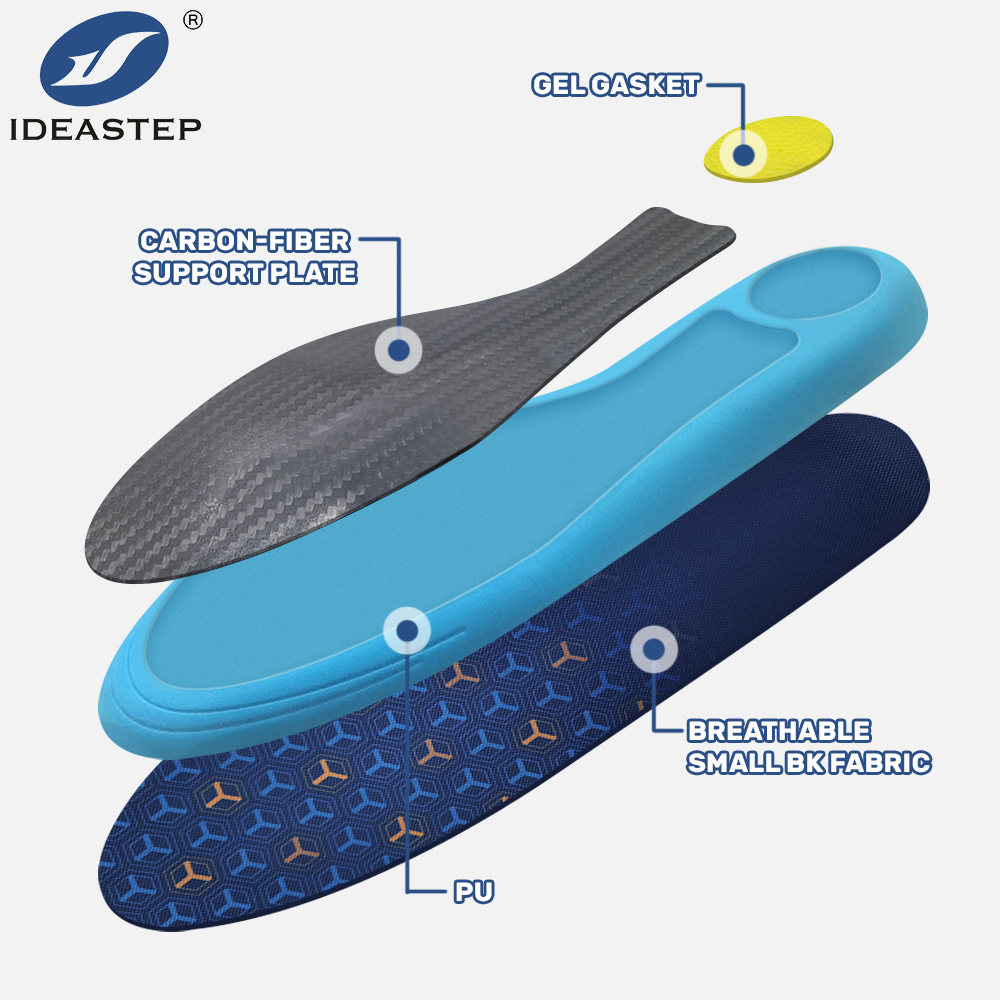
Step Into Lightweight Performance
In high-performance environments, small improvements can make a big difference.
Choosing the right insole means enhancing not only comfort but also movement efficiency and long-term foot health.
📩 Contact us today to request samples and wholesale pricing, and discover how the JF‑308‑3 can help you deliver lightweight, high-performance insole solutions to your customers.