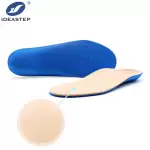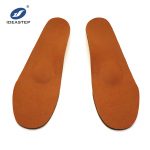
For foot care brands, the insole is more than a replacement footbed. Its materials, support structure, thickness, and appearance all contribute to how the finished product fits a specific market and footwear category.
That is why more brands, distributors, and footwear companies are moving beyond standard products and developing custom heel and arch support insoles. Customization gives buyers greater control over the product specifications while creating more room for private labeling, product differentiation, and market-specific designs.
For B2B projects, the goal is not simply to make a different-looking insole. A successful custom product needs a practical structure, suitable materials, consistent production, and specifications that can be maintained from the first sample through repeat orders.
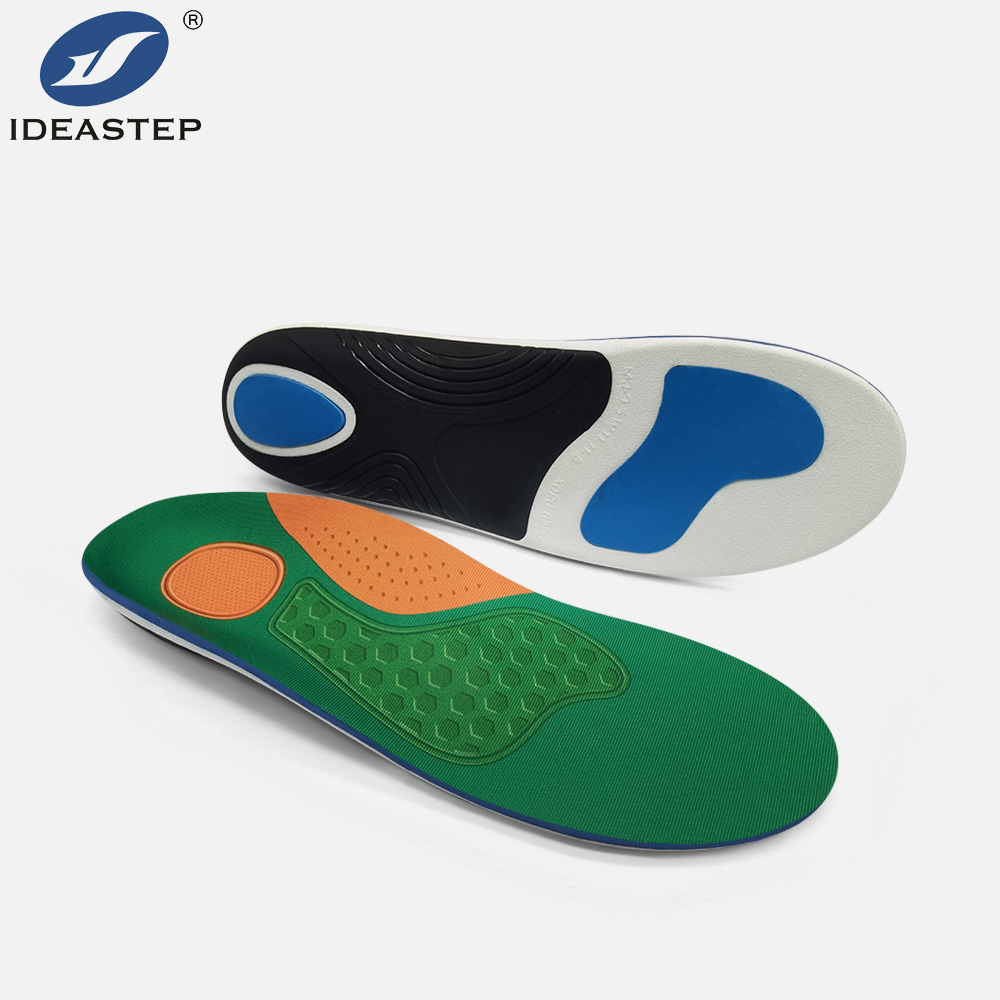
Why Standard Insoles May Not Be Enough for a Brand
Standard insoles can work well for general applications, but their fixed specifications can become a limitation when a brand wants to build a distinct product range.
A standard model may come with a fixed arch profile, heel cup, thickness, material combination, and size range. These specifications may not suit every type of footwear or every target market.
For example, a thin insole designed for casual shoes may not be suitable for a work shoe with more internal volume. Likewise, a cushioning-focused construction may not provide the structural characteristics required for a product positioned around arch support.
Custom development allows brands to start with the intended application and work backward to the appropriate product structure instead of trying to fit a standard design into every situation.
What Can Be Customized in Heel & Arch Support Insoles?
Customization can range from a few specification changes to a completely new insole construction. The right approach depends on the brand’s product concept, footwear, target market, and expected order volume.
Arch Support Profile
The arch profile can be adjusted in height, length, shape, and firmness. These parameters affect how the support structure sits beneath the foot and how much space the insole occupies inside the shoe.
A higher arch is not automatically a better design. The profile should be selected according to the intended application and balanced with the rest of the insole construction.
Heel Cup and Rearfoot Structure
The heel area provides an important foundation for the insole. Heel cup depth, width, and shape can be modified to suit the footwear and the desired rearfoot structure.
This is particularly relevant for brands developing insoles for shoes with specific heel shapes or limited internal space. The heel structure should work together with the arch support rather than being treated as a separate component.
Thickness and Cushioning
Overall thickness is an important specification for any custom insole project. Adding material can change the feel of the product, but excessive thickness may reduce usable space inside the shoe.
EVA, PU, gel, and layered constructions can be used to create different cushioning characteristics. Material density and thickness can also be adjusted according to the intended product positioning and cost target.
Top Cover and Product Appearance
The top cover is one of the most visible parts of an insole. Fabric, microfiber, velvet, and other textile materials can be selected according to the desired surface feel, appearance, and product positioning.
For private label projects, the product can also be coordinated with the brand’s logo, labeling, colors, and packaging requirements.
How Custom Insoles Help Brands Build a More Flexible Product Range
One of the main advantages of custom development is the ability to create several related products without using exactly the same construction for every application.
Develop Products for Different Footwear
Casual shoes, work shoes, sports footwear, and everyday walking shoes have different requirements for thickness, cushioning, support, and internal space.
A brand can develop different insole constructions for each category while maintaining a consistent product identity across the range.
Create Different Product Levels
Custom manufacturing also makes it possible to build products at different price and performance levels.
For example, an entry-level model may use a simple EVA construction, while a higher-positioned product can combine multiple materials, additional cushioning, or a reinforced support component.
This gives distributors and brands more flexibility when developing products for different sales channels and customer segments.
Build a Private Label Product
For distributors, private label manufacturing offers an opportunity to move from reselling generic products to building a branded product line.
Logo application, product labeling, packaging, colors, and selected product specifications can be developed around the brand’s requirements. Over time, this can make repeat purchasing and product expansion more straightforward.
Choosing Materials for Custom Heel & Arch Support Insoles
Material selection affects more than comfort. It also influences weight, flexibility, durability, support characteristics, production cost, and the final feel of the product.
EVA Foam
EVA is widely used in orthotic and support insole manufacturing because it is lightweight and available in a range of densities and hardness levels. It can be used for cushioning, support layers, or multi-density constructions.
PU Foam
PU is often selected for products where a softer cushioning feel is desired. It can be used alone or combined with other materials in layered constructions.
TPU
TPU is suitable for structural components that require a more defined support function. It can be incorporated into selected areas of an insole rather than used throughout the entire construction.
Top Cover Materials
Fabric, microfiber, velvet, and other textile materials can be used to create different surface finishes and product appearances. The final selection should consider the intended footwear, product positioning, and target cost.
From Product Concept to Bulk Production
A well-managed custom insole project should have a clear path from the initial specification to repeat production. This helps reduce unnecessary revisions and gives buyers a more reliable reference for future orders.
1. Define the Product Requirements
The manufacturer should first understand the intended footwear, size range, arch profile, heel structure, thickness, materials, top cover, branding, and target price.
An existing sample, drawing, or reference product can be useful at this stage, particularly when the buyer wants to reproduce or modify an existing design.
2. Develop the Structure and Materials
Based on the requirements, the construction can be developed around the selected arch profile, heel structure, cushioning system, and material combination.
The aim is to create a specification that works technically while remaining practical for the intended production volume and price range.
3. Review and Approve the Sample
A sample allows the buyer to review the dimensions, materials, appearance, and overall construction before committing to bulk production.
Any necessary adjustments can be made during this stage. Once the final sample is approved, the specifications can be used as the production reference.
4. Move into Bulk Production
After approval, the manufacturer produces the order according to the confirmed specifications. Maintaining consistent materials, dimensions, and construction is particularly important for brands planning repeat orders.

What B2B Buyers Should Look for in an Insole Manufacturer
For a custom project, choosing a supplier based only on the sample or unit price can create problems later. A capable manufacturer should be able to support both product development and ongoing production.
- Material options: Different EVA, PU, TPU, cushioning, and top-cover materials.
- Customization capability: Ability to adjust arch profiles, heel structures, thickness, and other specifications.
- Sampling support: A clear process for developing and approving samples.
- Production consistency: Ability to maintain approved specifications across repeat orders.
- OEM/ODM capability: Support for customized product development rather than only standard models.
- Private label support: Options for logos, labels, packaging, and branded products.
- Wholesale capacity: Ability to handle both initial and repeat B2B orders.
It is also worth confirming MOQ, lead time, packaging requirements, size range, and customization costs before production begins. These details can vary depending on the construction and order volume.
Who Can Benefit from Custom Heel & Arch Support Insoles?
Foot Care Brands
Brands can develop their own insole range with different support profiles, materials, and price levels while keeping a consistent visual identity.
Orthotic Brands
Orthotic brands may require specific arch structures, heel configurations, or material combinations for different product categories. Custom development provides more flexibility than relying entirely on standard products.
Footwear Companies
Footwear companies can develop insoles around the dimensions and construction of their shoes. This can be useful when an off-the-shelf insole does not provide the desired fit or product characteristics.
Distributors and Wholesalers
Distributors can use OEM and private label production to develop branded products instead of competing solely on standard products available from multiple suppliers.
Foot Care Suppliers
Suppliers serving the foot care market can develop different insole constructions for specific customer groups, footwear categories, and market segments.
What Should Brands Prepare Before Starting a Custom Insole Project?
The more clearly the product requirements are defined at the beginning, the easier it is to develop an accurate sample and quotation.
Before contacting a manufacturer, brands should consider:
- Target footwear and application
- Required size range
- Arch support profile
- Heel cup dimensions
- Overall thickness
- Preferred materials
- Top cover requirements
- Logo and packaging requirements
- Target price
- Estimated order volume
If a physical sample, technical drawing, or existing product is available, sharing it during the initial discussion can make the development process more efficient.
Frequently Asked Questions
Can heel and arch support insoles be customized?
Yes. Depending on the project, brands can customize the arch profile, heel cup, thickness, materials, cushioning layers, top cover, size, logo, and packaging.
What materials are available for custom insoles?
Common materials include EVA, PU, TPU, fabric, microfiber, and other cushioning or reinforcement materials. The final combination depends on the product requirements and target price.
Can distributors develop private label insoles?
Yes. Private label programs can include customized product specifications, logos, labels, packaging, and other brand requirements.
Can I receive a sample before placing a bulk order?
Yes. A sample can be developed and reviewed before the final product specifications are approved for bulk production.
What information is needed for a custom insole project?
Useful information includes the target footwear, size range, support requirements, materials, thickness, branding, estimated order volume, and target price. An existing sample or technical drawing can also be provided if available.
Custom Heel & Arch Support Insoles for Your Brand
Custom heel and arch support insoles give brands greater control over product design, material selection, branding, and market positioning. More importantly, they provide a practical way to develop products around specific footwear and customer requirements instead of relying on a fixed standard construction.
Ideastep supports custom arch support insoles, orthotic shoe inserts, OEM/ODM development, private label production, and wholesale orders for foot care brands, distributors, and footwear companies.
Share your product specifications, drawings, or existing sample to discuss your custom heel and arch support insole project.
Related Reading: Why Moisture-Wicking Layers Matter for Long-Lasting Orthotic Insoles.