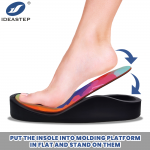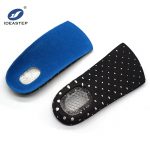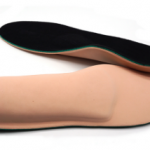
Carbon fiber orthotic insoles use a lightweight structural layer within an orthotic design shaped around the foot and the target footwear. The carbon fiber layer provides structural control, while the orthotic geometry, foam, and top cover determine the overall construction.
For custom orthotics, material selection and geometry need to be developed together. Arch contour, heel cup, thickness, flex, and footwear compatibility all affect the final design.
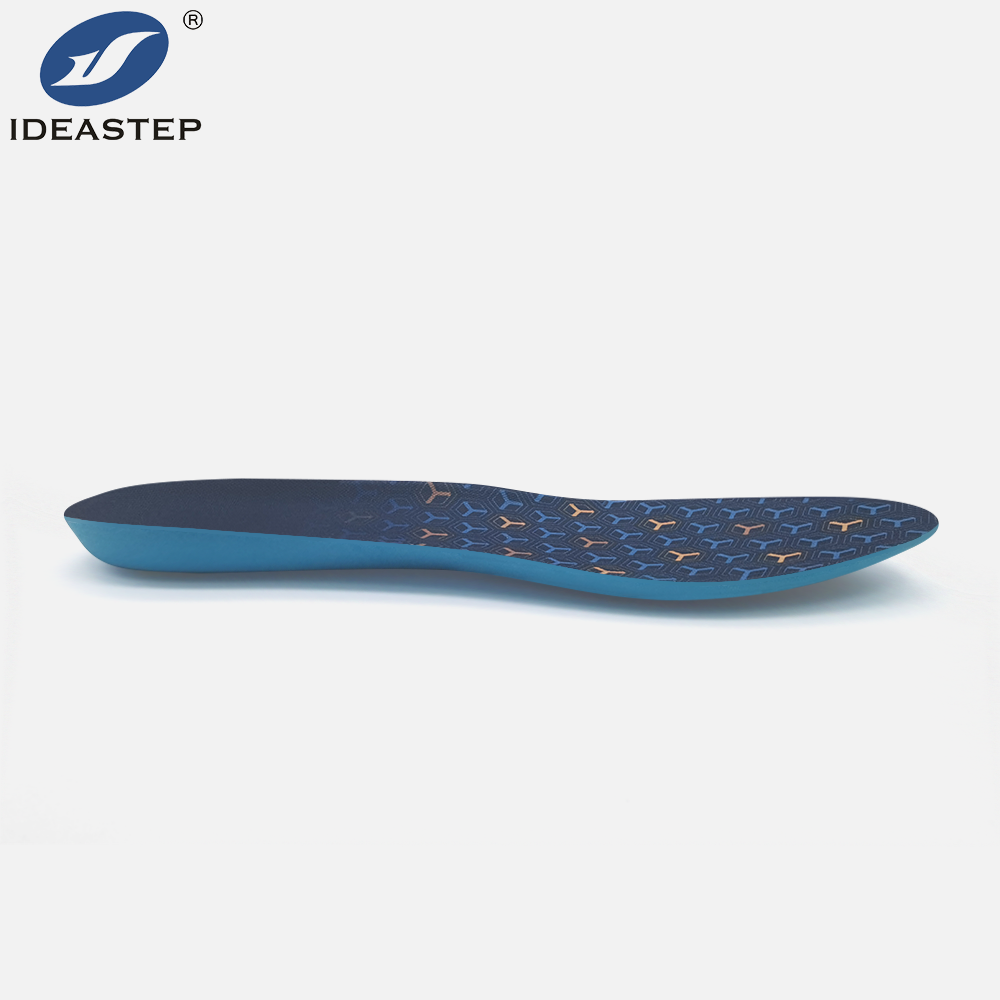
Carbon Fiber as a Structural Layer
Carbon fiber offers a high stiffness-to-weight ratio, making it suitable for orthotic constructions that require a thin structural component.
The carbon fiber can be designed as a full-length or partial-length layer. Thickness, coverage, shape, and fiber orientation can be adjusted to achieve the required structural characteristics and flex profile.
Rather than maximizing stiffness, the construction should be matched to the intended orthotic design and footwear.
Orthotic Geometry Comes First
The shape of the orthotic determines how it interacts with the foot and shoe. Key parameters include:
- Arch height and contour
- Heel cup depth and width
- Forefoot profile
- Overall length and width
- Edge thickness
These dimensions can be developed from an existing orthotic, foot measurements, a physical mold, or a digital design, depending on the project.
Controlling Flex and Thickness
A carbon fiber orthotic does not have to be completely rigid. Flex can be adjusted through carbon fiber thickness, coverage, geometry, and the surrounding material layers.
Full-length and partial-length designs create different flex characteristics. Foam thickness and density can further change the overall profile.
For low-volume footwear, thickness requires particular attention. The orthotic must fit within the available shoe space without unnecessarily changing the internal fit.
Material Construction
Carbon fiber is typically combined with foam and a top cover to form the finished orthotic.
Foam Layer
EVA, PU, and other foams can be used to build the required thickness and cushioning. Density and thickness can be selected according to the product specification.
Top Cover
Mesh, polyester, microfiber, and other textiles can be used as the top cover. Material selection depends on surface feel, durability, appearance, and cost requirements.
Bonding
When carbon fiber, foam, and textile layers are laminated together, bonding quality and layer alignment need to be controlled during production.
Prototype Development
Prototype testing should verify both the orthotic geometry and the complete material construction. Key checks include:
- Arch and heel geometry
- Carbon fiber thickness and coverage
- Overall thickness and weight
- Flex characteristics
- Layer bonding
- Fit inside the target footwear
Based on the test results, the carbon fiber structure, foam layers, or geometry can be revised before the final specification is approved.
Match the Orthotic to the Footwear
The same orthotic construction may behave differently in different shoes. Internal volume, heel structure, removable sockliner design, and forefoot space all influence fit.
For this reason, the target footwear should be considered during development, particularly when the carbon fiber layer adds structural thickness to the orthotic.
Custom and Private Label Options
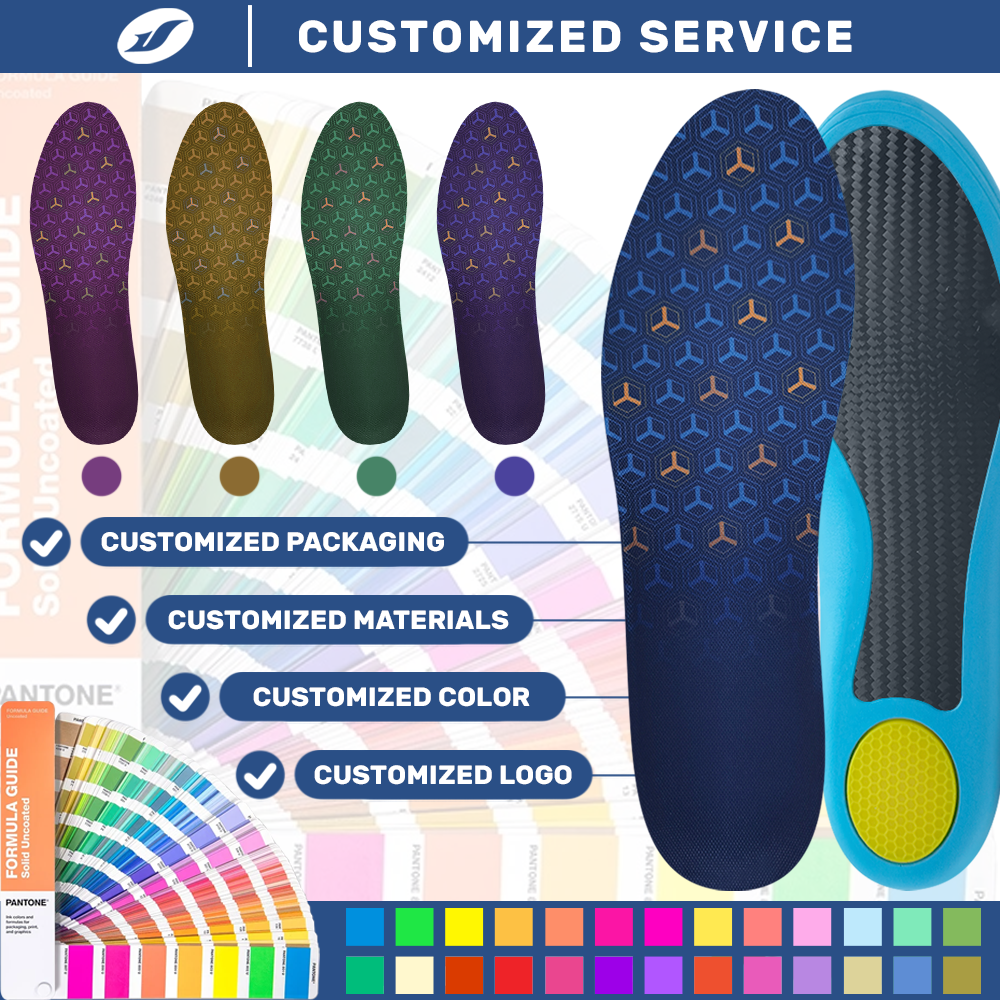
Carbon fiber orthotic insoles can be developed for custom, OEM, and private label programs. Depending on the project, customization can cover:
- Carbon fiber structure and coverage
- Orthotic geometry
- Foam material and density
- Top-cover material
- Size grading
- Logo and color
- Packaging
For repeat production, the approved sample should be supported by a detailed specification covering dimensions, materials, construction, and quality requirements.
Production Quality Control
Consistency is especially important when an orthotic design is produced across multiple sizes or in large quantities.
| Area | Key Checks |
|---|---|
| Geometry | Length, width, arch contour, and heel shape |
| Carbon Fiber | Thickness, coverage, shape, and edge condition |
| Foam | Material, density, and thickness |
| Bonding | Layer alignment and adhesion |
| Finished Insole | Weight, thickness, dimensions, and surface finish |
The approved sample should remain the reference for subsequent production batches to maintain consistent specifications.
Develop the Construction Around the Requirement
There is no single carbon fiber construction for every orthotic application. The appropriate combination depends on the required geometry, flex, thickness, footwear, and material specification.
A practical development process is to define the orthotic geometry and structural requirements first, then refine the carbon fiber, foam, and top-cover construction through prototype testing.
Custom Carbon Fiber Orthotics for Production
For brands, distributors, clinics, and footwear companies, custom carbon fiber orthotics can be developed from an existing specification or a new design. Once the geometry and material construction are approved, the same specifications can be applied to size grading, branding, packaging, and bulk production.
Have a carbon fiber orthotic design in development? Share the foot or footwear specifications, target construction, size range, and expected volume with our team, and we can review the requirements for sampling.
Related Post:
How Carbon Fiber Insoles are Made: A Step-by-Step Guide
The Manufacturing Process of Carbon Fiber Insoles