Introduction
Most footwear brands, orthotic clinics and sporting goods retailers lack in-house manufacturing capabilities for custom insoles. Many new product projects stall due to unclear design standards, unstable material matching and uncontrollable batch quality. A professional OEM orthotic insoles manufacturer solves these challenges. It helps brands launch personalized orthotic products quickly and capture more market share.
This real OEM orthotic insoles case study walks through a full project workflow. It covers requirement alignment, custom design, sample development, quality validation and mass production. B2B buyers can use this example to reduce development risks, shorten launch timelines and build reliable long-term OEM partnerships.
Project Background & Customer Customization Requirements
This client is an established European casual footwear brand. They focus on comfortable walking shoes and everyday athletic footwear. The brand wanted matching custom orthotic insoles to boost product value and expand accessory offerings.
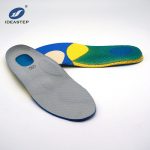
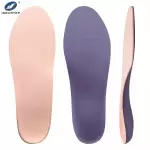
The client shared clear product requirements. Insoles needed moderate arch support to ease foot fatigue during long walks. The overall profile had to stay slim. This ensured compatibility with standard shoe lasts without crowding the toe box. A soft top cushion layer balanced structural support and all-day comfort.
For branding, the client required private label embossing and standardized size grading. They chose a small trial batch first. Larger bulk production would follow once market performance was validated.
1. Demand Alignment & Professional Custom Design
After receiving the OEM request, our technical team held detailed consultations. We mapped out product positioning and the needs of end users. We moved past generic insole structures and built a custom layered design around the client’s footwear style.
We recommended a proven two-layer composite structure. The base layer uses supportive EVA to stabilize arches and improve sole torsion resistance. The top layer uses low-density flexible foam to soften contact points and distribute foot pressure evenly.
At the design phase, we supplied material spec sheets and performance test reports. We adjusted foam hardness, thickness and arch curve based on client feedback. These steps laid solid groundwork for sample creation.
2. Prototype Proofing & Iterative Sample Optimization
Once design and material formulas were locked, our factory began prototype production. We followed custom CAD data and ergonomic standards to build the first set of samples.
The client ran in-shoe fitting and wear tests on prototypes. They returned practical feedback. We fine-tuned the arch contour and smoothed edge trimming to prevent skin friction.
We completed two rounds of sample revisions efficiently. Every detail including structure, feel, sizing and logo appearance was refined. Both parties approved and archived the master sample. This master sample acted as the official benchmark for all mass-produced goods.
3. Pre-Production Verification & Standardized QC Formulation
We did not jump straight into full-scale manufacturing after sample approval. We ran a small pre-production trial to simulate real factory workflows. This included die cutting, lamination, surface marking and shaping.
Our QC team created dedicated inspection standards for this OEM project. Key checks covered dimensional tolerance, compression recovery, bonding strength and logo clarity. Any defective items were filtered out early.
We shared the full pre-production inspection report and process rules with the client. Transparent quality control reduces batch variation and product defects in bulk orders.
4. Formal Bulk Production & On-Time Delivery
After pre-production results gained full client approval, the project moved into mass production. We built a clear production schedule aligned with order volume and delivery deadlines.
During manufacturing, we sent regular progress updates to the client. The whole process stayed transparent and traceable. After production finished, all goods passed a second full inspection. We confirmed every unit matched the approved master sample in performance, size and appearance.
The finished products were packed with custom labels and shipped on schedule. After receiving the cargo, the client validated batch quality and praised our product stability and OEM service.
Core Takeaways for OEM Insole Cooperation
This successful OEM orthotic insoles project delivers repeatable workflows for footwear and orthotic suppliers.
Clear requirement sorting and design confirmation keep projects running smoothly. Define material specs, structural parameters and branding details upfront. This cuts repeated revisions and saves development time.
Pre-production sample validation and small trial runs are critical risk controls. Skipping sampling often leads to costly bulk rework and budget losses.
Standardized batch quality control supports long-term collaboration. Consistent product performance lowers after-sales complaints and protects your brand reputation.
Conclusion
Quality OEM orthotic insoles service means more than simple manufacturing. It delivers end-to-end solutions covering design tuning, material matching, sample iteration, QC and bulk delivery. This real case shows how standardized workflows and technical expertise help brands launch premium custom orthotic insoles efficiently.
If you need bulk OEM orthotic insoles for your brand, our team provides full custom support from design proofing to mass shipment. Contact us today to get tailored project plans, free samples and custom wholesale pricing.
Related Articles: Inside an Orthotic Insoles Factory: From Design to Production.