3D printing is becoming a practical option for developing customized orthotic insoles. Instead of relying entirely on traditional molding and manual fabrication, a digital workflow can connect foot scanning, digital design, 3D printing, finishing, and product evaluation.
For podiatry clinics, this approach can make digital records and design adjustments easier to manage. For footwear brands and orthotic product companies, it opens up more options for customized structures, product development, and small-batch production.
However, 3D printing is only one part of the process. The quality of the final insole still depends on accurate foot data, appropriate design, material selection, printing parameters, fitting, and quality control.
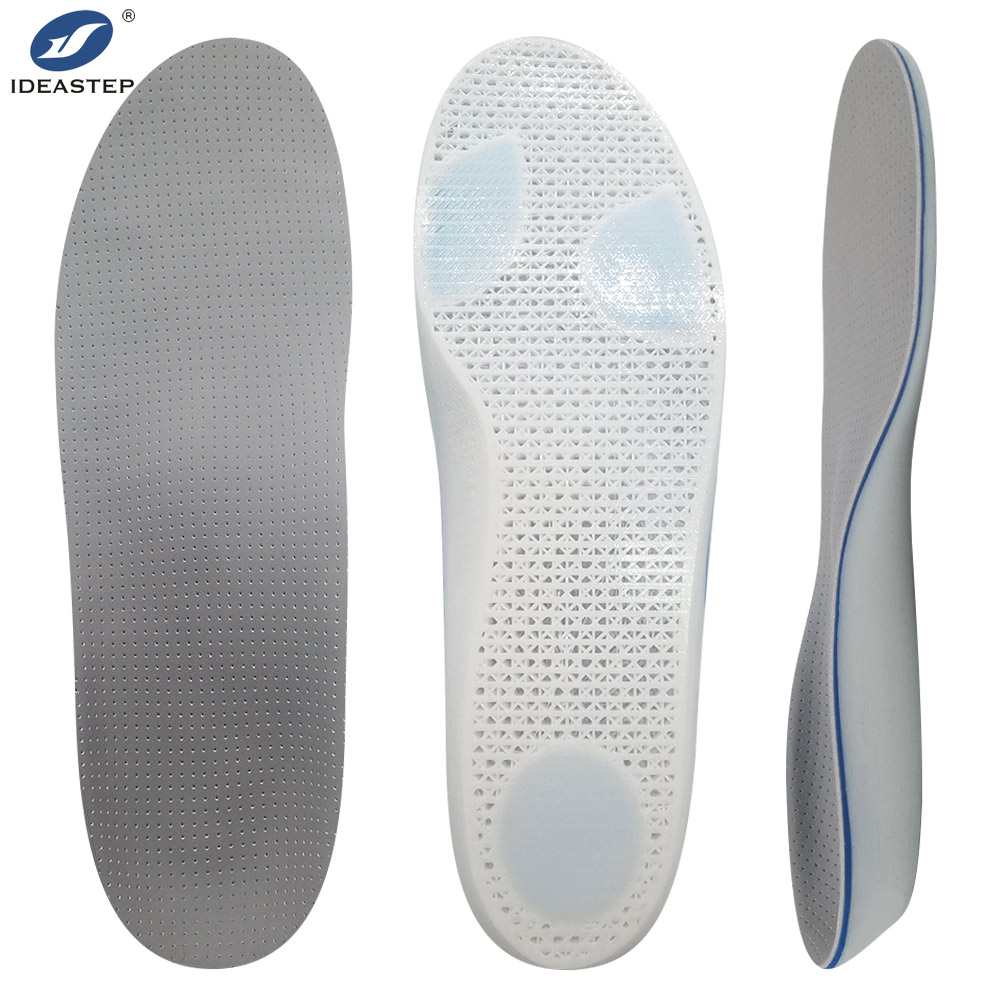
What Are 3D Printed Orthotic Insoles?
3D printed orthotic insoles are produced from a digital model rather than being shaped entirely through conventional manual methods.
The digital model can be adjusted according to the intended application, including:
- Arch height and contour
- Heel cup geometry
- Overall thickness
- Cushioning zones
- Offloading areas
- Local stiffness
- Internal lattice or other structural features
This gives designers greater control over the geometry of an insole and makes it easier to save, modify, and reproduce approved digital designs.
How the 3D Printed Insole Workflow Works
1. Capture Foot Data
The first step is obtaining accurate foot geometry. This may involve 3D scanning or other digital measurement methods.
Scan quality depends on factors such as scanner accuracy, foot positioning, anatomical coverage, and operator consistency. Poor input data can affect the fit of the final product, so scanning should be treated as part of the overall workflow rather than simply a technical step.
2. Create the Digital Design
The captured data is converted into a digital model. Designers can then adjust the arch, heel, thickness, contours, cushioning areas, or other structural features according to the project requirements.
One major advantage is that the approved design can be stored as a digital file and revised later without starting the entire process from scratch.
3. Print the Insole
The digital model is prepared for the selected 3D printing process and material.
Material choice depends on the required flexibility, stiffness, durability, surface characteristics, and intended application. TPU and other polymers are commonly explored for flexible orthotic applications, but the printing material should always be evaluated together with the design and manufacturing parameters.
4. Finish and Evaluate
After printing, the insole may require support removal, surface finishing, trimming, bonding, or the addition of a top cover.
The finished product should then be checked for dimensions, structure, fit, appearance, and intended performance before moving into repeat production.
Benefits of 3D Printed Orthotic Insoles for Podiatry Clinics
Digital Design Adjustments
Traditional fabrication can require considerable manual work when the structure needs to be changed. With a digital workflow, design parameters can be adjusted directly in the model.
Arch height, thickness, heel geometry, or specific structural areas can be modified while retaining the original digital reference.
Digital Records and Reproducibility
A digital scan and approved design can be stored for future reference. This is particularly useful when a clinic needs to reproduce or modify a previous design.
Digital workflows can improve design consistency and traceability, although the quality of the result still depends on the accuracy of the original scan, design, materials, and manufacturing process.
More Flexible Structural Design
3D printing allows manufacturers to produce geometries that can be difficult to achieve through conventional fabrication.
Variable thickness, internal lattice structures, and different stiffness zones can be incorporated into a design when the application requires them.
A More Connected Digital Workflow
For clinics working with an external manufacturer, digital files can simplify communication. Instead of relying only on physical samples or written descriptions, the clinic can provide digital geometry and design specifications for development and revision.
The result is a workflow that can connect clinical assessment with product development more directly.
Benefits for Footwear Brands and Orthotic Product Companies
Greater Product Design Freedom
Footwear brands can explore different combinations of arch structure, heel geometry, thickness, cushioning, and internal structures without being limited to a single conventional insole construction.
This is useful when developing specialized footwear products or differentiated insole ranges.
Faster Product Iteration
A digital design can be modified and printed again after prototype evaluation. This makes it easier to test different structures before finalizing a production version.
For brands developing new products, this can reduce dependence on repeated physical tooling during the early design stage.
Suitable for Customized and Small-Batch Products
3D printing can be particularly useful when the product requires a high degree of customization or when production quantities do not justify conventional tooling.
It can support prototype development, customized product programs, and selected small-batch applications. However, production economics still depend on print time, equipment capacity, material cost, post-processing, and order volume.
Digital Product Development
Once a design is approved, the digital file becomes part of the product development record.
For brands managing multiple sizes or configurations, digital files can provide a more organized way to manage design revisions and production references.
3D Printed Insoles vs. Traditional Manufacturing
| Factor | 3D Printed Insoles | Traditional Manufacturing |
|---|---|---|
| Customization | High design flexibility | Depends on manufacturing method |
| Design changes | Digital modification | May require physical modification or new tooling |
| Digital records | Easy to store and reproduce | More dependent on physical samples and molds |
| Complex structures | Suitable for complex geometries | May require multiple processes |
| Prototyping | Flexible for design iterations | Can require more manual development |
| Production volume | Useful for customized or selected small batches | Often more efficient for high-volume standardized products |
| Material options | Depends on printable materials | Wider range of conventional materials |
Neither approach is automatically better for every project. The right choice depends on customization requirements, volume, materials, equipment, cost, and the expected production workflow.
Material Selection Is Critical
3D printing does not determine insole performance by itself.
A geometrically accurate insole may still perform poorly if the material does not provide the required combination of flexibility, stiffness, durability, layer adhesion, and surface properties.
When selecting a material, manufacturers should consider:
- Hardness and flexibility
- Compression behavior
- Fatigue resistance
- Tensile and tear properties
- Layer adhesion
- Durability under repeated loading
- Surface characteristics
- Compatibility with top covers or additional cushioning layers
For some projects, a 3D printed base combined with a foam or textile top layer may provide a more practical construction than printing the entire insole as one material. Hybrid constructions can also be considered during customized orthotic development.
What Podiatry Clinics Should Consider
Before introducing 3D printed orthotic insoles into a clinical workflow, clinics should look beyond the printer itself.
- Foot scanning: Is the scanning process accurate and repeatable?
- Digital design: Can the design be adjusted according to clinical requirements?
- Material selection: Does the material provide the required mechanical properties?
- Printing capacity: Can the production system handle the expected workload?
- Post-processing: How are supports, edges, surfaces, and top covers handled?
- Validation: How will fit, comfort, structure, and product consistency be evaluated?
Digital technology does not replace clinical assessment. Instead, it changes how design and manufacturing are carried out, while clinical judgment remains an important part of the process.
What Footwear Brands Should Prepare Before Development
A footwear brand should define its product requirements before starting a 3D printed insole project.
Useful information includes:
- Target footwear type
- Size range
- Foot or last geometry
- Insole dimensions
- Arch and heel requirements
- Material preference
- Structural requirements
- Top cover requirements
- Branding
- Packaging
- Prototype quantity
- Expected production volume
The clearer these requirements are, the easier it is for a manufacturer to recommend a suitable design and production process.
From Prototype to Bulk Production
A practical development process can follow this sequence:
Foot Data → Digital Design → Prototype → Material and Fit Evaluation → Design Revision → Sample Approval → Production Validation → Bulk Production
Prototype approval should cover more than appearance.
Check:
- Overall dimensions
- Thickness
- Arch and heel geometry
- Material firmness
- Surface finish
- Top cover attachment
- Shoe fit
- Printing consistency
- Structural integrity
Once the sample is approved, the same specifications should be used as the reference for subsequent production batches.
This is especially important for B2B projects where the buyer expects the same product structure across repeated orders.
How to Choose a 3D Printed Orthotic Insole Manufacturer
When evaluating a supplier, do not focus only on the type of 3D printer they use.
A capable manufacturing partner should understand the complete process from digital design to finished insole.
Consider asking:
- What 3D printing technologies and materials are available?
- Can the supplier work from 3D scan data or existing digital files?
- Can arch height, heel geometry, thickness, and stiffness be customized?
- Can the supplier develop prototypes before bulk production?
- How are dimensions and material consistency checked?
- Can the supplier handle top covers and finishing?
- What production volume can they support?
- How are approved samples and digital specifications maintained for repeat orders?
For podiatry-related projects, it is also important to clearly define which party is responsible for clinical assessment, design approval, fitting, and final validation.
3D Printed Orthotic Insole Development with Ideastep
Ideastep provides 3D printed orthotic insole development and customized manufacturing for podiatry-related businesses, footwear brands, distributors, and other B2B customers.
Projects can start from:
- Digital foot files
- Product drawings
- Physical samples
- Existing insole designs
- Structural requirements
- Material specifications
The development process can include digital design, structural customization, material selection, 3D printing, CNC processing, finishing, and sample development according to the project.
For footwear brands, the focus can be placed on product structure, size range, materials, top cover, branding, and production requirements. For podiatry-related businesses, the project can be developed around the required foot geometry and approved design specifications.
If you are planning a 3D printed orthotic insole project or looking for a manufacturing partner, please contact our team to discuss your requirements.
Conclusion
3D printed orthotic insoles give podiatry clinics and footwear brands greater control over digital design and product development.
For clinics, the main advantages include digital records, easier design revisions, repeatable production references, and greater structural flexibility.
For footwear brands, the value lies in customized product development, digital design management, complex structures, prototyping, and selected small-batch production.
But 3D printing is not a shortcut around product development. Accurate foot data, appropriate materials, sound design, prototype testing, fitting, and quality control still determine the final result.
For B2B buyers, the most important question is therefore not simply whether a supplier owns a 3D printer, but whether it can manage the complete workflow from design and sampling to consistent production.
Related Reading:
3D Printed Insoles Price What Wholesale Buyers Need To Know
3D Print Arch Support Insoles: Custom Solutions for Orthotic Footwear Brands