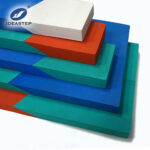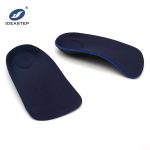
Low density EVA foam is widely used in footwear components where low weight, flexibility, and cushioning are required. It can be found in insoles, midsoles, slippers, sandals, and other lightweight shoe components.
But choosing an EVA grade is not as simple as selecting the lowest available density. Density, hardness, thickness, compression performance, resilience, and processing behavior all affect the finished component.
For footwear manufacturers, the right grade is the one that fits the product design and production process without creating problems during cutting, bonding, molding, or bulk production.
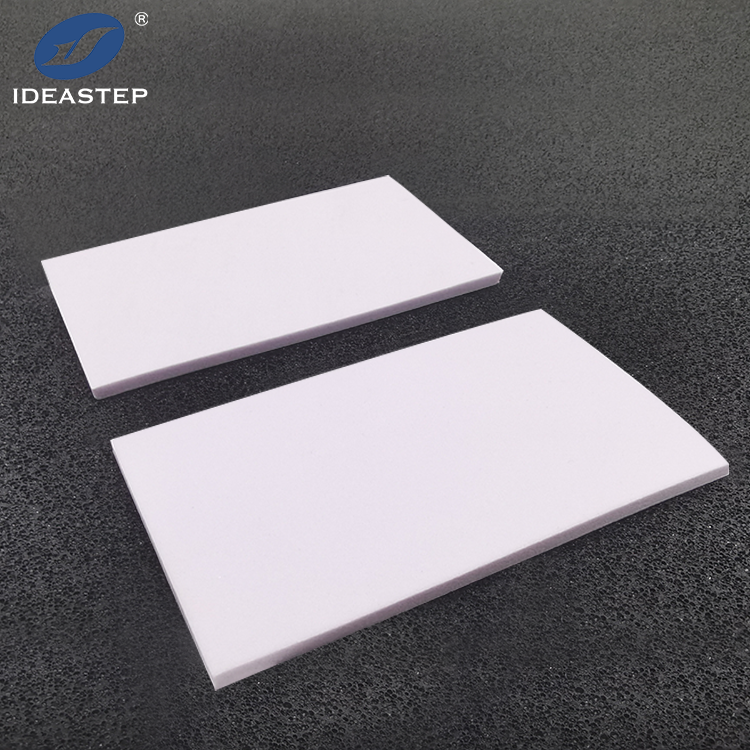
What Makes Low Density EVA Different?
EVA foam is a cellular material whose properties can be adjusted through formulation and foaming conditions. Reducing density generally means a greater proportion of cellular structure and less material by volume, which helps reduce component weight.
However, density alone does not determine how an EVA sheet or molded component will perform. Two materials with similar density can have different hardness, compression behavior, resilience, and dimensional stability.
That is why material selection should start with the role of the EVA component rather than a density target alone.
Key Specifications When Selecting EVA Foam
Density
Density is usually the first specification discussed during sourcing because it directly affects material weight and is closely related to the foam structure.
A lower-density grade may be suitable for lightweight insoles or cushioning layers, while a denser grade may be preferable where the component needs more structural stability.
Rather than choosing the lowest number, compare several grades against the actual thickness and construction of the footwear component.
Hardness
Hardness affects the firmness and feel of the finished EVA component. A soft grade may work well for cushioning, while a firmer material can provide a more stable base.
When requesting samples, specify the hardness scale and test method. Terms such as “soft,” “medium,” or “firm” are too subjective for repeat production.
Compression Set
Compression set shows how much permanent deformation remains after the foam has been compressed under defined conditions.
This is particularly relevant for insoles and midsoles that experience repeated loading. A material that feels comfortable when new may not maintain its original thickness if its compression-set performance is poor.
For bulk sourcing, compression set should therefore be part of the technical specification rather than an optional test.
Resilience
Resilience describes how the foam responds and recovers after impact or deformation. It can influence the feel of a footwear component and is particularly relevant to sports and performance applications.
Higher resilience is not automatically better. The target should match the construction, thickness, and intended use of the shoe.
Thickness
Thickness changes the behavior of EVA just as much as the material grade itself.
A low-density EVA sheet may behave differently at 3 mm and 8 mm thickness during cutting, compression, bonding, and use. Thickness tolerance also affects the dimensions of the final footwear component.
For this reason, samples should be tested at or close to the production thickness whenever possible.
Choosing a Grade for Different Footwear Components
| Footwear Component | Main Selection Priorities |
|---|---|
| Insoles | Weight, cushioning, compression resistance, thickness consistency |
| Midsoles | Density, resilience, compression performance, dimensional stability |
| Slippers | Lightweight structure, flexibility, processability |
| Sandals | Weight, flexibility, surface finish, durability |
| Work footwear | Compression resistance, stability, thickness control |
| Orthotic components | Density consistency, hardness, machinability, shape retention |
These categories are only a starting point. The final specification should be confirmed with samples using the actual shoe construction.
Fabrication Tips for Low Density EVA Foam
Die Cutting
Die cutting is a practical choice for repeated EVA shapes in volume production.
Low-density foam can compress around the cutting edge and recover after the blade passes through. If the material, thickness, or hardness changes, the same cutting settings may not produce the same result.
Before production, check the cut dimensions after the foam has recovered. Edge quality and dimensional accuracy should be compared with the approved sample.
CNC Cutting and Machining
CNC processing is useful for prototypes, customized insoles, and components with more complex profiles.
It allows manufacturers to adjust dimensions, contours, bevels, and other details without producing a new cutting die. The cutting parameters still need to match the EVA grade because softer or lower-density foam can behave differently under machining.
Skiving
Skiving reduces the thickness of EVA or creates a tapered section. It is useful when a component needs a gradual thickness transition rather than a flat sheet.
The starting sheet must have good thickness consistency. Variations in the raw sheet will become more noticeable after skiving and can affect the final profile.
Lamination
EVA is often laminated with mesh, fabric, PU foam, microfiber, or other materials.
The bonding process should be tested using the actual EVA grade and top material. Adhesive compatibility, surface preparation, pressure, and curing conditions can all affect the bond.
A small-scale bonding test before bulk production is much less costly than discovering adhesion problems after a large order has been completed.
What to Test Before Approving a Material
A supplier sample should be evaluated against the requirements of the finished component, not just its appearance.
The basic checklist can include:
- Density
- Hardness
- Thickness and tolerance
- Compression set
- Resilience
- Tensile strength
- Elongation
- Cell uniformity
- Surface quality
- Cutting performance
- Bonding performance
- Dimensional stability
- Color consistency
The test method also matters. A specification such as “hardness 30” is incomplete unless the testing scale and method are clear.
For repeat orders, the same testing conditions should be used from one batch to the next so that changes in material performance can be identified early.
Look Beyond Price per Kilogram
Low density EVA foam can reduce material weight, but the lowest material price does not necessarily produce the lowest production cost.
A better comparison includes:
- Material yield
- Cutting waste
- Thickness tolerance
- Processing stability
- Bonding performance
- Rejection rate
- MOQ
- Lead time
- Packaging
- Transportation
For example, a slightly higher-priced EVA grade may be more economical if it produces fewer rejected components and maintains tighter dimensions during production.
For large footwear orders, cost per usable component is often more meaningful than price per kilogram.
Quality Control in Bulk Production
Once a material has been approved, consistency becomes the main concern.
Density, hardness, and thickness should be controlled by batch. For finished components, dimensional inspection should also cover the areas most likely to vary during cutting, machining, molding, or lamination.
The approved sample should serve as the production reference. It should define the agreed material, dimensions, appearance, and key tolerances rather than being treated as a one-time prototype.
When a supplier changes the EVA formulation, production method, or key raw materials, the buyer should be informed and the material should be re-evaluated when necessary.
What to Include in an EVA Sourcing Brief
A clear specification makes supplier comparison faster and reduces unnecessary sampling.
Include the following information where available:
- Application — insole, midsole, slipper, sandal, or other component.
- Target density — or acceptable range.
- Hardness — with the test scale.
- Thickness — including tolerance.
- Dimensions — sheet size or finished component size.
- Color — standard or custom.
- Processing method — die cutting, CNC machining, molding, skiving, or lamination.
- Required physical properties — such as compression set or resilience.
- Order volume — sample, trial order, or bulk production.
- Packaging requirements — especially for private-label products.
If the specifications are not complete, provide a physical sample, drawing, shoe last, existing insole, or reference component. A supplier can usually make a more useful recommendation from an actual reference than from a general request for “lightweight EVA.”
How to Evaluate a Low Density EVA Foam Supplier
A suitable supplier should be able to handle both the material and the manufacturing side of the project.
Check whether the supplier can provide:
- Consistent EVA grades
- Different density and hardness options
- Multiple thicknesses
- Sheet production
- Die cutting
- CNC processing
- Lamination
- Sample development
- OEM and ODM production
- Batch quality control
- Suitable MOQ and production capacity
The ability to supply a low density EVA grade is only one part of the equation. If the supplier cannot maintain thickness, dimensions, bonding quality, or material consistency during production, the initial material advantage has little value.
Low Density EVA Foam Supply for Footwear Manufacturers
Ideastep supplies EVA materials and customized EVA components for footwear and insole applications.
Projects can be developed around density, hardness, thickness, shape, color, surface material, and fabrication requirements. EVA can be supplied as sheets or processed into finished components through cutting, shaping, lamination, and related processes.
Development can start from a material specification, drawing, physical sample, existing component, or basic application requirement. Samples can then be reviewed before bulk production.
If you are sourcing low density EVA foam for footwear manufacturing, contact our team with your target specifications, application, sample requirements, and expected order volume.
Conclusion
Selecting low density EVA foam is a balance between weight, physical properties, processing behavior, and production consistency.
The practical sourcing process is straightforward:
Define the application → select the EVA grade → test samples → verify fabrication → approve the specification → control bulk production.
The best material is not necessarily the lightest or the cheapest. It is the grade that delivers the required performance, processes reliably, and remains consistent from the first sample through repeat production.
Recommended Reading: Low Density EVA Foam: Material Characteristics & Bulk Sourcing for Orthotic Insoles.