Developing a skate custom EVA insole requires the right combination of material properties, product geometry, and manufacturing processes. For footwear brands, wholesalers, and OEM buyers, key considerations include dimensional accuracy, consistent material quality, production feasibility, and repeat-order reliability.
EVA (ethylene-vinyl acetate) is widely used in footwear components because manufacturers can select different formulations to meet specific density, hardness, flexibility, and compression requirements. The appropriate specification depends on the insole design, footwear construction, target cost, and production volume.
1. Define the Requirements for Custom EVA Insoles
A clear product specification helps manufacturers assess feasibility, prepare accurate quotations, and reduce sampling revisions.
Confirm Dimensions and Structure
Provide the required length, width, thickness, outline, and shaped features. For insoles developed for a specific skate shoe model, supply a technical drawing or reference sample.
Also specify the arch profile, heel geometry, top-cover material, color, and surface finish where applicable. These details affect tooling, material consumption, and production costs.
Set Material and Quality Requirements
Define measurable requirements for EVA density, hardness, thickness tolerance, and compression performance where relevant. Terms such as soft, firm, and durable are not sufficient for manufacturing specifications.
Agree on applicable test methods and acceptance limits before sampling so that the supplier can evaluate materials and establish inspection procedures.
2. Select the Right EVA Material
EVA formulations differ in density, hardness, flexibility, and compression behavior. Buyers should evaluate material data alongside the finished design rather than selecting materials by name alone.
Density and Hardness
Density measures mass per unit volume, while hardness measures resistance to indentation under a specified test method. These properties are not interchangeable, so both should be considered when comparing EVA grades.
Confirm the test methods and measurement conditions used by the supplier to ensure that material specifications are comparable.
Compression and Recovery
For applications with defined cushioning or durability requirements, evaluate compression set, recovery, and dimensional stability under appropriate test conditions.
A manual squeeze test cannot establish long-term performance. Request relevant test data or arrange testing against agreed acceptance criteria when these properties are critical.
Single-Density and Multi-Density Construction
Single-density EVA can simplify material planning and production. Multi-density construction allows different sections or layers to use materials with different properties.
Multi-density designs require additional attention to bonding, alignment, and process control. Confirm that the supplier can maintain the required tolerances and construction consistency during bulk production.
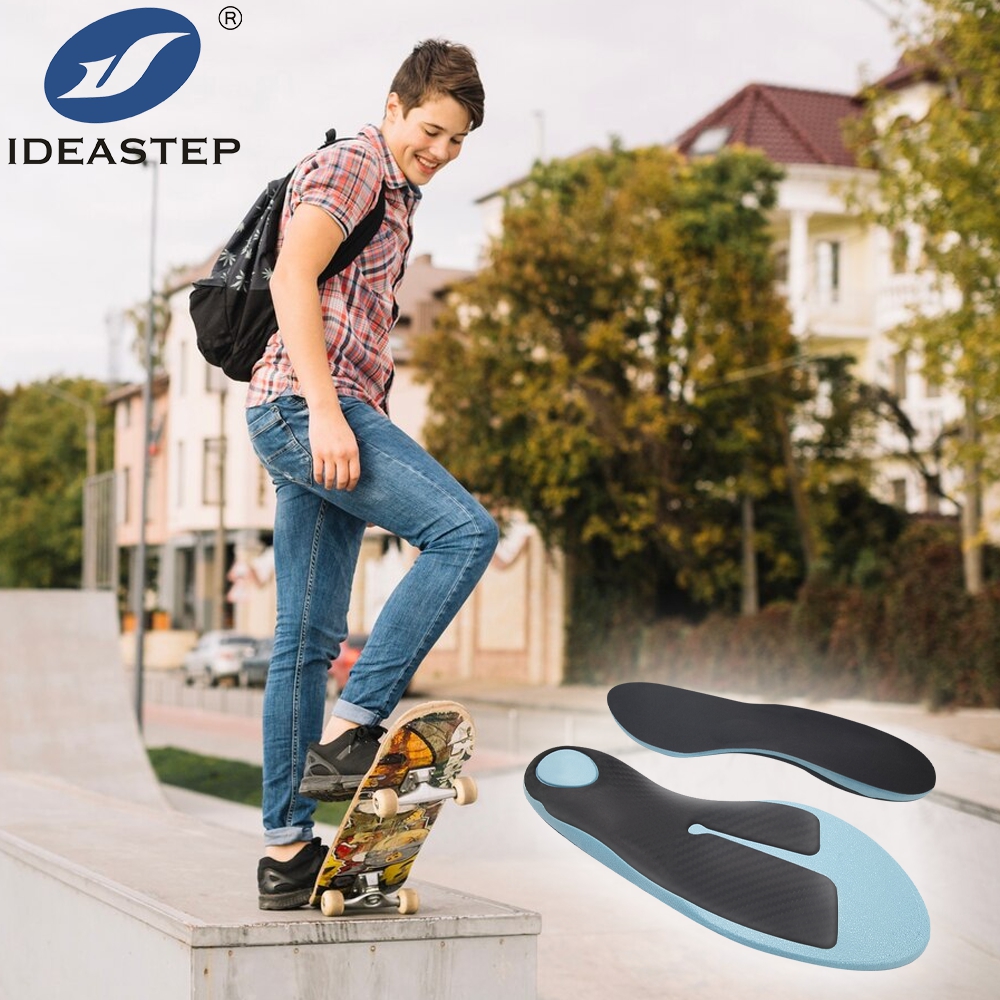
3. Optimize Insole Geometry for Skate Footwear
Insole geometry must match the footwear’s internal dimensions and construction. Changes to thickness or contour can affect available shoe volume and assembly compatibility.
Thickness and Profile
Specify thickness at defined measurement points, particularly when the heel, arch, and forefoot have different profiles. Include acceptable tolerances in the technical drawing.
Verify the finished dimensions against the footwear specification to reduce fit-related assembly issues and production discrepancies.
Heel and Arch Geometry
Define the dimensions and position of any shaped heel section or arch contour. Record the approved geometry in the technical drawing and document subsequent revisions to keep samples and production orders aligned.
Top-Cover and Surface Finishing
Depending on the design, EVA insoles may incorporate textile top covers or other surface materials. Confirm material compatibility, bonding requirements, color, and finish.
For private-label projects, specify logo placement, labeling, and packaging. Additional layers and finishing processes may affect overall thickness, production time, and unit cost.
4. Select an Appropriate Manufacturing Process
The manufacturing method depends on product geometry, material format, tooling requirements, order volume, and dimensional tolerances.
Die Cutting
Die cutting suits many sheet-based EVA insole designs and supports repeatable outlines once tooling and material specifications are established.
Review cutting accuracy, edge quality, thickness consistency, material utilization, and tooling costs before confirming the process.
Compression Molding
Compression molding can produce shaped EVA components that require a formed profile. Tooling investment and setup requirements should be assessed against the design and expected order volume.
Before production, confirm the required geometry, material formulation, tooling ownership, and sample approval procedure.
CNC Cutting and Prototype Development
CNC cutting can support prototype development and designs requiring flexible dimensional adjustments. Its suitability depends on shape complexity, material format, production volume, and cost targets.
Ask the supplier to explain the advantages and limitations of the proposed manufacturing route before finalizing the design.
5. Establish Sampling and Quality Control Procedures
Sample approval provides a reference for bulk production, while consistent output depends on material control, process management, and defined inspection criteria.
Sample Approval
Evaluate the prototype against the agreed specification, including:
- Length, width, and thickness
- EVA material and hardness
- Shape and contour accuracy
- Color and surface finish
- Bonding quality for multi-layer designs
- Compatibility with the intended footwear
Record deviations and required corrections. Use sample identification and revision numbers to ensure that both parties work from the same approved design.
Production Inspection and Batch Consistency
Define inspection points and acceptance limits before production begins. Depending on the design, checks may cover dimensions, material consistency, surface defects, bonding, labeling, and packaging.
Maintain records of approved samples, technical drawings, material specifications, and inspection results. Review proposed material substitutions or process changes before implementation, and arrange additional sampling or testing when necessary.
6. Evaluate Suppliers for Wholesale and OEM Projects
Supplier selection should cover technical capability, quality management, production capacity, and commercial terms.
Verify Manufacturing Capabilities
Review the supplier’s material sourcing, manufacturing processes, dimensional controls, and inspection procedures. Request relevant technical documents and samples to support the evaluation.
A successful prototype alone does not demonstrate the ability to maintain consistent specifications across bulk orders. Confirm that production capacity and quality procedures match the required quantity and delivery schedule.
Clarify OEM and ODM Requirements
OEM projects generally follow buyer-defined specifications, while ODM projects may include supplier involvement in product design and development.
Before confirming an order, clarify:
- Product specifications and approved materials
- Design and tooling ownership
- Permitted material substitutions
- Logo and packaging requirements
- Sample revisions and approval procedures
- Inspection criteria and acceptance limits
- Documentation for repeat orders
Clear responsibilities help reduce misunderstandings about design changes, product consistency, and delivery requirements.
Compare Total Sourcing Costs
Compare quotations using the same material specifications, dimensions, order quantities, and packaging requirements. Include tooling, sampling, inspection, and other applicable charges.
Confirm MOQ, payment terms, production lead time, quotation validity, and revision costs. Comparing the full quotation scope provides a more reliable basis for supplier selection than unit price alone.
7. Common Questions About Custom EVA Insoles
Is EVA suitable for every skate insole design?
No. Suitability depends on the EVA formulation, required thickness, product geometry, manufacturing method, and defined performance criteria. Evaluate the proposed material against the project specification.
Can custom EVA insoles use multiple densities?
Yes, when the design and manufacturing process support multi-density construction. Confirm material compatibility, bonding requirements, dimensional tolerances, and production consistency.
What information is needed for a wholesale quotation?
Provide a technical drawing or reference sample, dimensions, material requirements, estimated quantity, color, top-cover details, branding, packaging, and target delivery schedule. New designs may require additional technical information.
How can buyers maintain consistency across repeat orders?
Use an approved technical specification, retain reference samples, define inspection criteria, and document material or process changes. These controls help manufacturers compare production batches against agreed requirements.
Conclusion: Custom EVA Insole Manufacturing for Skate Footwear
Successful skate custom EVA insole production depends on suitable material selection, accurate geometry, an appropriate manufacturing process, and documented quality control. Buyers should establish measurable specifications before sampling and verify that the proposed process meets design and production requirements.
For wholesale and private-label projects, supplier evaluation should include material documentation, tooling arrangements, inspection procedures, production capacity, and repeat-order controls. A structured sourcing process helps businesses manage costs and maintain consistent product specifications.
Request a Quote for Skate Custom EVA Insoles
Looking for a manufacturing partner for custom EVA insoles for skate footwear? Ideastep works with B2B customers on insole sourcing and custom product requirements. Share your technical drawings or reference samples, target materials, dimensions, estimated order quantity, and branding or packaging needs to help define the project scope.
Contact our team to discuss product specifications, sampling requirements, MOQ, and production lead time.
Contact Ideastep for a Quote | Explore Custom Orthotic Insole Solutions