Knee support orthotics rely on a combination of structural components, mechanical alignment and secure fixation to provide the intended level of joint support. Their design must account for knee movement, load distribution and the interaction between the orthosis and the limb.
For orthotic manufacturers and medical product suppliers, these requirements influence material selection, frame geometry, hinge configuration and assembly methods. A reliable design must balance structural stability with controlled movement, without adding unnecessary weight or bulk.
1. Defining the Design Requirements
The first step in developing a knee support orthosis is identifying its intended function. Different products require different levels of support and movement control.
Common configurations include:
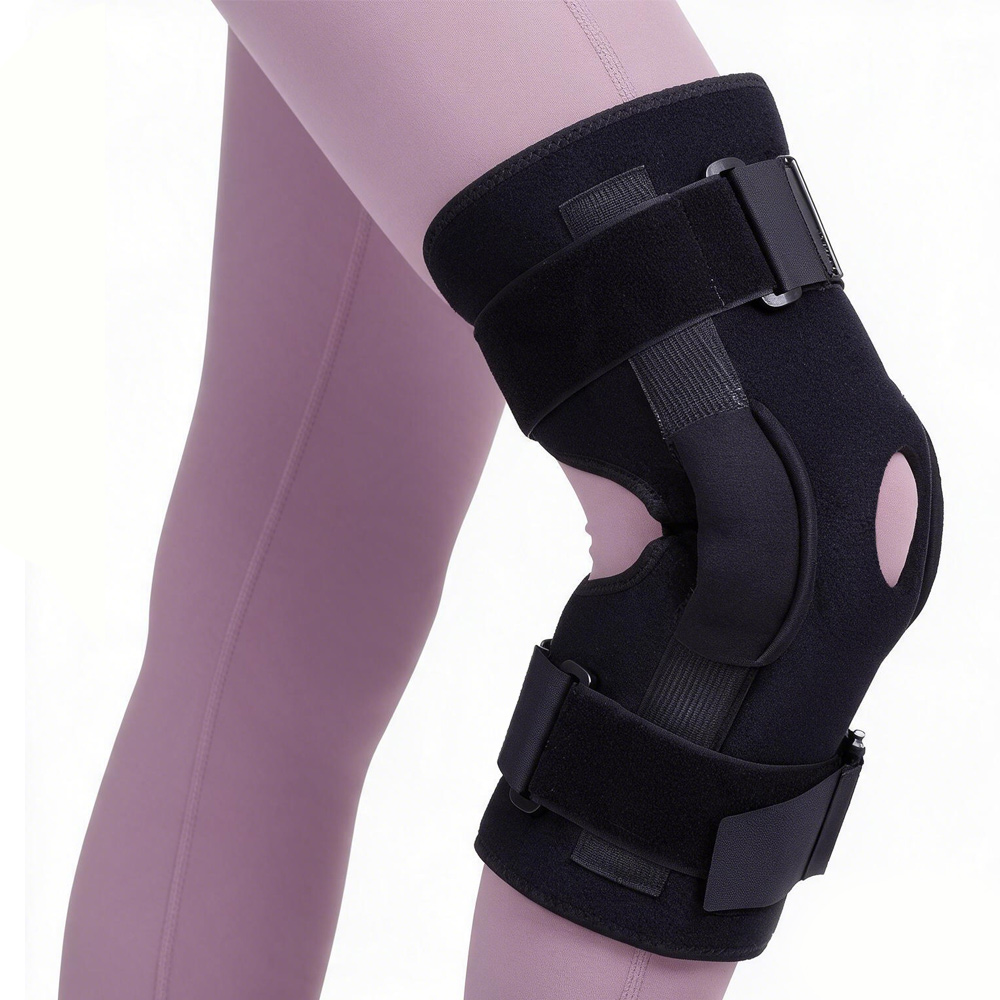
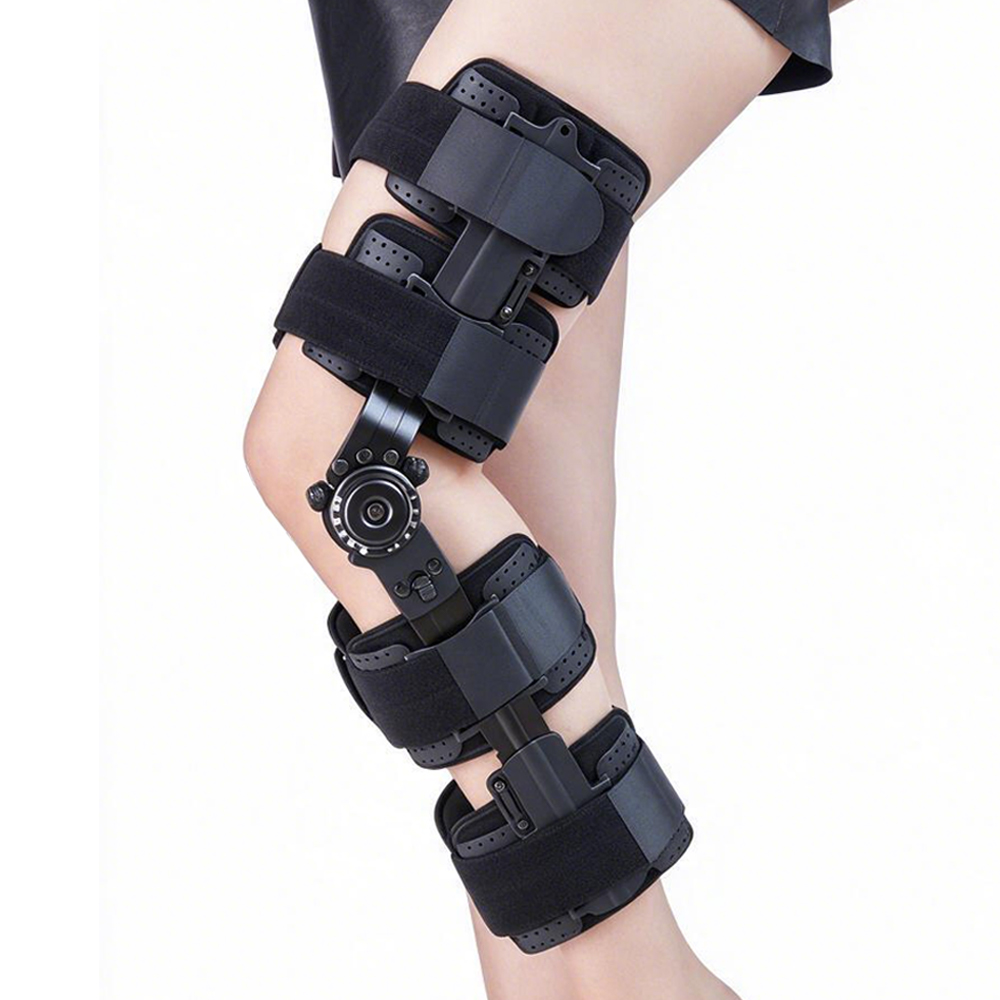
- Hinged knee braces: Use mechanical joints to guide movement or limit specified ranges of motion.
- Rigid knee orthoses: Use structured frames or shells to provide external support and restrict unwanted movement.
- Patellar support braces: Incorporate specific components to help guide or stabilize the patella.
- Unloader knee braces: Use a frame and strap arrangement designed to apply corrective forces across the knee joint.
- Elastic knee supports: Rely mainly on textile construction to provide compression and light support.
These designs are not interchangeable. The intended function determines the required frame strength, joint mechanism, fixation method and material combination.
2. Material Selection for Knee Support Orthotics
Material selection should reflect the mechanical role of each component rather than focus on a single material across the entire product.
Thermoplastics
Polypropylene (PP) and other thermoplastics are used in molded shells and selected structural components. They offer a balance of formability, stiffness and weight.
Material thickness, forming conditions and shell geometry all affect the final rigidity. For custom-molded components, dimensional accuracy is also important for maintaining the intended fit.
Metal Alloys
Aluminum and stainless steel are commonly used in hinge mechanisms and reinforcement components.
Aluminum can reduce component weight, while stainless steel offers strength and wear resistance. The choice depends on the required load capacity, hinge design and product construction.
Technical Fabrics and Elastic Materials
Nylon, polyester, neoprene and elastic fabric blends are used in sleeves, straps and flexible sections.
Their key properties include tensile strength, stretch recovery, abrasion resistance and dimensional stability. These characteristics affect how well the orthosis stays in position during repeated movement.
Foam Padding
EVA foam and other cushioning materials are used at selected contact points between the frame and the limb. Their purpose is to improve the interface and help distribute localized pressure.
Foam density, thickness and compression behavior should be matched to the frame design. Padding must remain securely attached throughout repeated use.
3. Structural Design and Component Integration
The frame, hinges and fixation system work together to control how the orthosis responds to movement and external forces.
Frame Geometry and Load Distribution
The frame provides the main structural support in many rigid and hinged knee orthoses. Its geometry determines how forces are transferred through the device and how securely it fits around the limb.
Designers need to consider frame width, contour, material thickness and reinforcement placement. Poorly positioned supports may create localized pressure or allow excessive movement between the orthosis and limb.
Hinge Position and Range of Motion
In hinged knee orthoses, joint placement is one of the most important design variables.
The mechanical hinge should be positioned to follow the knee’s movement as closely as the product design allows. Misalignment can cause the brace to shift, increase friction or interfere with movement.
Depending on the intended application, hinge systems may include adjustable flexion and extension stops. These mechanisms must operate consistently and remain securely fixed during use.
Strap Configuration and Fixation
Straps maintain the orthosis position and help transfer support forces between the frame and limb.
Their width, position, material and attachment points affect retention and pressure distribution. Strap anchors and stitching or bonding areas should withstand repeated tension without loosening or tearing.
Contact Surfaces and Padding
The interface between the orthosis and limb requires careful attention. Frame edges, strap positions and padding thickness can all affect contact pressure.
Padding should be placed where support is needed without interfering with hinge movement or overall brace alignment. Its shape and attachment method should also suit the frame geometry.
4. Key Stability Considerations
Knee orthotic stability depends on the combined performance of the frame, joint mechanism and fixation system.
Resistance to unwanted movement: The frame must provide sufficient structural rigidity to control the movement specified by the product design.
Mechanical alignment: Hinge positioning and joint clearance should be checked throughout the intended range of motion.
Brace retention: The fixation system must limit slipping and rotation during repeated flexion and extension.
Structural durability: Frames, hinges, fasteners and strap anchors must withstand the mechanical demands expected in the product’s intended application.
Increasing rigidity alone does not guarantee better stability. The design must balance support, alignment, retention and mobility.
5. Manufacturing and Quality Control
Production accuracy directly affects the consistency of knee support orthotics. Key manufacturing controls include:
- Thermoforming: Maintain consistent heating and forming conditions to control shell shape and dimensions.
- Component machining: Check hinge dimensions, hole positions and connection points.
- Assembly: Verify hinge alignment, fastener security and strap positioning.
- Bonding and stitching: Inspect padding attachment, seam strength and strap anchors.
- Dimensional inspection: Confirm frame symmetry, size specifications and component placement.
- Functional testing: Check hinge movement, range-of-motion stops, fixation strength and structural durability.
For hinged products, repeated flexion and extension testing can help identify wear, loosening and alignment problems before bulk production.
6. Sourcing Considerations for Knee Orthotic Manufacturers and Distributors
When evaluating a knee orthotic supplier, buyers should look beyond the product’s external appearance. The construction and production process need to match the intended technical requirements.
Important points include:
- Frame material, thickness and structural configuration
- Hinge type, adjustment mechanism and movement range
- Strap materials, attachment methods and fixation strength
- Padding specifications and contact-area design
- Available sizes and dimensional tolerances
- Sample development and functional testing
- Production capacity, MOQ and lead time
- Quality control and batch consistency
Providing clear drawings, material specifications and functional requirements can make product development more efficient and reduce unnecessary sample revisions.
Custom Knee Support Orthotics for B2B Projects
Developing knee support orthotics requires coordination between frame geometry, mechanical components, materials and fixation systems. Each element must work as part of the complete structure.
For B2B projects, manufacturers need to establish product specifications early and verify them through sample development and functional testing. This helps maintain consistency from initial design to bulk production.
Ideastep supports orthotic product development and manufacturing projects for business customers. Buyers can discuss knee support product specifications, material requirements, sample development and bulk supply arrangements with the team.
Recommended Reading: Large Knee Support Brace for Sports and Orthopedic Supply.