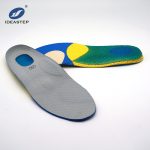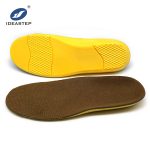
For wholesalers, distributors, podiatry suppliers, and footwear brands, sourcing the best insoles for big toe arthritis requires more than finding a comfortable product at a competitive price.
Buyers need to consider support, cushioning, material selection, product consistency, sizing, customization, MOQ, and production capacity before choosing a long-term supplier.
This guide focuses on the key factors B2B buyers should consider when sourcing insoles for customers who experience big toe joint discomfort.
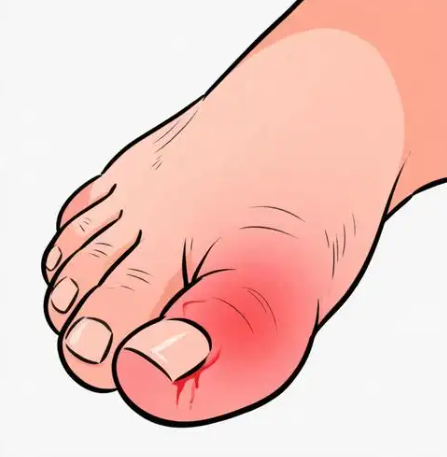
What Should Insoles for Big Toe Arthritis Offer?
Big toe arthritis, including conditions such as hallux rigidus, can be associated with stiffness and discomfort around the big toe joint. Appropriate footwear and insole design may help improve overall foot comfort and support.
For B2B buyers, three product characteristics deserve particular attention.
Forefoot Support
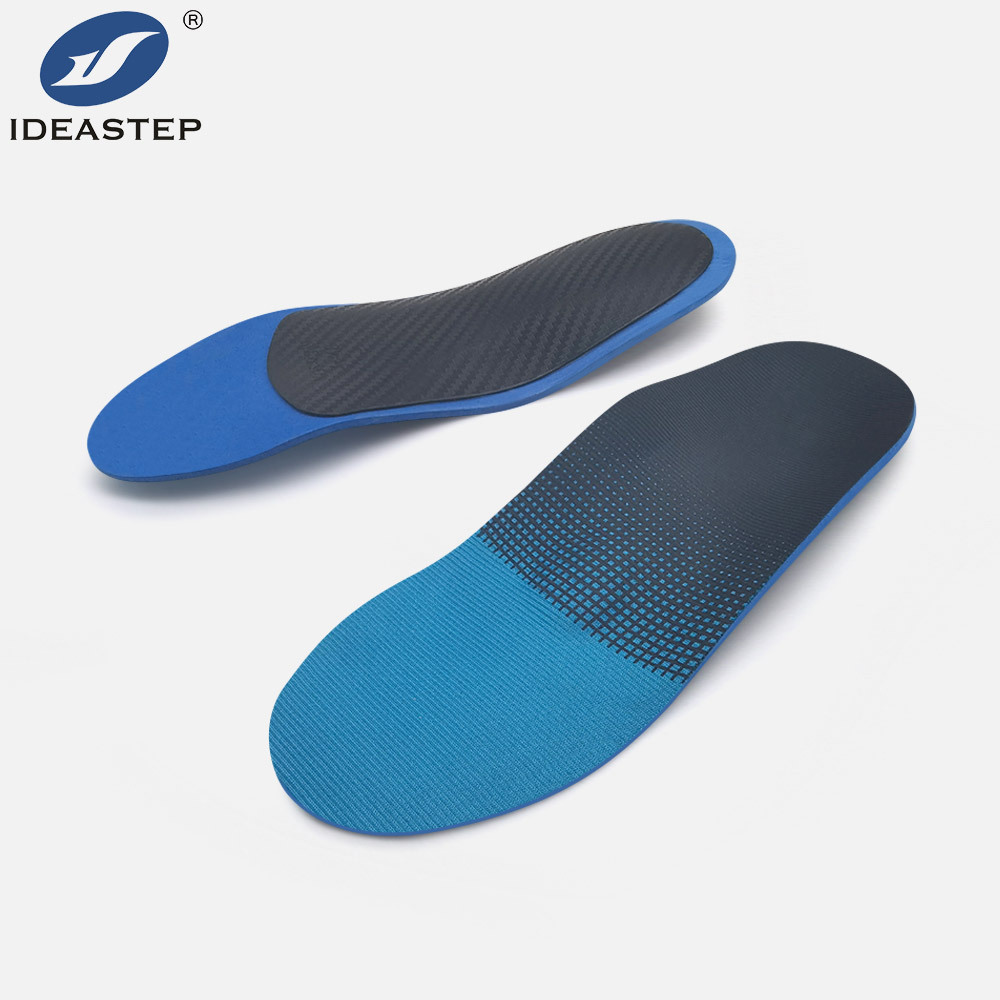
The forefoot is heavily involved during walking and push-off. Depending on the product design, a firmer support layer or structural component can help create a more stable platform inside the shoe.
Manufacturers may use TPU, firm EVA, thermoplastic materials, or other support components to achieve different levels of stability.
Cushioning
Cushioning is important for everyday walking and standing. However, an insole should not simply be as soft as possible.
A combination of different foam densities can provide cushioning where needed while maintaining sufficient structural support.
Multi-density EVA is commonly used for this purpose because it offers flexibility in balancing cushioning, resilience, weight, and support.
Arch Support
The big toe does not work independently from the rest of the foot. Arch structure and overall foot stability can also influence how loading is distributed during walking.
For wholesale products, buyers should consider whether the arch profile matches the intended customer group rather than using the same support level for every product.
Best Materials for Wholesale Orthotic Insoles
Material selection affects product performance, durability, weight, and cost.
EVA Foam
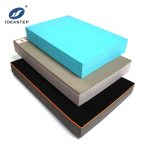
EVA is one of the most widely used materials for orthotic and comfort insoles. Different densities and hardness levels allow manufacturers to create cushioning zones and firmer support areas.
For B2B sourcing, ask suppliers for specific material specifications rather than simply accepting “EVA” as the product description.
TPU
TPU can provide additional structural support and controlled flexibility. It is often combined with EVA to create a lightweight, multi-layer construction.
PU Foam
PU can provide a different cushioning feel and can be used in various insole constructions depending on the required performance and price range.
Top-Cover Materials
The top cover affects comfort, breathability, moisture management, and product appearance. Common options include microfiber, mesh, polyester fabric, and micro-velvet.
For private-label products, the top cover can also be customized to match a brand’s positioning.
Prefabricated or Custom Insoles?
For most wholesalers, prefabricated products are easier to stock and distribute. They can be offered in different sizes and support configurations without requiring individual customization.
A standard product range might include:
- Everyday cushioning insoles
- Arch support insoles
- Metatarsal support insoles
- Firm support insoles
- Sports and walking insoles
Custom or semi-custom insoles become more attractive when a buyer wants to differentiate its product line or serve specialized fitting requirements.
Depending on the manufacturer’s capabilities, buyers may customize:
- Support structure
- EVA density and hardness
- Cushioning layers
- Top-cover materials
- Size and shape
- Colors
- Logo
- Packaging
For distributors developing their own brands, OEM/ODM manufacturing can provide much more flexibility than standard catalog sourcing.
How to Choose a Wholesale Insole Supplier
The right supplier should be evaluated on both product quality and manufacturing capability.
1. Check the Product Specification
Before comparing prices, confirm:
- Material composition
- Density and hardness
- Insole thickness
- Support structure
- Size range
- Top-cover material
- Expected application
A lower-priced product is not necessarily more competitive if the specifications are different.
2. Request Samples
Samples allow buyers to evaluate the actual product instead of relying only on photos or specifications.
Pay attention to:
- Overall workmanship
- Cushioning
- Support
- Flexibility
- Dimensions
- Surface finish
- Fit inside the target footwear
For customized products, the sample stage should be completed before mass production.
3. Evaluate OEM/ODM Capability
For B2B buyers, customization can be an important competitive advantage.
A capable manufacturer should be able to discuss material combinations, structural modifications, branding, packaging, and other product requirements.
This allows wholesalers to develop a private-label orthotic insole range instead of competing solely with generic products.
4. Confirm MOQ and Production Capacity
Before placing an order, confirm:
- MOQ
- Sample lead time
- Production lead time
- Bulk pricing
- Packaging requirements
- Monthly production capacity
- Repeat-order capability
A supplier may be suitable for a small trial order but unable to support larger volumes later. It is better to evaluate scalability from the beginning.
5. Review Quality Control
Consistent quality is critical for repeat wholesale orders.
Ask how the manufacturer controls:
- Raw materials
- Dimensions
- Bonding
- Trimming
- Surface finishing
- Finished-product inspection
The goal is to ensure that the product received in the next production run matches the approved sample.
Why Direct Manufacturer Sourcing Can Benefit Wholesalers
Working directly with an experienced manufacturer can simplify product development and communication.
Instead of coordinating separate suppliers for materials, branding, packaging, and production, B2B buyers can work with one manufacturing partner.
The main advantages include:
Product customization – Modify materials, support structures, colors, branding, and packaging according to market requirements.
Better communication – Discuss specifications directly with the production and technical teams.
More consistent quality – Establish a defined specification based on an approved sample.
Scalable production – Move from product testing to regular bulk orders as demand increases.
For established distributors and footwear brands, these advantages can be more valuable than simply finding the lowest unit price.
A Simple B2B Buying Checklist
Before placing a wholesale order for big toe arthritis insoles, make sure you have confirmed:
- Product structure and intended application
- Material specifications
- Cushioning and support characteristics
- Size range
- Sample quality
- MOQ and pricing
- Production lead time
- OEM/ODM options
- Private-label packaging
- Quality-control procedures
- Repeat-order capacity
Build a Better Wholesale Insole Range
Rather than relying on one universal product, wholesalers can create a small range with different support and cushioning levels.
Standard Model
Lightweight EVA with everyday cushioning and basic arch support.
Support Model
Multi-density EVA with a firmer support layer or TPU component.
Premium Model
Multi-layer construction with enhanced cushioning, upgraded top cover, and more advanced support features.
Custom Model
OEM/ODM solution developed around the buyer’s target market and brand requirements.
This approach gives distributors more flexibility to serve different customer segments while maintaining a consistent product category.
Conclusion
Choosing the best insoles for big toe arthritis for wholesale distribution is ultimately about finding the right balance between product performance, manufacturing consistency, customization, and commercial viability.
For B2B buyers, the best supplier is not necessarily the one offering the lowest quotation. Look for a manufacturer that can provide reliable materials, consistent production, flexible OEM/ODM options, quality control, and the capacity to support long-term orders.
If you are sourcing wholesale orthotic insoles or developing a private-label insole range, an experienced manufacturer can help you move from product concept and sampling to reliable bulk production.
Looking for a Wholesale Orthotic Insole Supplier?
Discuss your target market, material requirements, support structure, size range, branding, and packaging with our team.
Contact Ideastep for OEM/ODM orthotic insole solutions and request a sample for evaluation before your bulk order.
Explore More: Reliable company for high arch insoles.