Persistent Supply Pain Points for Footwear Brands and Clinical Partners
Footwear developers, podiatry clinics and wholesale distributors routinely hit limits when working with standard prefabricated insoles. Generic templates rarely align with unique shoe last geometry, and they cannot be tuned across the wide range of patient biomechanics. Many suppliers offer only surface-level branding changes rather than structural adjustments, leaving buyers to deal with inconsistent fit, high return rates and weak product differentiation. For clinics, in-house fabrication calls for skilled technicians and costly equipment, while outsourced options often come with rigid MOQs, unclear compliance paperwork and unreliable turnaround.
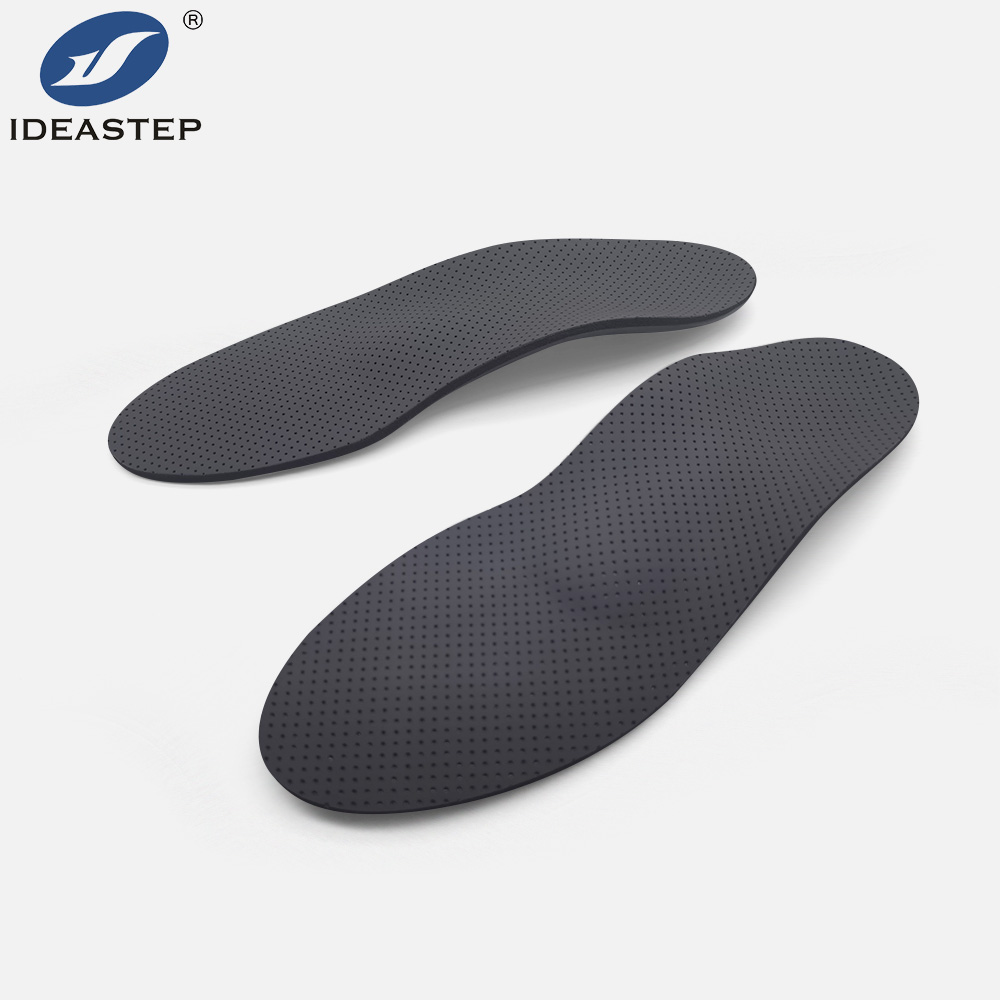
How Bespoke Insole Manufacturing Addresses Footwear Brand Challenges
Shoe brands need insole geometry that complements their lasts, rather than fighting them. Bespoke production cuts down much of this friction:
- Last-aligned design: Engineers build each insole profile from your last files, CAD data or physical samples. Thickness, heel pocket contour and toe-box clearance are locked during sampling, so inserts fit cleanly without heavy trimming on assembly lines.
- Product tiering without new shoe molds: One base footwear model can support multiple support grades, from soft comfort inserts to semi-rigid corrective variants. This lowers tooling investment and reduces inventory complexity.
- Consistent batch performance: Digital workflows standardise arch height, flex zones and cushion layup. Variation between production runs stays tightly controlled, which lowers customer complaints and return volumes.
- Material matching by use case: Teams pick substrates from cork, EVA, TPU, carbon fiber and PORON to match the shoe’s purpose, whether it is workwear, athletic, safety or formal dress footwear.
Solutions for Clinical and Podiatry Supply Workflows
Clinics prioritise predictable correction, audit-ready documentation and flexible order sizes for individual prescriptions or small private label stock.
- Patient-specific biomechanical tuning: Bespoke insoles are built from 3D scans, plaster casts or prescription notes. Stiffness, posting and pressure redistribution are adjusted for flat feet, high arches, plantar fasciitis, foot drop and diabetic foot care.
- Reduced in-lab workload: Outsourcing the full fabrication cycle frees clinical staff from grinding, forming and laminating work. Providers concentrate on assessment, patient education and follow-up care instead of manufacturing.
- Scalable compliance support: Validated production processes generate batch traceability, risk assessment records and biocompatibility test data required for ISO 13485 and MDR medical device filing.
- Mixed order flexibility: A reliable bespoke manufacturer supports both individual prescription orders and small clinic stock runs, avoiding the large minimums that rule out smaller practices.
Digital Bespoke Workflow: From Data Capture to Finished Insole
- Foot data is captured via 3D scan, pressure mapping or traditional plaster casting, then shared with the manufacturing team
- Biomechanical specs and footwear last constraints are added to the digital design file
- CAD adjustment sets arch height, heel cup depth, flex zones and posting angles
- CNC milling, compression curing or thermoforming shapes the selected substrate
- Cushion layers, top covers and edge bevelling are applied, followed by quality inspection
- Finished units are labelled, packaged and shipped with full batch records for clinical traceability
This digital pipeline cuts remake rates common in older manual casting workflows, where distortion and technician variation often led to ill-fitting orthotics.
Key Tradeoffs to Plan for Bespoke Insole Sourcing
- Lead time: Fully custom, prescription-driven production runs slower than prefabricated stock. Most partners schedule dedicated sampling windows to align with brand launch timelines or clinic referral volumes.
- Unit cost: Bespoke work carries higher per-unit pricing than mass-standard inserts. The value appears in fewer returns, stronger clinical outcomes and premium margin positioning.
- Spec locking: Once golden samples are approved, material stack and geometry changes trigger new sampling cycles. Clear specification documents prevent scope creep and unexpected delays.
When Bespoke Insoles Are the Right Supply Strategy
- Footwear brands launching premium, orthopaedic or occupational lines where fit consistency is a core selling point
- Clinics treating complex foot pathologies that prefab orthotics cannot adequately correct
- Distributors building differentiated catalogues and moving away from low-margin commodity insoles
- Programs requiring medical-grade traceability and regulatory documentation for EU or other regulated markets
Many established buyers combine both models: prefabricated SKUs handle high-volume routine demand, and bespoke manufacturing covers complex prescriptions and premium product releases.
Conclusion
Bespoke custom shoe insoles resolve two core supply challenges at once: they align precisely with footwear geometry for brands, and deliver targeted, traceable biomechanical correction for clinical providers. The shift from generic stock to data-driven custom production does not suit every SKU, but it gives partners focused on fit quality, clinical results and higher margins a clear competitive edge.
Send over your last specifications, prescription workflow requirements or target material stack. We can map sampling schedules, validate compliance documentation and build insoles matched to your footwear or clinical programme.
FAQ: Bespoke Custom Shoe Insoles for Footwear and Clinical Supply
Q1: What inputs do you need to start bespoke insole production?
We accept 3D foot scans, plaster casts, shoe last files, CAD drawings or marked reference samples. Each brief should define stiffness targets, thickness limits and top cover requirements.
Q2: Can bespoke manufacturing support both brand bulk orders and single patient prescriptions?
Yes. Flexible production lines handle private label batch runs and individual prescription pairs, though lead times and pricing structures differ between the two.
Q3: How does bespoke insole production support MDR and ISO 13485 compliance?
Each production run carries traceability logs, material certificates and validation records. These files form the technical documentation required for medical device audits.
Q4: Is bespoke manufacturing suitable for safety footwear or work boot lines?
Absolutely. Bespoke profiles can be engineered to fit tight internal volumes while maintaining support for long-standing occupational use, paired with slip-resistant or anti-fatigue top materials.
Q5: What is the difference between bespoke insoles and simple white-label prefabricated insoles?
White-label options only add branding to an existing mould. Bespoke manufacturing redesigns the underlying arch, heel and flex geometry to meet unique footwear or clinical requirements.
Q6: Can I switch material stacks after sampling is complete?
Material changes require new sampling and performance checks. It is most efficient to lock substrate, cushioning and top cover specs before mass production begins.
Related Reading: Custom Shoe Insoles: Bulk Custom Arch‑Support Solutions For OEM And Clinical Sourcing.