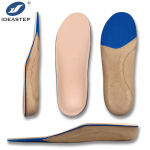
Metatarsal support insoles are designed around the forefoot rather than relying on cushioning alone. The shape and position of the metatarsal support, together with the surrounding footbed structure, determine how the insole feels under the foot.
For custom production, these details need to be considered before the final design is fixed. A small change in pad height, position, or material hardness can change the overall feel of the insole.

Understanding the Metatarsal Support Structure
The metatarsal area covers the front part of the foot behind the toes. An insole designed for this area may use a metatarsal pad or dome to provide a raised support point beneath the forefoot.
The pad is not simply placed in the center of the forefoot. Its:
- Position
- Height
- Shape
- Width
- Transition into the footbed
all affect the finished product.
The correct design depends on the intended foot profile, shoe construction, insole thickness, and the amount of support required.
Combining Forefoot Support with the Rest of the Insole
A metatarsal feature works as part of the entire insole structure.
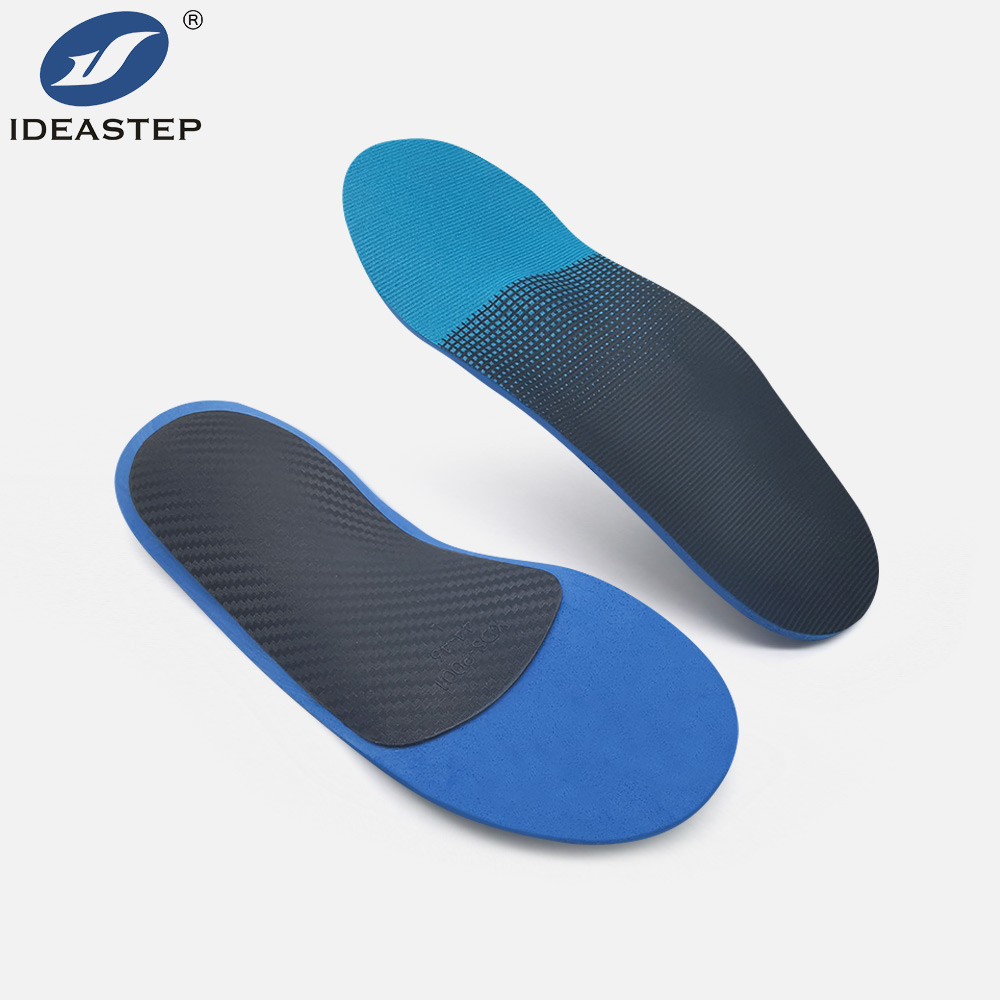
A contoured arch can be used to provide additional midfoot support, while a heel cup helps contain the rearfoot. The forefoot area can remain more flexible, depending on the footwear and intended use.
This creates a more balanced construction than treating the metatarsal pad as a separate component.
For example, a firmer support layer can be combined with softer material around the heel or forefoot. The transition between these areas is important because an abrupt change in hardness or thickness may affect comfort.
Choosing Materials
There is no single material that suits every metatarsal support insole. The choice depends on the required structure, cushioning, thickness, durability, and cost.
EVA is commonly used for lightweight footbeds and cushioning layers. Different hardness levels allow the material to be used in both softer and more supportive constructions.
TPU can be used for structured support components where greater stability is required.
PU, PORON, and memory foam are options for cushioning layers, while fabric, mesh, and velvet can be used for different top-cover requirements.
In multi-layer designs, the materials need to work together. Changing one layer can affect the flexibility, thickness, and feel of the complete insole.
Customizing the Insole for Different Shoes
The same metatarsal support design may not work equally well in every type of footwear.
Work shoes, casual shoes, sports footwear, and shoes with limited internal space can require different thicknesses and structures. A thinner design may be needed where shoe volume is restricted, while a more structured construction may be suitable when there is sufficient space.
During development, manufacturers can adjust:
- Size range
- Metatarsal pad position and shape
- Arch height
- Heel cup depth
- Overall thickness
- Material hardness
- Top-cover material
- Color and logo
The important point is to evaluate these changes as part of the complete insole rather than individually.
From Sample to Production
Custom orders usually begin with a sample, drawing, specification, or basic product concept.
The first step is to review the dimensions, materials, structure, and intended application. A sample can then be produced for evaluation.
During sampling, attention can be given to the metatarsal support, arch contour, heel cup, thickness, cushioning, and surface material. If something needs to change, the design can be adjusted before production begins.
Once the final sample is approved, the main specifications should be recorded. These normally include material details, dimensions, layer structure, component positions, logo requirements, and packaging information.
This record becomes the reference for production and makes repeat orders easier to reproduce.
Quality Checks During Production
Quality control does not need to be complicated, but the important dimensions should be consistent.
Depending on the product specification, checks may include:
- Material thickness and hardness
- Overall length and width
- Metatarsal pad position
- Arch and heel structure
- Layer alignment
- Bonding
- Edge finishing
- Logo placement
The approved sample can be used as a physical reference alongside the production specifications.
If a material or structural component needs to be changed during production, it should be reviewed before continuing with the order.
Low MOQ for New Designs
For a new product, a smaller initial order can be useful when the design has not yet been tested in the market.
It gives the buyer an opportunity to review the finished product, packaging, and customer response before moving to larger quantities. For the manufacturer, it also provides an opportunity to identify production issues and refine the specification.
MOQ depends on factors such as materials, tooling, production method, packaging, and customization requirements, so it is better to confirm it together with the product specifications.
Ideastep Custom Insole Production
Ideastep works with custom orthotic and functional insole projects, including designs using EVA, TPU, and other cushioning or support materials.
A project can start from an existing sample, drawing, specifications, or a new product idea. Depending on the construction, the team can work on material selection, structural adjustments, sizing, top covers, branding, packaging, and OEM/ODM production.
For a new metatarsal support design, providing the basic dimensions, material requirements, target quantity, and intended footwear application is a useful starting point for evaluating the project.
Conclusion
Metatarsal support insoles are built around several connected details: support position, forefoot cushioning, arch structure, heel containment, material selection, and overall thickness.
For custom and bulk production, keeping these details clearly defined from sampling through production helps maintain the intended structure and makes repeat orders more consistent.
If you are developing a metatarsal support insole, please contact the Ideastep team with your sample, drawing, or product requirements for further discussion.
Related Reading: How to use metatarsal pads?.