
Why Many Sports Injuries Start from the Feet
When people think about sports injuries, they often focus on the knees, ankles, or muscles.
But in reality, many problems begin at the foundation of movement — the feet.
During activities like running, jumping, or quick direction changes, the feet absorb repeated impact forces several times your body weight. If these forces are not properly managed, they can transfer upward and lead to:
-
Heel pain
-
Knee strain
-
Ankle instability
-
Long-term overuse injuries
This is why foot support plays a critical role in injury prevention.
The Hidden Problem: Poor Shock Absorption
Most standard insoles provide only minimal cushioning.
This means:
-
Impact forces are not effectively absorbed
-
Pressure is concentrated on specific areas
-
Muscles and joints compensate for the lack of support
Over time, this can result in:
-
Faster fatigue
-
Reduced performance
-
Higher injury risk
Proper shock absorption is not just about softness — it requires material engineering and structural design.
Stability Matters More Than You Think
In dynamic sports, your foot is constantly exposed to:
-
Lateral movement
-
Twisting forces (torsion)
-
Sudden stops and pivots
Without proper support, the foot can:
-
Roll inward excessively (overpronation)
-
Lose alignment
-
Become unstable inside the shoe
This instability increases the likelihood of:
-
Ankle sprains
-
Ligament strain
-
Reduced movement efficiency
The Balance Between Cushioning and Control
A well-designed sports insole must achieve two things at the same time:
-
Absorb impact (to protect joints)
-
Control movement (to maintain stability)
Too soft → lacks support
Too hard → lacks comfort
The best solutions combine elastic materials with structural reinforcement.
How Modern Sports Insoles Solve These Problems
Advanced sports insoles use a multi-layer system to manage both impact and stability:
-
Cushioning layers (such as EVA or gel) reduce landing forces
-
Structural components (such as TPU) stabilize the foot
-
Targeted padding improves pressure distribution
For example, designs like the JH‑20904 sports insole integrate:
-
Lightweight EVA for responsive cushioning
-
TPU support for anti‑torsion stability
-
Forefoot padding to reduce pressure during push-off
This type of construction helps create a more balanced and controlled movement experience — especially during high-impact sports.
Why Forefoot Support Is Often Overlooked
Many people focus only on heel cushioning, but the forefoot plays a major role in movement.
During sports, the forefoot is responsible for:
-
Push-off power
-
Acceleration
-
Direction changes
Without proper cushioning in this area:
-
Pressure builds up quickly
-
Discomfort increases
-
Performance decreases
Targeted forefoot padding helps distribute force more evenly and improves overall comfort.
Lightweight Design and Energy Efficiency
Another important factor is weight.
Heavy or bulky insoles can:
-
Slow down movement
-
Increase energy consumption
-
Disrupt natural foot motion
Modern designs focus on lightweight materials that provide support without restriction, allowing athletes to move more naturally and efficiently.
Who Benefits Most from Sports Insoles?
Sports insoles are especially beneficial for:
-
Athletes involved in high-impact sports
-
Individuals experiencing foot fatigue or discomfort
-
Users needing better stability and alignment
-
Footwear brands aiming to enhance performance value
Even for everyday training, improved foot support can make a noticeable difference.
Building Performance from the Ground Up
Foot health is often overlooked, but it directly affects how the entire body moves.
By improving:
-
Shock absorption
-
Stability
-
Pressure distribution
Sports insoles help reduce injury risk and support better performance over time.
Solutions like the JH‑20904 represent how modern insole design is evolving — combining biomechanics, material science, and practical performance needs into one functional component.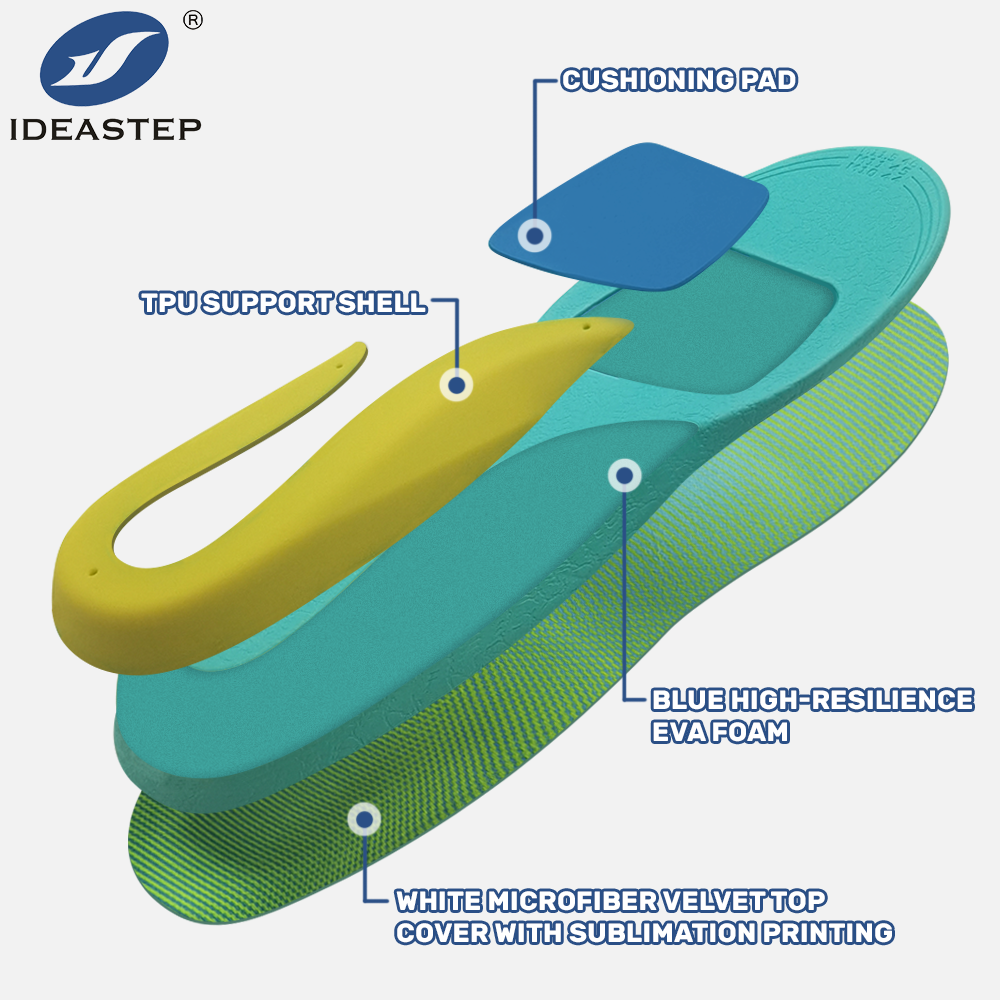
Step Smarter, Move Better
In sports, every step matters.
Choosing the right insole is not just about comfort — it’s about protecting the body, improving efficiency, and supporting long-term performance.