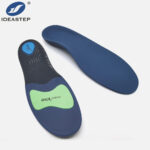
Introduction: Why Supplier Selection Matters in Orthotic Insole Development
Choosing an orthotic insole supplier is not just a sourcing decision—it directly shapes your product quality, brand positioning, and long-term market performance. In the footwear industry, especially within OEM and ODM development, the supplier you work with often determines whether your product line can maintain consistency, scalability, and differentiation.
Many B2B buyers underestimate this stage and focus only on pricing. In reality, issues such as inconsistent cushioning, unstable materials, or weak structural design usually trace back to supplier capability rather than the design itself.
A reliable orthotic insole manufacturer should act as a development partner, not just a production vendor.
Core Criteria for Evaluating an Orthotic Insole Supplier
OEM and ODM Development Capability
A qualified supplier should have full OEM/ODM development capability, not just assembly or copying ability. This includes in-house mold development, multi-density material structuring, and the ability to translate biomechanical requirements into physical insole designs.
For orthotic insoles, this is especially important because structure—such as arch height, heel cup depth, and pressure distribution zones—directly affects performance.
Material Engineering and Selection Expertise
Orthotic insoles typically rely on multiple materials such as EVA, PU, TPU, gel, and fabric layers. A capable supplier should understand how these materials interact rather than treating them as isolated components.
For example, EVA may be used for cushioning layers, while TPU or reinforced shells provide structural support. Without proper material coordination, even a well-designed insole will lose stability during real-world use.
Production Consistency and Batch Stability
In B2B production, consistency matters as much as performance. Buyers should evaluate whether the supplier can maintain stable density, hardness, and compression behavior across large production batches.
Inconsistent foam behavior is one of the most common reasons for product returns in private label insole programs.
Quality Control and Testing Standards
A reliable supplier should operate under structured quality control processes, including compression set testing, wear simulation, and pressure distribution validation.
While certifications such as ISO or CE are important, real performance validation comes from internal testing systems and long-term production data.
Types of Orthotic Insole Suppliers in the Market
Trading Companies vs Manufacturing Factories
Trading companies typically provide sourcing convenience but limited technical control. Manufacturing factories, on the other hand, offer better cost efficiency, engineering input, and customization flexibility.
For orthotic insole development, factory-based partners are generally more suitable for long-term brand building.
Standard Product Suppliers vs Custom Development Partners
Standard suppliers focus on pre-made designs with limited modification options. Custom development partners work closely with brands to create tailored solutions based on foot structure, target users, and product positioning.
For competitive footwear brands, customization is often essential for differentiation.
Medical-Oriented vs Sports-Oriented Manufacturers
Medical orthotic suppliers typically focus on biomechanical correction and clinical support. Sports-focused manufacturers prioritize energy return, lightweight structure, and shock absorption.
Understanding your target market helps determine which type of supplier is more appropriate.
Key Technical Capabilities You Should Evaluate
Biomechanical Design Understanding
A strong supplier should understand foot biomechanics, including arch support behavior, gait alignment, and pressure distribution patterns. Without this foundation, orthotic design becomes purely cosmetic rather than functional.
Tooling and Mold Development Capability
Custom orthotic insoles require precise mold engineering. The supplier should be capable of rapid prototyping and iterative adjustments based on sampling feedback.
Material Density and Structural Control
One of the most important technical strengths is the ability to control EVA density and multi-layer structure design. Different zones within the insole may require different hardness levels to achieve balanced performance.
B2B Factors That Influence Supplier Selection
MOQ Flexibility and Development Support
For many brands, especially in the early stages, flexible MOQ is critical. A capable supplier should support small trial orders without compromising production standards.
Lead Time and Supply Chain Stability
Reliable suppliers maintain predictable sampling and mass production timelines. Delays in development cycles often indicate weak internal production planning.
Long-Term Cost Efficiency
The lowest unit price is not always the best option. Stable production, fewer defects, and consistent quality usually result in better long-term cost efficiency for B2B buyers.
Warning Signs of an Unreliable Supplier
Lack of Engineering Capability
If a supplier cannot explain structural design choices or material behavior, they are likely not capable of supporting true orthotic development.
Inconsistent Product Quality
Variations in density, shape, or cushioning performance between batches are strong indicators of weak process control.
Limited Customization Ability
Suppliers that only offer catalog-based products without structural modification capability are not suitable for brand-level development.
What a Reliable Orthotic Insole Supplier Should Offer
A strong supplier is not defined by a single feature, but by a complete capability system, including:
- Material engineering expertise (EVA, PU, TPU, gel combinations)
- Biomechanical design understanding
- OEM/ODM development capability
- Stable mass production system
- Consistent batch quality control
Conclusion: The Right Supplier Defines Your Product Ceiling
In orthotic insole development, the supplier you choose will directly influence how far your product line can grow. Beyond manufacturing, the right partner contributes to design improvement, material optimization, and long-term product stability.
For brands competing in the global footwear market, selecting a reliable orthotic insole supplier is not just a procurement step—it is a strategic decision that shapes product identity and market success.
Recommended Orthotic Insole Suppliers: Ideastep: A Leading Orthopedic Insole Manufacturer in China