Understanding the Difference between orthopedic and comfort insoles has become increasingly important for footwear brands, medical suppliers, and OEM/ODM manufacturers operating in today’s segmented global insole market.
In practice, these two product categories are often used in completely different application scenarios, with distinct design logic, material systems, and production requirements.
As the insole industry continues to evolve, buyers are no longer evaluating products only by softness or comfort.
Instead, they are making decisions based on functional positioning—whether the product is designed for biomechanical correction or general cushioning support.
This distinction directly affects product development strategy, manufacturing process, and target market selection.
1. Why the Difference between orthopedic and comfort insoles matters in real manufacturing
In most OEM and ODM manufacturing environments, insole products are developed for clearly defined market purposes.
Orthopedic insoles and comfort insoles may look similar at first glance, but they serve different levels of foot support needs.
From a production perspective, this difference influences material selection, structural complexity, tooling investment, and even MOQ planning.
For B2B buyers, misunderstanding this segmentation often leads to product positioning issues in downstream markets.
2. What are orthopedic insoles?
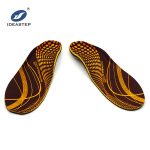
Orthopedic insoles are function-oriented foot support products designed to assist in correcting biomechanical imbalances and improving overall foot alignment.
In real-world applications, they are commonly developed based on foot pressure data, gait analysis, or clinical recommendations.
Key characteristics:
- Designed for biomechanical correction and structural support
- Often developed using 3D foot scanning and CAD/CAM systems
- Include multi-density structures for targeted pressure control
- Used in medical, rehabilitation, and professional sports applications
Compared to standard insoles, orthopedic designs typically require higher engineering precision and more advanced material integration to achieve functional stability in daily use.
3. What are comfort insoles?
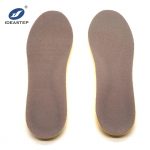
Comfort insoles are primarily designed to improve wearing comfort and reduce foot fatigue during daily activities.
Unlike orthopedic solutions, they are not intended to correct structural foot issues.
Key characteristics:
- Focus on cushioning and shock absorption
- Simple structure with fewer engineering layers
- Mainly use EVA or PU foam materials
- Widely used in casual footwear and general daily use
In manufacturing practice, comfort insoles are typically optimized for cost efficiency and production scalability rather than biomechanical correction.
4. Key Difference between orthopedic and comfort insoles
4.1 Functional purpose
Orthopedic insoles focus on structural correction and gait improvement, while comfort insoles are mainly designed for cushioning and fatigue reduction.
4.2 Design approach
Orthopedic insoles are developed based on foot anatomy data and biomechanical principles.
Comfort insoles are generally designed based on material softness and user experience requirements.
4.3 Material structure
Orthopedic insoles often use multi-layer or multi-density constructions combining EVA, PU, and TPU support elements.
Comfort insoles usually rely on simpler foam-based structures with fewer functional layers.
4.4 Target users
Orthopedic insoles are typically used by individuals with foot conditions or alignment issues.
Comfort insoles are more commonly used by general consumers seeking everyday comfort.
4.5 Application scenarios
Orthopedic insoles are widely used in medical footwear, rehabilitation programs, and performance-focused sports environments.
Comfort insoles are more common in casual shoes, work footwear, and light activity use.
5. Manufacturing differences from an OEM/ODM perspective
From a factory production standpoint, the Difference between orthopedic and comfort insoles becomes even more obvious.
Orthopedic insole production usually involves digital development processes such as 3D scanning, CAD/CAM modeling, and precise structural adjustment.
Comfort insoles, in contrast, are often produced using molding or foam compression processes that prioritize efficiency and cost control.
In real OEM/ODM production, this difference affects production cycle, customization depth, and investment in tooling and engineering systems.
6. B2B strategy: how to choose the right product direction
For B2B buyers, selecting between orthopedic and comfort insoles is not simply a product choice, but a market positioning decision.
- Medical and rehabilitation brands generally prioritize orthopedic insole development
- Footwear brands often combine both categories in their product portfolio
- Wholesalers benefit from offering a tiered product structure for different price segments
- OEM/ODM partners should align product design with target regulatory and market requirements
In most cases, a balanced product strategy helps companies serve both premium functional markets and mass consumer segments more effectively.
7. Market trends driving orthopedic insole demand
Several long-term trends are contributing to the growing demand for orthopedic insoles:
- Increasing prevalence of foot-related health conditions
- Rising awareness of posture and gait correction
- Growth in sports performance and injury prevention markets
- Shift toward functional and medical-grade footwear solutions
As a result, orthopedic insoles are gradually becoming a core category in the global foot care industry.
8. How to choose a reliable orthopedic insole OEM/ODM supplier
In B2B procurement, supplier capability plays a key role in product success and long-term stability.
- Ability to support biomechanical and orthopedic design development
- Experience with digital customization technologies such as CAD/CAM
- Material engineering expertise in EVA, PU, and TPU systems
- Stable mass production and quality control systems
- Experience in medical or professional footwear markets
9. Conclusion
The Difference between orthopedic and comfort insoles is not only a matter of product classification, but also reflects two different manufacturing and market strategies.
Orthopedic insoles focus on functional correction and clinical-level support, while comfort insoles prioritize everyday cushioning and general comfort.
For B2B companies, clearly understanding this distinction is essential for building a stable and scalable product portfolio in the global insole market.
In real business practice, companies that correctly separate these two categories are better positioned to serve both medical-grade and mass consumer demand effectively.
For OEM/ODM orthopedic insole development, bulk production, or customized foot support solutions, manufacturers can integrate both product lines to achieve broader market coverage and stronger competitiveness.
Let your curiosity guide your next read: Are orthopedic insoles useful?