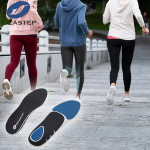
A truly high-quality orthotic insole is not defined by softness or cushioning alone. In professional practice, it is a biomechanical system designed to guide foot function, manage load distribution, and maintain structural stability over long-term use.
For footwear brands, orthopedic suppliers, and industrial safety shoe manufacturers, the difference between a standard insole and a well-engineered orthotic solution often shows up only after real-world wear—during prolonged standing, repetitive motion, and high-load conditions.
This article breaks down the core engineering principles behind a high-performance orthotic insole from a product development and B2B manufacturing perspective.
1. Material Engineering: The Foundation of Performance
Material selection is not just about comfort—it determines how the insole behaves under stress, heat, and repeated compression.
EVA, PU, and TPU in Real Applications
- EVA is widely used in cushioning layers where lightweight structure and shock absorption are required. It performs well in mass-market comfort insoles and work footwear applications.
- PU offers higher rebound stability and better long-term durability, making it suitable for premium orthopedic systems and high-frequency use environments.
- TPU is typically used in structural or reinforcement zones where shape retention and mechanical strength are critical.
In real product development, these materials are rarely used alone. Multi-density combinations are far more common, especially in OEM orthopedic designs.
Why Density Control Matters More Than Material Type
Two insoles made from the same EVA can perform completely differently if density and compression resistance are not controlled precisely. In B2B production, even small variations in foam formulation can lead to noticeable differences in user fatigue and support stability.
2. Arch Support: Functional Design, Not Just Elevation
One of the most misunderstood aspects of orthotic insoles is arch support. Effective design is not about simply “supporting the arch,” but about guiding the foot through a more controlled motion path.
How the Arch System Actually Works
The foot operates through a coordinated system of the medial longitudinal arch, lateral arch, and transverse arch. During walking or standing, these structures continuously adapt to load changes.
A well-designed orthotic insole does not rigidly block movement. Instead, it provides controlled resistance, helping prevent excessive collapse or overcorrection.
Custom Orthotics vs Standard Insoles
Standard insoles typically rely on generic arch heights. In contrast, custom orthotic systems are based on foot morphology and pressure mapping data.
From a manufacturing perspective, this difference significantly affects product positioning: standard products compete on price, while customized solutions compete on functional outcomes.
3. Pressure Distribution: Where Real Performance Becomes Visible
Pressure distribution is often the most direct indicator of insole quality during real-world use.
Managing Heel and Forefoot Load
In high-performance orthotic systems, heel strike and forefoot push-off zones are engineered separately. This allows the insole to respond differently during each phase of gait.
Without this separation, users often experience localized fatigue, especially in long-hour standing or walking environments.
Why Poor Designs Fail Under Real Conditions
In controlled testing, many low-cost insoles perform adequately. However, under continuous daily use, pressure tends to concentrate in specific zones, leading to discomfort and material breakdown.
This is where engineering design—not just material softness—becomes the deciding factor.
4. Manufacturing Precision: The Hidden Variable
Even a well-designed orthotic concept can fail if manufacturing precision is inconsistent.
Digital Modeling and Production Accuracy
Modern orthotic production increasingly relies on 3D scanning and CAD-based modeling. These systems help translate foot geometry into manufacturable structures with higher repeatability.
However, software accuracy alone is not enough. Tooling quality, mold stability, and material behavior during curing all influence final performance.
Multi-Layer Construction in Practice
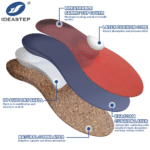
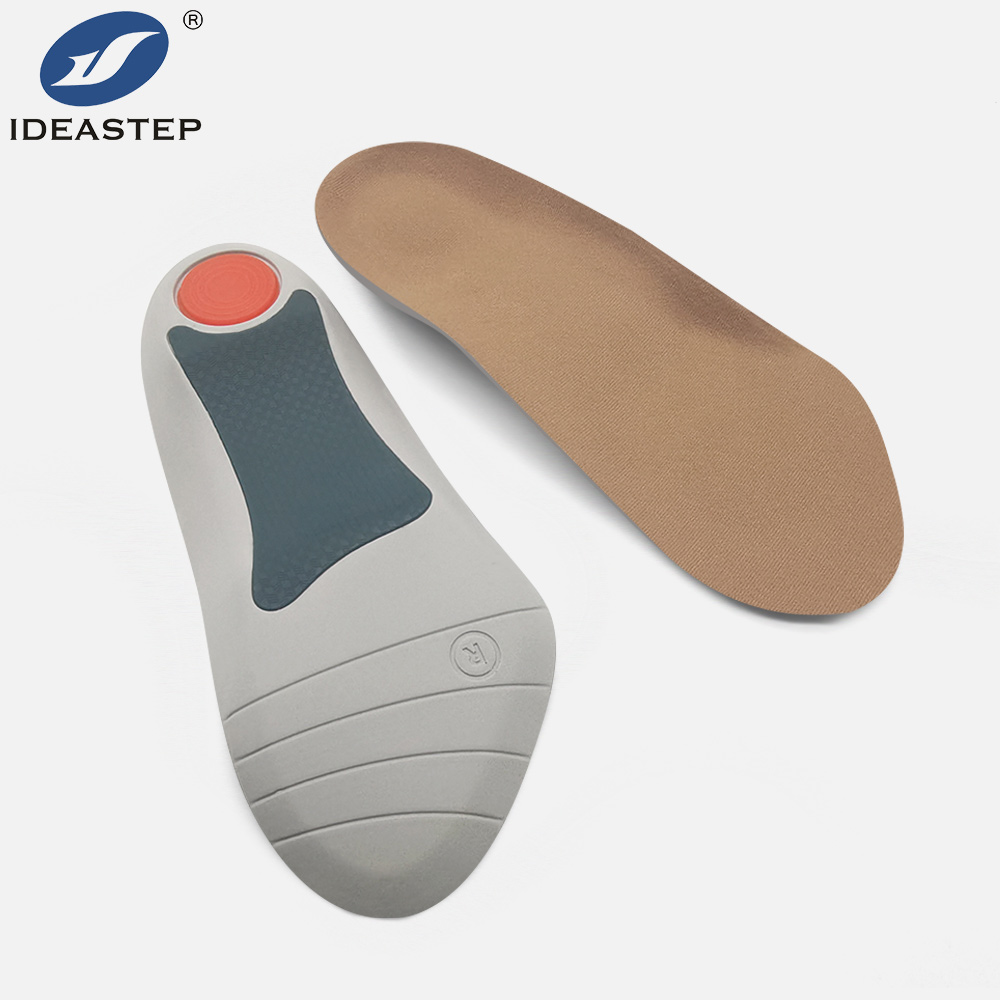
Most professional-grade orthotic insoles follow a layered structure:
- Top layer: comfort, moisture control, and skin interface stability
- Middle layer: arch control and biomechanical guidance
- Bottom layer: shock absorption and structural stability
The key challenge is not stacking materials, but ensuring these layers work as a single integrated system.
5. Durability: Long-Term Functional Stability
Durability in orthotic insoles is not only about physical wear resistance. It is about how long the product maintains its functional properties.
Some materials may look intact but lose rebound performance over time. Others may maintain shape but gradually lose cushioning efficiency.
For B2B applications such as work boots, healthcare footwear, or sports distribution, this performance decay directly affects brand reputation and return rates.
Consistency Across Production Batches
One of the most critical but often overlooked factors in large-scale procurement is batch consistency. Even slight variations in foam density, cutting tolerance, or lamination pressure can lead to inconsistent user experiences across different shipments.
6. Application-Specific Engineering
A high-quality orthotic insole is never universal. It is always designed around use case requirements.
Different Demands, Different Designs
- Sports footwear: Focus on energy return, flexibility, and dynamic cushioning
- Work boots: Emphasis on fatigue reduction, durability, and stability under static load
- Medical footwear: Prioritizes pressure relief and corrective alignment control
Condition-Based Design Requirements
Flat feet, high arches, plantar fasciitis, and diabetic foot conditions all require different structural strategies. In professional orthotic development, these are not variations—they are entirely different design categories.
7. Selecting a Manufacturing Partner: B2B Perspective
For brands and distributors, product quality is closely tied to manufacturing capability.
Key Evaluation Criteria
- Ability to control material consistency at scale
- Experience in OEM/ODM orthotic development
- Integration of biomechanical design expertise
- Quality control across multi-batch production
Sample Validation Is Not Optional
Before mass production, sample testing should evaluate not only comfort but also structural response, compression behavior, and long-term deformation risk.
In professional sourcing, the sample phase is often where production risks are identified—not after delivery.
Conclusion: What Truly Defines a High-Quality Orthotic Insole
A high-quality orthotic insole is the result of controlled material engineering, biomechanical understanding, and manufacturing precision working together as a single system.
In real-world applications, performance differences rarely come from a single feature. They come from how well the entire structure behaves under continuous load over time.
For B2B buyers, the most important decision is not choosing the “best material,” but selecting a manufacturing partner capable of maintaining consistency, customization depth, and engineering reliability at scale.
That is what ultimately defines a high-quality orthotic insole in today’s global footwear and footcare market.
Related Post: How Ideastep Insoles Empower NFL Players to Maximize Performance.