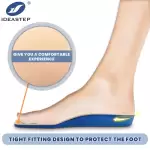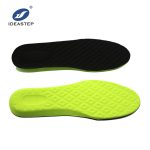
For buyers sourcing orthopedic insoles for flat feet, the challenge is rarely just finding an insole with an arch-shaped profile. The support structure, material density, heel design, thickness, and footwear compatibility all influence the final product.
As an experienced orthopedic insole manufacturer, Ideastep develops medical arch support insoles for foot care brands, distributors, footwear companies, and professional suppliers. Products can be developed from an existing design or customized around specific material, structural, and branding requirements.
What Makes an Arch Support Insole Suitable for Flat Feet?
Flat feet do not necessarily require the same insole design for every user or application. A product intended for everyday footwear may need a different balance of flexibility and cushioning than one designed for work shoes or professional foot care applications.
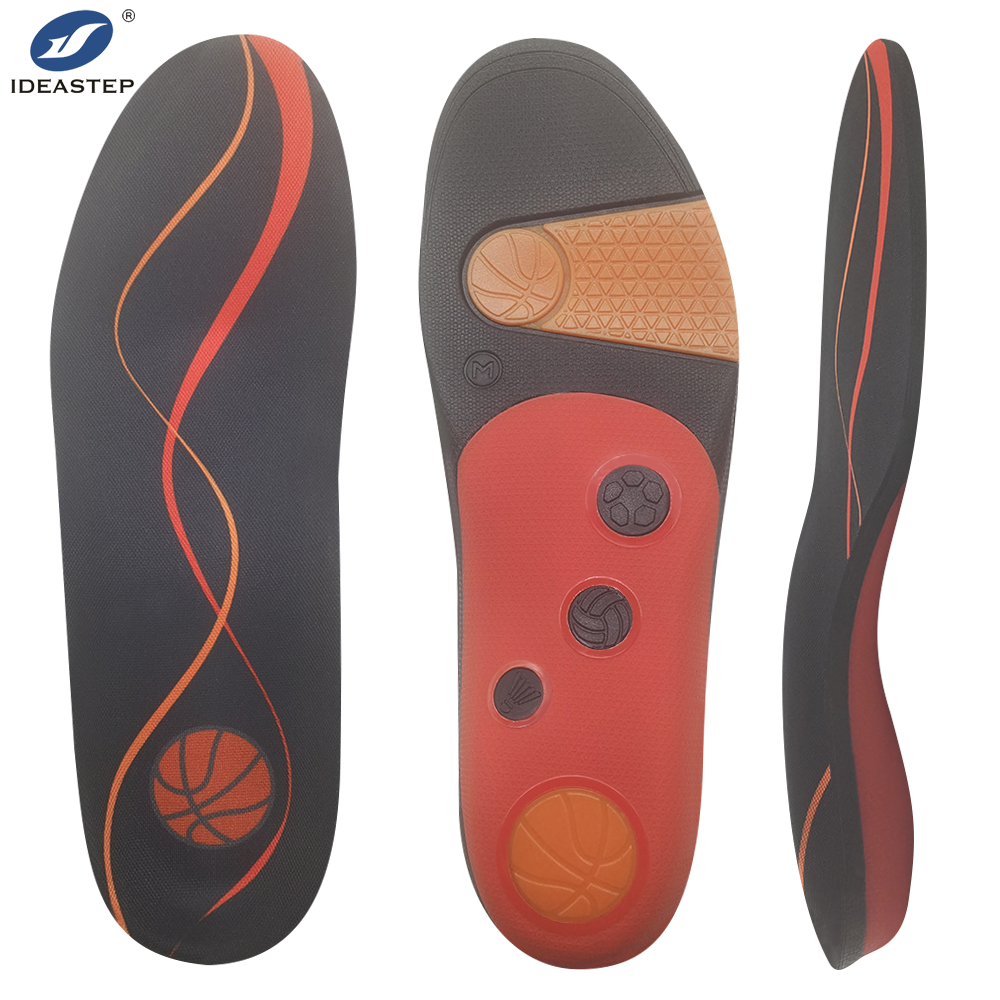
For product development, the arch area is only one part of the equation. The heel cup, overall footbed shape, cushioning layer, and bottom structure also affect how the insole sits inside the shoe.
A well-designed product may therefore combine a defined arch profile with:
- A stable heel area
- Controlled cushioning under the heel and forefoot
- Appropriate foam density and hardness
- A thickness that fits the intended footwear
- A surface material suited to extended wear
For B2B buyers, these details are important because they determine whether a product can be used as a practical part of a footwear or foot care range rather than simply being marketed as an “arch support” insole.
Design the Insole Around the Footwear, Not Just the Arch
One of the most important considerations when developing orthopedic insoles is the relationship between the insole and the shoe. An arch support that works well in a roomy walking shoe may not have the same effect on the fit of a low-volume dress shoe, sports shoe, or safety boot.
This is why custom specifications can be adjusted according to the intended application. Depending on the project, manufacturers may modify:
- Arch height and contour
- Heel cup depth and shape
- Overall insole thickness
- Hardness and foam density
- Reinforcement placement
- Top-cover materials
This approach also gives brands more freedom to create several products within the same range, such as softer everyday models, firmer support models, or application-specific designs for sports and work footwear.
Choosing Materials for Wholesale Orthopedic Insoles
Material selection should follow the intended performance of the product rather than simply choosing the most commonly used material. For wholesale orthopedic insoles, cost, consistency, durability, and manufacturing repeatability are also important considerations.
EVA for Lightweight Support and Cushioning
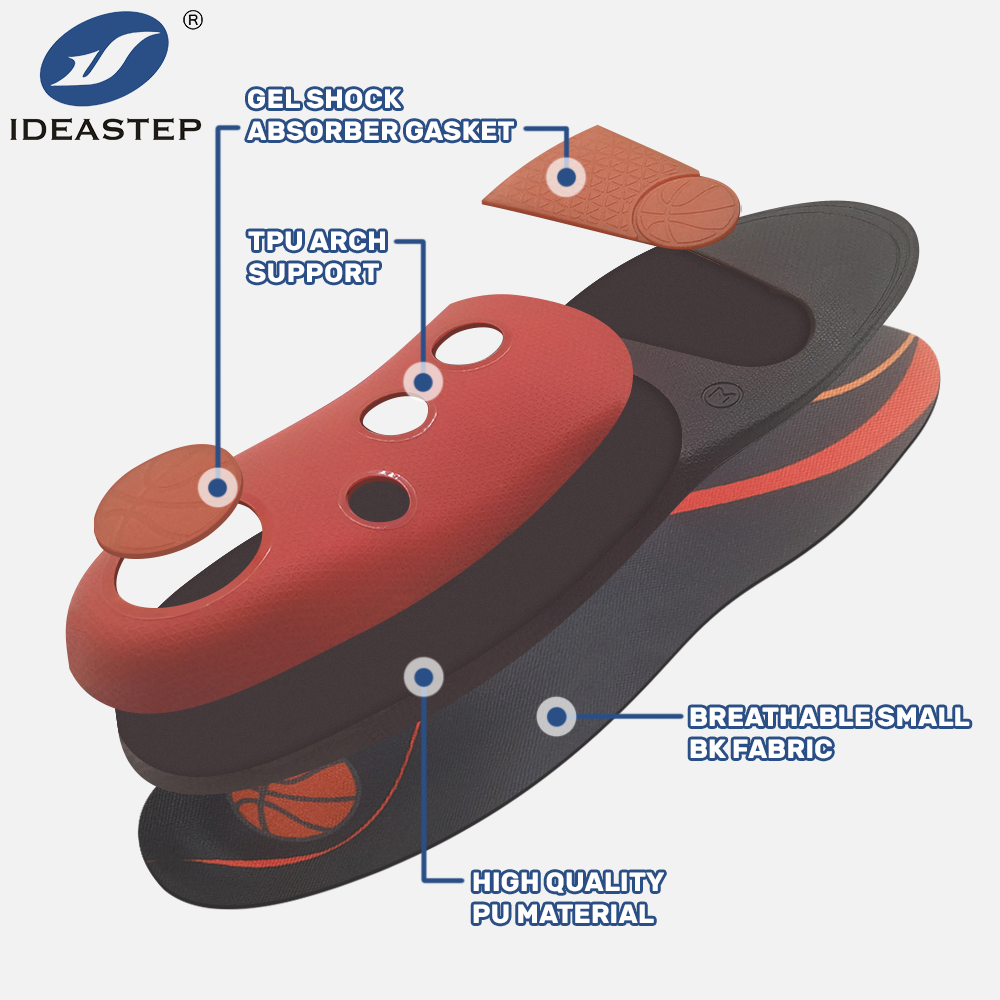
EVA is a practical choice for many orthopedic insole constructions because it is lightweight, easy to process, and available in different density and hardness levels. This makes it possible to create products ranging from softer cushioning designs to firmer support structures.
PU for a Softer Cushioning Feel
PU foam can be considered when a softer underfoot feel and cushioning performance are priorities. It can also be combined with firmer components to create a layered construction with different functional zones.
TPU for Structural Reinforcement
TPU components can be integrated into selected areas where additional structural support is required. Rather than making the entire insole rigid, reinforcement can be concentrated around specific sections of the footbed.
Fabric and Microfiber for the Top Layer
The top layer has a direct effect on surface feel and product positioning. Fabric and microfiber options can be selected according to the intended footwear, target price, and desired wearing experience.
From Standard Insoles to Customized Product Lines
Not every buyer needs a completely new insole mold. For some projects, modifying an existing construction is enough to meet the target specification. For others, a new structure may be necessary.
This distinction matters when planning a wholesale product line because development cost, lead time, minimum order requirements, and production complexity can vary significantly between the two approaches.
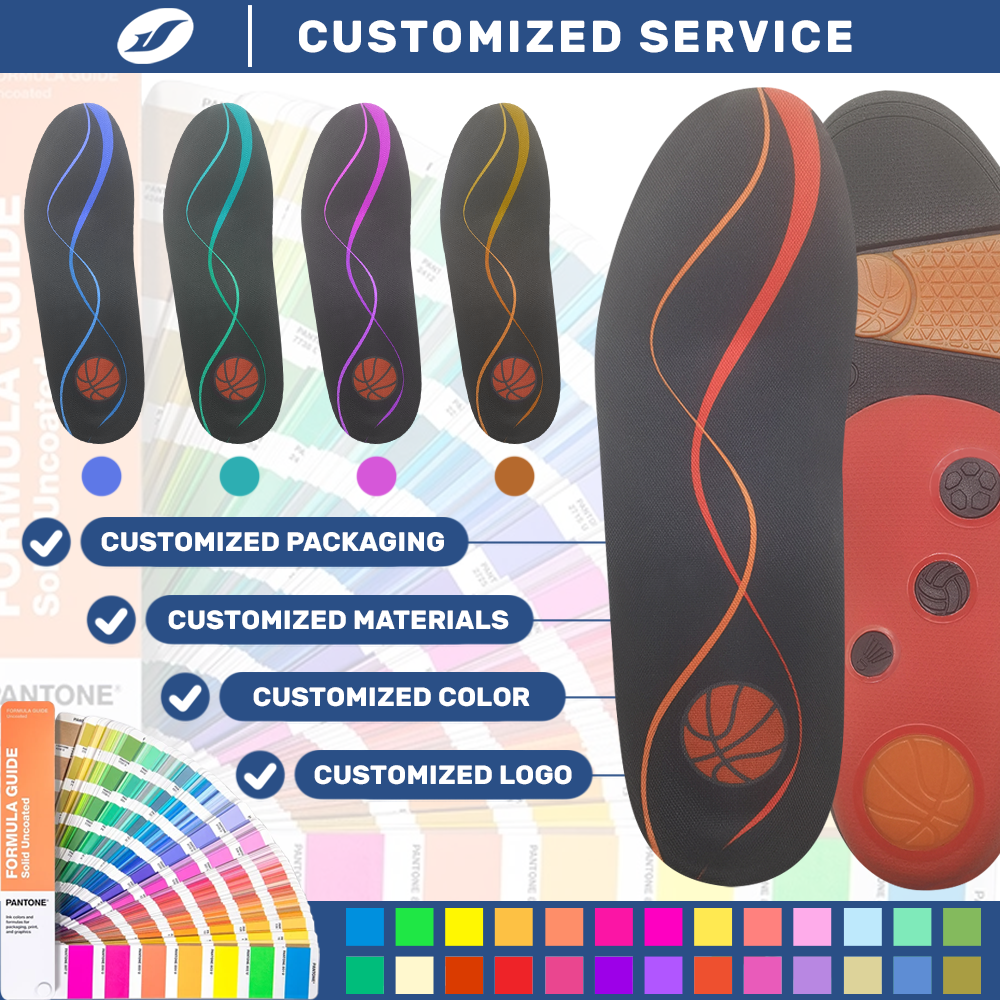
Customization can cover different levels of the product, including:
| Customization Area | Typical Requirements |
|---|---|
| Support Structure | Arch profile, heel support, reinforcement |
| Materials | EVA, PU, TPU, fabric, microfiber and cushioning layers |
| Dimensions | Length, thickness, width and overall shape |
| Surface | Top-cover material, texture and branding |
| Packaging | Private label, retail packaging and bulk packaging |
For established brands, this flexibility can be useful when expanding an existing product range without changing the entire manufacturing strategy.
What B2B Buyers Should Check Before Ordering
A supplier’s product catalog is only one part of the purchasing decision. Before placing a wholesale order, buyers should clarify several practical points with the manufacturer.
- Support specification: Confirm the intended arch profile, hardness, and reinforcement structure.
- Material consistency: Ask whether the selected materials and specifications can be maintained across repeat orders.
- Sample development: Evaluate samples before committing to larger production quantities.
- Footwear compatibility: Check whether the thickness and shape work with the target shoe construction.
- Customization scope: Clarify which components can be modified and whether new tooling is required.
- Packaging and branding: Confirm private-label, labeling, and packaging requirements before production.
These checks can prevent a common problem in B2B sourcing: a sample looks acceptable, but the final product does not fully match the original specification.
Wholesale and OEM Manufacturing for Orthopedic Insole Brands
For distributors and brands, manufacturing support should extend beyond simply supplying finished products. A useful supplier should be able to discuss material alternatives, evaluate structural changes, produce samples, and maintain the approved specification during bulk production.
OEM and ODM projects can start with an existing product, a physical sample, drawings, or a set of basic requirements. From there, the product can be reviewed for material selection, dimensions, support structure, and production feasibility before sampling.
Sample approval is an important checkpoint. It gives buyers an opportunity to assess fit, surface feel, support characteristics, and overall construction before moving into larger quantities.
For private-label projects, packaging and branding can also be incorporated into the production plan.
Applications Across Foot Care and Footwear Markets
The same basic arch support concept can be adapted for different commercial applications.
- Foot Care Brands: Private-label insoles for retail and professional foot care channels.
- Orthopedic Distributors: Wholesale products for healthcare and specialist distribution networks.
- Footwear Brands: Customized insoles integrated into casual, sports, or work footwear.
- Professional Suppliers: Products developed around specific material and support requirements.
The final specification should be determined by the footwear, target market, and intended product positioning rather than using the same construction for every application.
Frequently Asked Questions
Can orthopedic insoles for flat feet be customized?
Yes. Arch profile, heel structure, hardness, thickness, materials, top covers, and reinforcement components can be adjusted according to the project requirements.
Are wholesale orthopedic insoles available for private-label brands?
Yes. Wholesale, OEM, ODM, and private-label options are available for brands, distributors, and professional suppliers. Packaging and product specifications can also be discussed during development.
What materials are commonly used for medical arch support insoles?
Common materials include EVA foam, PU foam, TPU components, fabric, microfiber, and various cushioning materials. The final combination depends on the desired support, comfort, durability, and product cost.
Can I order samples before bulk production?
Sample development can be arranged before bulk production. This allows buyers to review the product construction and make necessary adjustments before confirming the final specification.
Build a Customized Orthopedic Insole Program
A successful wholesale insole project starts with a clear product specification. Whether the requirement is a lightweight EVA design, a reinforced orthopedic construction, or a private-label product range, the structure and materials should be developed around the intended footwear and market.
Ideastep works with B2B customers on product development, sampling, customization, and bulk manufacturing of medical arch support insoles and other orthopedic foot care products.
Contact us to discuss your product specifications, sample requirements, and wholesale project.
Recommended Reading: Best custom fit insoles arch support suppliers for Shoemaker.