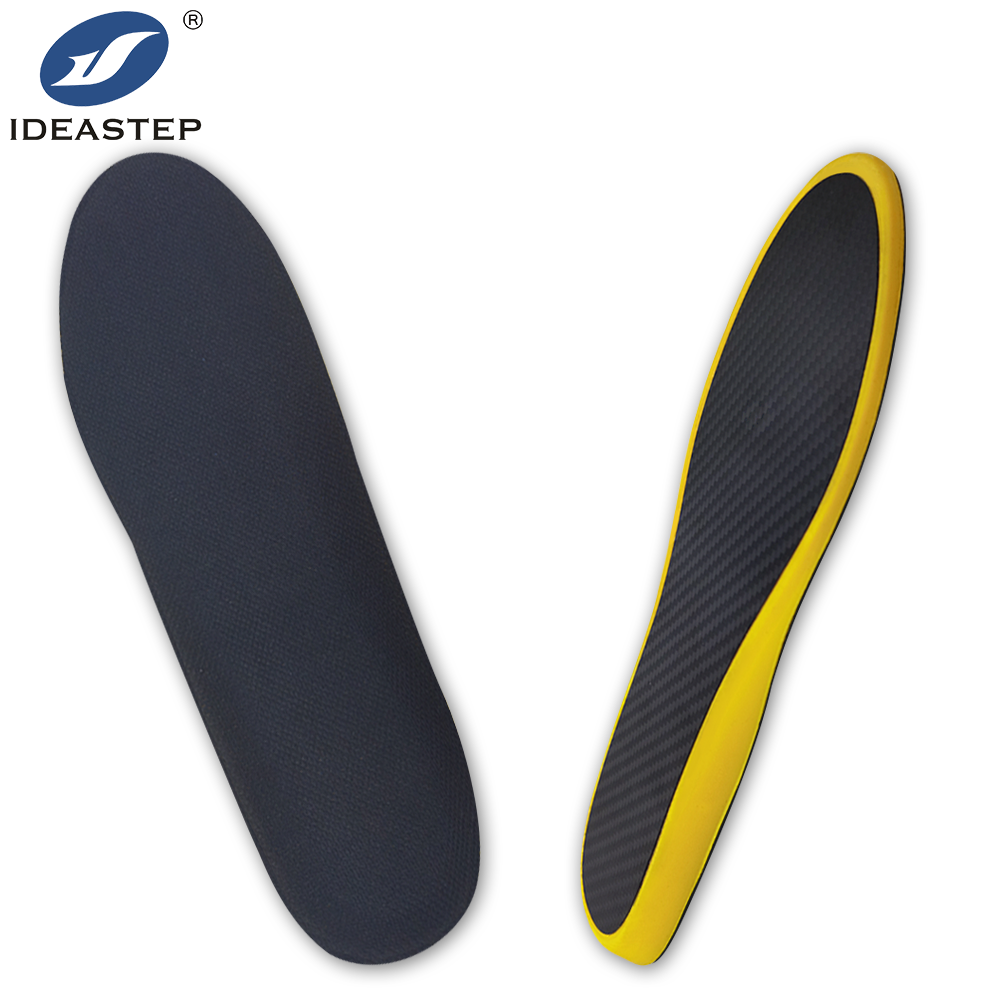
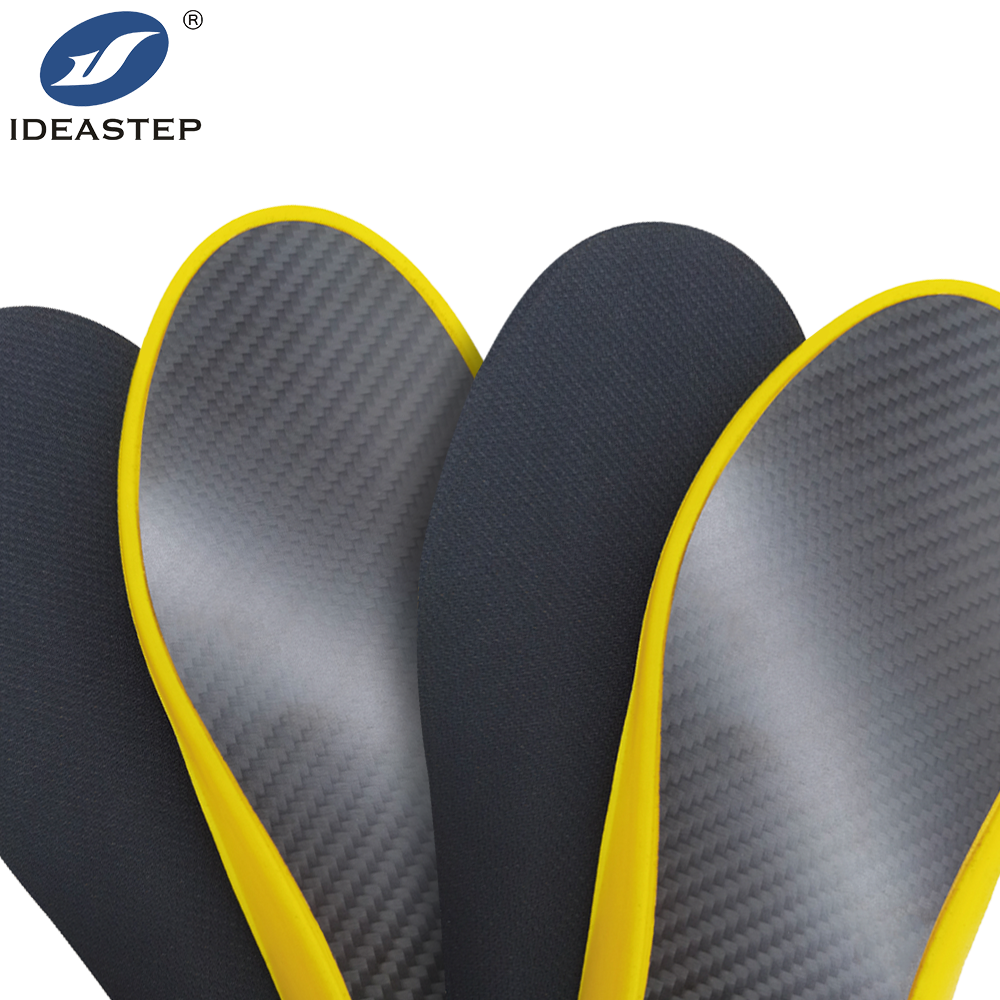
Flexible carbon fiber insoles are designed around a simple requirement: retain the structural advantages of carbon fiber while allowing a controlled degree of flex. This makes the construction different from a rigid carbon fiber plate used as a standalone structural component.
The final result depends on more than the carbon fiber itself. Plate design, fiber construction, foam, top-cover materials, and insole geometry all work together to determine the weight, thickness, flex, and feel of the finished product.
Flexibility Starts With the Carbon Fiber Structure
The carbon fiber layer is the foundation of the design, but its thickness and coverage need to be matched to the intended application.
A full-length layer provides a different flex pattern from a partial-length plate. Thickness, shape, and fiber orientation can also change how the insole bends. Rather than simply making the carbon fiber thinner, manufacturers can adjust the coverage and structure to create a more controlled flex profile.
For product development, the main parameters to define are:
- Carbon fiber construction
- Plate thickness
- Length and coverage
- Fiber orientation
- Flex profile
- Edge finishing
The Other Layers Shape the Final Product
Carbon fiber provides structure, while the surrounding materials determine much of the insole’s underfoot feel and overall profile.
Foam Construction
EVA, PU, and other foams can be used around the carbon fiber layer. Density and thickness can be selected according to the required cushioning, weight, and product cost.
The foam construction does not have to be uniform across the entire insole. Heel and forefoot areas can use different thicknesses or materials when the design calls for it.
Top-Cover Material
The top cover is the surface that comes into direct contact with the foot. Mesh, polyester, microfiber, and other textiles are commonly used, depending on the desired surface feel, appearance, and durability.
For private label products, the top cover also provides space for customized colors, patterns, printed graphics, and logos.
Design Around the Shoe, Not Just the Insole
A carbon fiber insole may look suitable as a standalone sample but behave differently once it is placed inside the target footwear.
Heel depth, arch height, forefoot volume, and the available space under the upper can all affect the final fit. A few millimeters of additional thickness may be acceptable in one shoe but create a fit issue in another.
For this reason, development should start with the actual footwear whenever possible. Useful reference information includes the original sockliner, shoe dimensions, size range, and available internal space.
Finding the Right Balance Between Structure and Flex
There is no single carbon fiber specification that suits every insole. A design intended to flex through the forefoot will require a different structure from one where greater rigidity is preferred.
Weight and thickness also need to be considered at the same time. Adding carbon fiber or foam can change the product’s overall profile, while reducing material may affect the intended flex or cushioning.
During sampling, it is useful to compare several constructions rather than changing one specification repeatedly. For example, different plate thicknesses, coverage areas, or foam combinations can be evaluated side by side.
What to Check on a Prototype
A prototype should be evaluated as a finished insole inside the intended shoe. Measurements alone cannot show how the construction behaves in actual use.
- Overall thickness and weight
- Heel and arch positioning
- Forefoot clearance
- Flex behavior
- Edge contact
- Layer bonding
- Surface finish
Repeated bending and dimensional checks can also help identify construction issues before the design moves into bulk production.
Turning the Design Into an OEM Product
Once the construction has been confirmed, the same design can be adapted for different sizes, footwear models, or private label programs.
OEM customization may include the carbon fiber structure, foam combination, insole geometry, top cover, logo, colors, size grading, and packaging. The level of customization depends on the supplier’s production capabilities and the requirements of the project.
For a new development, buyers should provide as much information as possible at the sampling stage, including the target footwear, size range, preferred materials, flex requirements, branding details, and estimated order volume.
Keeping Bulk Production Consistent
Once the prototype is approved, its specifications should be recorded as the production reference. This is particularly important for carbon fiber products because small changes in thickness, coverage, or bonding can affect the finished construction.
| Production Point | What to Control |
|---|---|
| Carbon Fiber | Thickness, shape, coverage, and flex |
| Foam | Material, density, and thickness |
| Geometry | Length, width, heel, arch, and forefoot profile |
| Bonding | Layer adhesion and edge condition |
| Surface | Top-cover material, appearance, and logo |
| Finished Product | Weight, dimensions, and overall consistency |
A documented specification and an approved physical sample give both sides a clear reference throughout production.
A Practical Approach to Flexible Carbon Fiber Insole Development
The best construction is not necessarily the one with the most carbon fiber. It is the one that matches the footwear, target flex, thickness, weight, and material requirements.
For OEM and private label development, the process can remain straightforward: define the footwear and product requirements, develop several material and structural options, test the prototypes, and use the approved construction as the reference for production.
If you are developing flexible carbon fiber insoles for a new footwear program, please contact our team with your shoe specifications, target size range, material requirements, and estimated quantity.
Related Reading:
Wholesale Carbon Fiber Insoles for Enhanced Running Performance
Carbon Fiber Foot Insoles Core Performance Factors For Wholesale Buyers