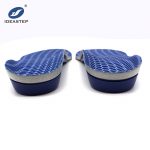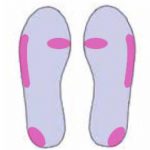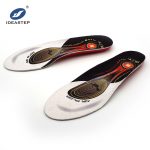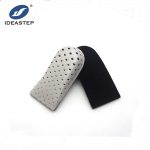
Thin carbon fiber insoles are used in performance footwear, cycling shoes, work footwear, orthotic products, and other applications where low profile and controlled stiffness are important.
For wholesalers and footwear buyers, the key issue is not simply whether an insole uses carbon fiber. The more important questions are its thickness, stiffness, construction, shoe compatibility, production consistency, and cost at volume.
A suitable product should meet the requirements of the target footwear while remaining practical for repeated production and sourcing.
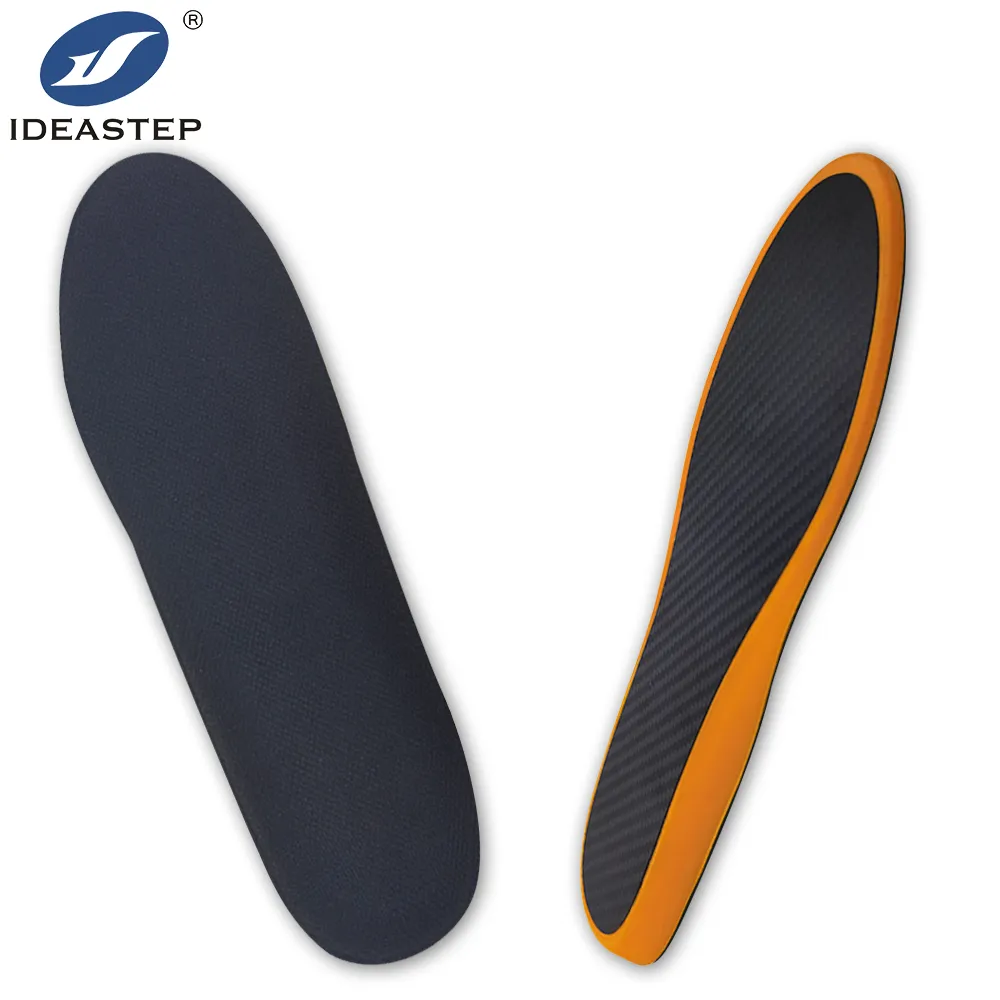
What Is a Thin Carbon Fiber Insole?
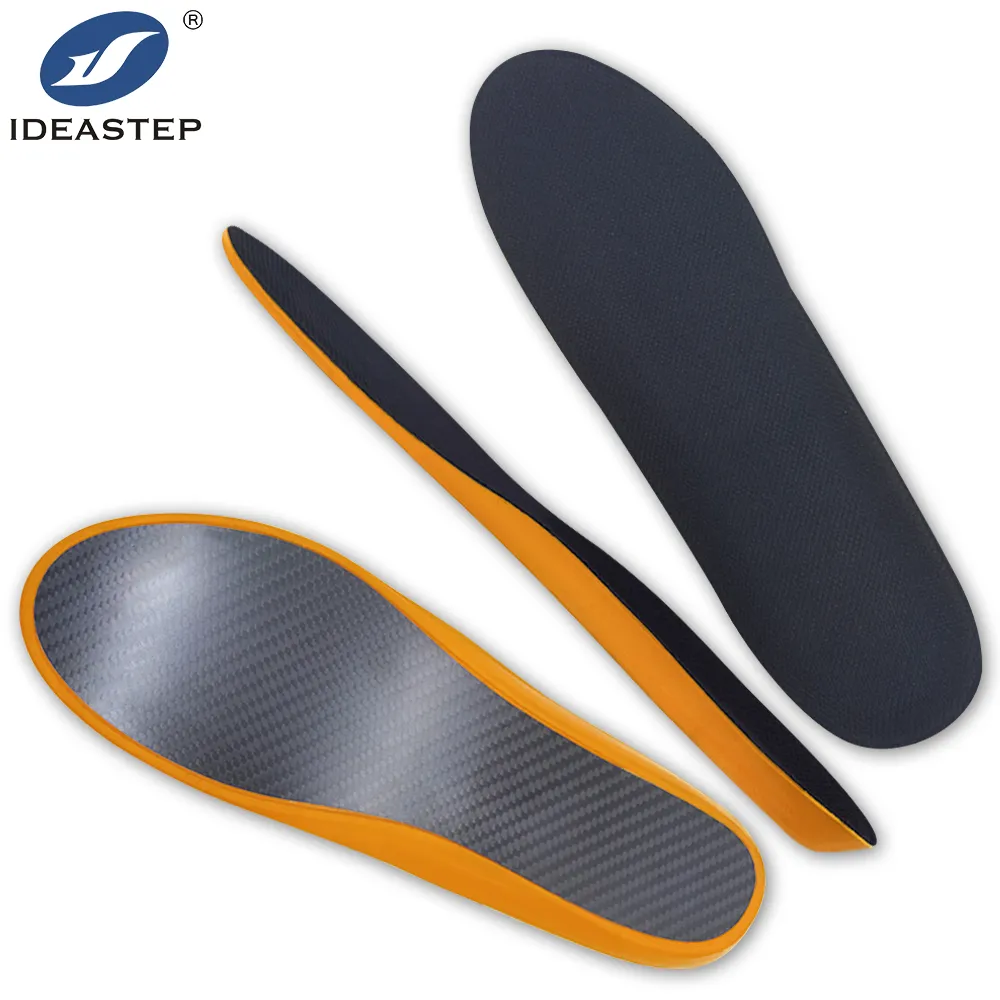
A thin carbon fiber insole usually combines a carbon fiber plate or composite shell with materials such as EVA, PU foam, or fabric.
The carbon fiber provides structural stiffness, while the other layers determine cushioning, surface feel, thickness, and fit.
Compared with a conventional foam insole, a carbon fiber construction can provide a stiffer platform without requiring a thick rigid insert. Studies have shown that adding carbon fiber plates can significantly increase footwear bending stiffness, although the effect on overall footwear performance depends on the complete shoe design.
A typical construction may include:
- Carbon fiber plate or composite shell
- EVA or PU foam layer
- Fabric or textile top cover
- Shaped heel or arch section
- Adhesive or laminated layers
For B2B sourcing, these components should be specified separately rather than treating the product simply as a “carbon fiber insole.”
Key Performance Factors
Low Profile
Thin construction is useful when internal shoe space is limited.
For wholesalers, this matters when supplying footwear manufacturers that already have a defined insole cavity. A thicker insert may change the shoe fit, reduce internal volume, or require changes to the upper and midsole.
The target should be the required structure at a practical thickness, not simply the thinnest possible product.
Bending Stiffness
Carbon fiber is commonly selected for its high stiffness-to-weight characteristics.
The stiffness of a finished insole depends on more than carbon fiber thickness. Plate geometry, fiber orientation, layup, length, and supporting materials all affect the result.
Research using different carbon plate thicknesses has demonstrated clear changes in footwear bending stiffness, but greater stiffness does not automatically mean better performance for every application.
For wholesale products, the important point is to define a consistent stiffness range rather than relying on thickness as the only specification.
Weight
Carbon fiber can provide structural reinforcement with relatively little material, but the finished insole weight depends on the complete construction.
When comparing suppliers, check the weight by size and include:
- Carbon fiber plate
- Foam
- Top cover
- Adhesive
- Additional reinforcement
This gives buyers a more useful comparison than looking at the carbon fiber layer alone.
Structural Stability
A carbon fiber layer can help maintain the intended shape of an insole and provide a more rigid base.
This can be useful for footwear products that require a consistent structure across different sizes and production batches.
However, the final behavior still depends on the shoe construction and the way the carbon layer is positioned.
Carbon Fiber Structure and Material Options
The carbon layer is only one part of the finished product. Different constructions can be developed for different footwear requirements.
Flat Carbon Fiber Plate
A flat plate is relatively straightforward to integrate into a layered insole.
It can work well when the footwear manufacturer already has a defined footbed shape and mainly needs additional structural stiffness.
Contoured Carbon Fiber Structure
A contoured plate follows the shape of the foot or shoe last more closely.
This can improve integration with the footwear but requires tighter control of dimensions and tooling.
Carbon Fiber with EVA
Combining carbon fiber with EVA provides a practical balance between structure and cushioning.
EVA thickness, density, and hardness can be adjusted according to the intended footwear application.
Carbon Fiber with PU Foam
PU foam can also be used when the product requires a different cushioning or recovery profile.
The choice between EVA, PU, and other materials should be based on the target shoe, required thickness, expected loading, and cost.
Where Thin Carbon Fiber Insoles Are Used
Performance Footwear
Carbon fiber structures are commonly considered when footwear requires increased bending stiffness.
However, wholesalers should avoid treating carbon fiber as a guaranteed performance upgrade. Research has produced different results depending on footwear construction, stiffness, and testing conditions.
Cycling Footwear
Cycling shoes generally require a firm platform, making carbon fiber a suitable material for certain insole constructions.
Low-profile designs can provide reinforcement without taking up excessive internal space.
Work and Safety Footwear
Carbon fiber can be used in selected work footwear applications where a stable and lightweight insole structure is required.
The finished product should be evaluated against the requirements of the target footwear and applicable standards.
Orthotic Products
Carbon fiber can also be incorporated into orthotic products where controlled stiffness is required.
For these applications, geometry, stiffness, fit, and loading should be considered together rather than selecting the material based on stiffness alone.
What Wholesalers Should Check Before Ordering
For wholesale sourcing, a product photo and unit price are not enough. Buyers should confirm the main specifications before requesting a quotation.
1. Carbon Fiber Construction
Ask for information about:
- Carbon fiber type
- Composite construction
- Fiber orientation
- Resin system
- Surface finish
- Production consistency
The material specification used for samples should match the approved bulk-production specification.
2. Thickness
Confirm both the carbon layer thickness and the total insole thickness.
For example, a finished product may contain a 1–2 mm carbon layer plus EVA and a fabric cover. These dimensions should not be combined into a single thickness figure.
3. Stiffness
Stiffness is often more useful than thickness when comparing suppliers.
If stiffness is important to the project, ask how it is controlled and whether the supplier can provide a defined test method or test data.
4. Dimensions
Check:
- Length
- Width
- Heel width
- Arch height
- Toe shape
- Edge profile
- Carbon plate coverage
For private-label or footwear-manufacturer projects, these dimensions should match the intended shoe last.
5. Foam and Top Cover
Confirm the material, thickness, hardness or density, bonding method, and top cover.
A carbon fiber plate with different foam constructions can produce very different finished products.
6. Weight
Set a target weight by size if the product is intended for lightweight footwear.
This makes supplier comparisons easier and helps control production consistency.
Sample Testing Before Bulk Production
Sample approval is important when developing a custom carbon fiber insole.
The sample should be tested inside the target footwear, not only inspected as a standalone product.
Check:
- Shoe fit
- Internal volume
- Heel position
- Arch position
- Forefoot flexibility
- Overall stiffness
- Weight
- Surface comfort
- Edge finishing
- Bonding
- Compatibility with the midsole and outsole
If the product is intended for a specific shoe model, testing it in that shoe can reveal problems that are difficult to identify from the insole alone.
Quality Control for Bulk Orders
For wholesalers, consistency between batches is a major sourcing issue.
A practical QC process can include:
Material Inspection → Thickness Check → Dimensional Check → Stiffness Check → Foam Inspection → Lamination → Surface Inspection → Weight Check → Packaging
Important inspection points include:
- Carbon fiber appearance
- Plate thickness
- Overall dimensions
- Warping or deformation
- Stiffness consistency
- Foam bonding
- Top cover alignment
- Edge finishing
- Weight variation
- Packaging
For repeat orders, keep the approved sample and specification sheet as the production reference.
OEM and ODM for Carbon Fiber Insoles
The sourcing model depends on how much product development the buyer already has.
OEM Carbon Fiber Insoles
OEM is suitable when the buyer already has a defined product.
The supplier can work from:
- CAD drawings
- Physical samples
- Shoe last dimensions
- Material specifications
- Existing insole designs
- Packaging requirements
The main requirement is consistent production according to the approved specification.
ODM Carbon Fiber Insoles
ODM is useful when the buyer has a general product concept but needs support with development.
The supplier may assist with:
- Carbon fiber structure
- Thickness
- Stiffness
- Foam selection
- Insole shape
- Top cover
- Prototype development
- Production adjustments
For wholesalers developing their own product range, ODM can be useful when they do not have a complete technical specification yet.
How to Compare Carbon Fiber Insole Suppliers
Unit price should not be the only comparison point.
Wholesalers should look at:
Material Capability
Can the supplier handle carbon fiber together with EVA, PU, fabric, and other insole materials?
Customization
Can they adjust thickness, shape, stiffness, foam, and top cover?
Sampling
Can they produce samples based on drawings, physical samples, or shoe dimensions?
Production Consistency
Can the supplier maintain the same dimensions, weight, stiffness, and appearance across repeat orders?
MOQ and Lead Time
Check whether the MOQ and production schedule fit your sales volume and inventory plan.
Communication
Specifications should be confirmed clearly before production, including tolerances, materials, dimensions, packaging, and inspection requirements.
A lower unit price can become less competitive if inconsistent production leads to returns, rework, or repeated sampling.
A Practical Sourcing Process
A straightforward sourcing process is:
Define Application → Confirm Shoe Dimensions → Select Structure → Develop Sample → Test in Shoe → Revise → Approve Sample → Confirm QC Standard → Bulk Production
Before requesting quotations, wholesalers should prepare:
- Target footwear category
- Size range
- Shoe last or insole dimensions
- Target thickness
- Target weight
- Required stiffness
- Carbon fiber construction
- Foam material
- Top cover
- Branding
- Packaging
- Estimated order quantity
The more complete the information, the easier it is for suppliers to provide an accurate quotation and development plan.
Thin Carbon Fiber Insole Supply for B2B Footwear
For wholesalers, footwear manufacturers, and private-label brands, carbon fiber insole development should start with the requirements of the target footwear.
Ideastep can develop carbon fiber insole products using carbon fiber plates or composite structures combined with EVA or foam layers, top covers, and customized shapes.
Projects can start from a drawing, physical sample, shoe last, existing insole, or basic product requirements.
The focus is on matching the thickness, stiffness, cushioning, weight, and dimensions to the intended footwear rather than using carbon fiber simply as a selling point.
If you are sourcing thin carbon fiber insoles for wholesale or footwear production, please contact our team to discuss your specifications, sample requirements, and expected order volume.
Conclusion
Thin carbon fiber insoles can provide a combination of low profile, stiffness, and lightweight construction, but the finished product depends on the complete structure.
For wholesalers, the main sourcing points are:
- Carbon fiber construction
- Total and plate thickness
- Stiffness
- Dimensions
- Foam and top cover
- Weight
- Shoe compatibility
- Sample approval
- Batch consistency
- MOQ and lead time
The best supplier is not necessarily the one offering the lowest price or the thinnest carbon plate. What matters is whether the supplier can turn the required specifications into a consistent product that fits the target footwear and remains practical for repeat orders.
Related Reading: Thin Carbon Fiber Insoles Lightweight Support Guide For Footwear Wholesale Buyers.