Customizing insoles involves more than adding a logo or changing the product color. For wholesale buyers, the real challenge is developing products that meet different market requirements while keeping specifications and supply arrangements manageable.
A footwear distributor may need several insole models for different shoe categories. An orthotic supplier may want to expand an existing range, while a private-label brand may require a product with its own design and specifications.
Each project has different priorities. Buyers should therefore approach insole customization as a product development process, not simply a list of modifications.
This article explores how wholesale buyers can plan customized insole ranges, establish meaningful product differences, and manage development more efficiently.
1. Why Wholesale Buyers Need More Than Standard Insole Designs
Standard insoles provide a starting point, but they may not meet the requirements of every product range.
Market positioning, footwear compatibility, material preferences, and branding all influence product specifications. A distributor supplying several footwear categories, for example, may need different insole constructions rather than one general-purpose model.
Customization allows buyers to:
- Differentiate products: Develop distinct structures and material combinations instead of relying on cosmetic changes.
- Build brand identity: Add customized colors, logos, labels, and packaging.
- Adapt to market requirements: Adjust product configurations for different footwear categories.
- Expand existing ranges: Introduce new models based on established designs.
- Maintain specification control: Set consistent requirements for production and repeat orders.
However, adding more variations does not automatically improve a product range. Buyers should focus on changes that serve a clear commercial purpose.
2. Three Levels of Insole Customization
Not every project requires a completely new design. Wholesale buyers can generally approach customization at three levels.
Level One: Modify an Existing Product
This option starts with an established insole design and introduces selected changes, such as:
- Logo placement and branding
- Top cover color or material
- Product labeling
- Packaging design
- Selected size adjustments
It suits projects where the existing construction already meets the main requirements. Buyers can develop private-label products without redesigning every component.
Before proceeding, confirm which modifications the existing model can accommodate. Some changes may affect construction, production methods, or MOQ.
Level Two: Customize Selected Components
Component-level customization offers more flexibility. Instead of changing the entire insole, buyers can modify selected parts while retaining suitable elements of the original design.
Typical options include:
- Changing the top cover while retaining the base structure
- Adjusting the heel section
- Introducing a different cushioning layer
- Modifying the arch profile
- Combining materials to create a new configuration
This method allows manufacturers to develop several variations from a shared design foundation. However, each component change must work with the surrounding structure.
Level Three: Develop a New Insole Design
Some projects need a completely different shape, structural configuration, or material combination. In these cases, developing a new design may be more suitable than modifying an existing model.
Buyers should provide reference products, technical drawings, target dimensions, and intended footwear applications before development begins.
A new design usually requires more sample revisions and technical communication. Defining the expected product specifications early helps keep the project on track.
3. Build Product Differences That Matter
A common problem in product development is creating too many models without giving each one a clear purpose.
Changing only the top cover color may create a visual variation, but it does not necessarily establish meaningful product differentiation. Wholesale buyers should consider how each model contributes to the overall range.
Differentiate by Product Category
Start by identifying the main categories the range needs to cover. Depending on the business, these may include:
- Everyday comfort insoles
- Sports and athletic insoles
- Orthotic support insoles
- Work and safety footwear insoles
- Specialty footwear inserts
Each category has different design priorities. Sports insoles may require constructions suited to athletic footwear, while work insoles need to match specific footwear dimensions and material requirements.
The goal is to develop products for defined applications rather than create a separate model for every possible market.
Differentiate by Construction
Within one category, buyers can introduce variations through construction rather than appearance alone.
For example, an insole range may include flexible, semi-rigid, and rigid configurations. Other differences may involve cushioning arrangements, heel structures, or material combinations.
These variations give each model a clearer specification and make the product catalog easier to organize.
Differentiate by Market Positioning
Not every product needs the same level of customization. A wholesale range may include a standard model, a more configurable option, and a specialized design developed for a particular brand or market.
This structure gives buyers more flexibility without requiring a completely new design for every product.
4. Decide Which Components Should Be Shared
When a range includes several customized models, buyers should identify components that can share common specifications.
For example, different insoles may use the same size grading or packaging format while featuring different top covers or structural configurations.
A useful way to organize these components is:
| Component Group | Development Approach | Example |
|---|---|---|
| Shared elements | Keep specifications consistent across suitable models | Size labeling, packaging format, selected base components |
| Configurable elements | Allow controlled changes | Top cover, cushioning layer, color |
| Model-specific elements | Develop according to individual requirements | Specialized shell shape, arch profile, custom dimensions |
This classification helps manufacturers identify which components they can reuse and which require separate development.
Standardization should not compromise the intended design. Components should only be shared when their specifications suit each model.
5. Keep the Product Range Manageable
Customization can quickly increase the number of product variations. Combining multiple sizes, colors, materials, and structures may complicate purchasing, inventory planning, and production scheduling.
Buyers can control this complexity by following a few practical steps.
Start with core models. Identify the main products that cover the most important market requirements.
Add purposeful variations. Introduce additional sizes, colors, or constructions only when they serve a defined product or market need.
Limit unnecessary combinations. Not every material needs to work with every structure. Keep the available configurations practical.
Maintain clear product records. Assign model numbers and update specifications for each version to avoid confusion during repeat orders.
The objective is to offer meaningful product choices without creating an unnecessarily complicated catalog.
6. Turn Market Requirements Into a Product Brief
A general request such as “customize this insole” does not give a manufacturer enough information to begin accurate development.
Buyers should translate their requirements into a clear product brief covering:
- Product concept: Product category, intended footwear application, and main design objectives.
- Reference information: Existing insoles, photographs, technical drawings, or physical samples.
- Design requirements: Construction, dimensions, material preferences, and components requiring customization.
- Branding: Logo files, color references, labels, and packaging artwork.
- Commercial details: Estimated quantity, size range, sample requirements, and purchasing schedule.
- Technical priorities: Essential specifications and details that allow flexibility.
Separate mandatory requirements from optional preferences. This gives the manufacturer room to suggest practical alternatives while keeping the project focused.
7. Manage Samples and Repeat Orders Consistently
A sample should provide a reliable reference for the final product, not just an opportunity to check its appearance.
During evaluation, buyers should review:
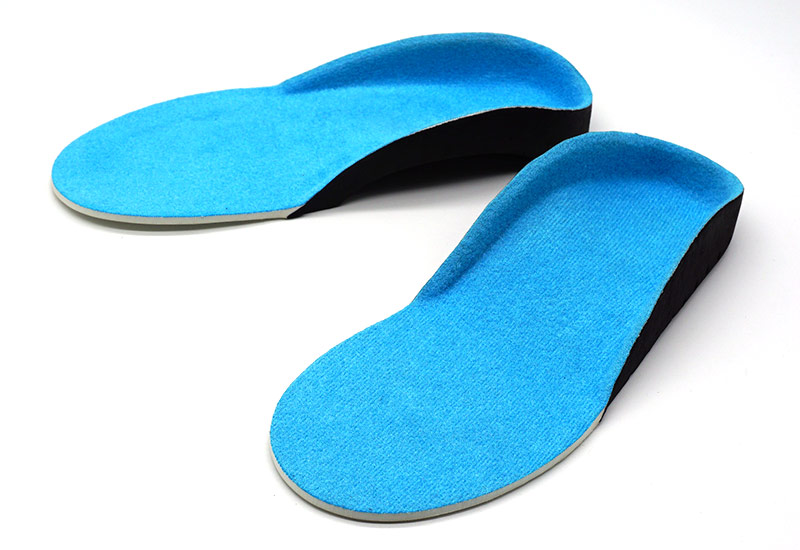
- Overall shape and dimensions
- Material types and layer arrangement
- Structural components and their positions
- Surface appearance and branding
- Size consistency
- Packaging details, where applicable
After sample approval, both parties should retain the confirmed specifications and sample version as the production reference.
For repeat orders, communicate any requested changes before production starts. Adjustments to materials, thickness, component layout, or branding may require a revised sample or updated specification.
Clear development records help maintain consistency across different models and future orders.
8. What to Look for in a Custom Insole Manufacturer
A suitable manufacturing partner should do more than accept customization requests. It should understand how design decisions affect product development and bulk production.
When evaluating suppliers, wholesale buyers should consider:
Product development: Can the manufacturer review technical drawings, reference samples, and proposed configurations?
Material options: Can the supplier recommend suitable combinations for the intended construction?
Customization capabilities: Can the manufacturer handle product modifications, component-level changes, and new designs?
Production resources: Does the factory have suitable processes and equipment for the required specifications?
Sample coordination: Can the team manage revisions and maintain records of approved designs?
Bulk order management: Can the manufacturer maintain consistent specifications across multiple models and repeat orders?
These capabilities provide a more useful basis for supplier evaluation than price alone.
Develop Your Custom Insole Range With a Clear Plan
A successful customization project starts with a clear product direction. Buyers need to define the role of each model, identify which components require changes, and decide how the products fit into the wider range.
For wholesale businesses, this approach creates a more organized path from initial concept to long-term supply.
Ideastep works with B2B buyers on custom orthotic insoles, product modifications, material configurations, and OEM/ODM development. Whether you are adapting an existing model or planning a new product range, our team can discuss your specifications and production requirements.
Contact our team to discuss your custom insole project.