Introduction
Many footcare brands rely on ready-made insoles to simplify sourcing. Off-the-shelf options work for basic stock needs, yet they lock you into fixed arch shapes, layered materials and pressure distributions. These standard specs rarely fit the specific user groups your brand serves. Bulk custom made insoles solve this limitation. We build every production run around your defined biomechanical targets, instead of forcing your market to adapt to pre-set designs. This approach gives distributors, podiatry clinics and footwear partners a tangible competitive advantage.
Why Biomechanical Specs Should Guide Your Bulk Insole Program
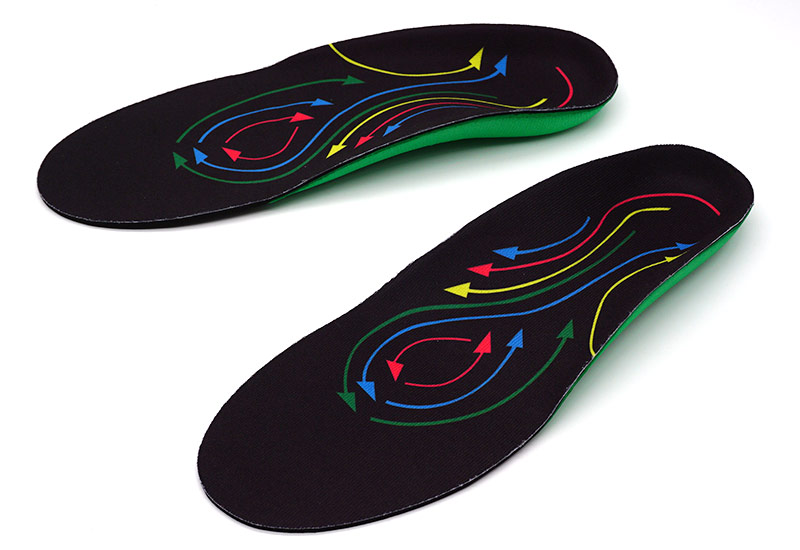
Biomechanical parameters govern how an insole interacts with the foot during weight transfer. Arch height, heel cup containment, metatarsal relief and support stiffness all shape real-world performance. Generic bulk insoles use one averaged profile. That profile may suit a small subset of users, but it falls short for people with flat feet, high arches, rearfoot instability or persistent pressure pain.
When you own the biomechanical specification, you control your product identity. A brand focused on occupational standing support can prioritise stable rearfoot control. Clinic lines for diabetic foot care lean toward even pressure redistribution and low-shear surface layers. Sport-focused ranges tune flexible zones to preserve natural push-off without compromising support. These custom specs become the feature that sets your products apart from commodity suppliers.
Defining Biomechanical Benchmarks With Our Engineering Team
We do not kick off production based on vague requests for softer or firmer insoles. Our team works alongside you to translate product ideas into measurable engineering benchmarks. We document target pressure zones, deflection values, support geometry and fatigue performance requirements.
This work often draws from your clinical feedback or sales data. If your clinic team sees recurring metatarsal overload cases, we adjust pad placement and shore hardness. If retail buyers report poor fit inside work boots, we refine heel cup depth and edge profiling. Every change ties back to the biomechanical outcomes your brand wants to deliver.
We supply testable reference samples once specs are finalised. These golden samples act as the standard for all future bulk orders and prevent quality drift across repeat shipments.
Material Stack Selection Aligned To Biomechanical Performance Goals
Material selection follows your biomechanical targets, not the reverse. Corrective insoles built for long-term arch control pair rigid TPU shells with cushioning top layers. Comfort-focused retail models use layered EVA or PORON for gradual flex and shock absorption. Diabetic lines rely on low-density, non-compressive foams to avoid concentrated pressure points.
We also test layer bonding under repeated load cycles. Even well-designed geometry fails if layers separate after extended use. Our material validation checks compression set, moisture resistance and skin-contact safety before bulk production starts. This process protects your brand reputation once goods reach clinics and end users.
Bulk Production Controls That Preserve Your Custom Biomechanical Profile
Specification drift across batches stands as the biggest risk for custom bulk orders. Many manufacturers loosen geometry tolerances once order volumes grow. Our quality workflow prevents this issue.
Our teams reference your approved golden sample during raw material checks, CNC setup and final functional inspections. Operators verify arch height, heel cup depth and layer thickness against your spec sheet for every production lot. Batch test records accompany each shipment so your team can quickly confirm consistency.
Private branding and custom packaging integrate smoothly without altering core geometry. Custom moulded marks, printed size labels and tailored packaging are added only after we confirm each insole meets your biomechanical benchmarks.
Scaling Your Line With Iterative Spec Updates
Brand product priorities shift over time. You might launch a new footwear line, roll out a clinical sub-category or adjust pricing tiers. Our workflow supports controlled spec updates alongside bulk reorders.
We log every adjustment to your biomechanical profile and create new golden samples for revised SKUs. This lets you expand your portfolio step by step. You can keep your flagship product unchanged while releasing variants built for new market segments, without rebuilding your supply chain from scratch.
Contact Us To Develop Bulk Custom Made Insoles To Your Spec
If you are ready to move past generic wholesale insoles and build a product line defined by your own biomechanical standards, our engineering and production team can support you. Share details of your target user groups, performance priorities and volume roadmap. We will walk through spec alignment, sample validation and scalable bulk manufacturing options. Contact us to develop insoles that deliver on your brand’s unique performance promise.
Frequently Asked Questions
Can we maintain separate biomechanical specs for multiple SKUs under one brand?
Yes. We keep independent golden samples and spec sheets for each SKU. Our production system separates tooling and inspection rules to avoid mixing different profiles.
What minimum order applies for bulk custom made insoles built to custom biomechanical specs?
MOQ changes based on tooling and material needs. We offer flexible terms for brand partners launching new lines and lay out clear MOQ guidance during your initial consultation.
Will you provide test reports mapped to our custom biomechanical specifications?
We provide batch test documentation tied to your defined benchmarks. Reports cover dimensional checks, hardness validation and compression performance for internal audits and clinic reviews.
Related Reading: Custom Made Insoles for Wholesale Buyers: Product Range, Specifications, and Supply.