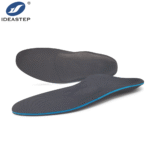
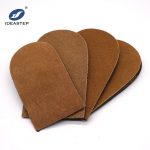
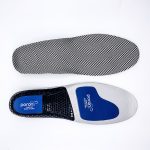
Custom feet insoles are widely used across the orthotic, footwear, sports, and foot care industries. Unlike standard insoles with fixed specifications, custom designs allow manufacturers to adjust materials, dimensions, density, and support structures to meet different product requirements.
Developing a suitable insole involves more than selecting a material or changing its shape. Material properties, structural design, manufacturing methods, and quality control all affect the final product. For wholesalers and distributors, understanding these factors makes it easier to assess product specifications and develop a well-defined insole range.

1. Understanding Custom Feet Insoles
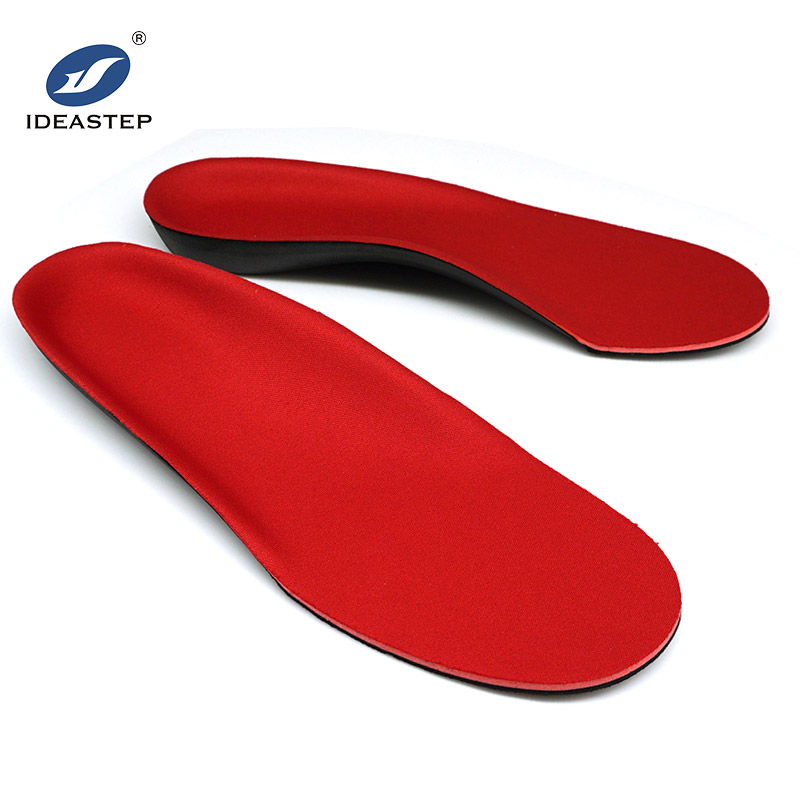
Custom feet insoles are developed according to specific design requirements, which may include customized dimensions, arch profiles, heel cup shapes, cushioning layers, and material combinations. The level of customization depends on the intended application and the technical specifications of the project.
These products are commonly developed for several B2B market segments:
- Orthotic product suppliers: Insoles with defined support structures and material specifications.
- Foot care distributors: Different insole designs for varied product categories and market requirements.
- Sports and footwear brands: Insoles developed around specific footwear designs and performance requirements.
- Footwear manufacturers: Inserts matched to shoe dimensions, internal volume, and construction.
- Rehabilitation product suppliers: Customized structures based on defined product specifications.
Before production begins, the project should have clear requirements for dimensions, materials, construction, and intended use. These details provide a practical starting point for product development.
2. Common Materials Used in Custom Feet Insoles
Material selection affects cushioning, flexibility, structural stability, weight, and durability. Each material has different characteristics, and manufacturers often combine several materials to achieve the required performance.
EVA
Ethylene-vinyl acetate (EVA) is one of the most widely used materials in insole manufacturing. Its density, hardness, and thickness can be adjusted to suit different designs.
Depending on the formulation, EVA can serve as a cushioning layer, a base material, or part of a multi-density construction. Manufacturers can also combine EVA materials with different hardness levels to create specific structural profiles.
Key specifications to review include:
- Density and hardness
- Thickness and dimensional tolerance
- Compression and rebound properties
- Color and surface finish
- Consistency between production batches
PU
Polyurethane (PU) is used in various insole constructions because its formulation can produce different levels of softness, cushioning, and resilience. It can serve as a cushioning component or be combined with other materials in a layered design.
When evaluating PU, manufacturers and buyers should consider its density, compression behavior, weight, and durability in relation to the intended application.
Memory Foam
Memory foam is commonly used as a cushioning or top layer. Its compression characteristics make it suitable for designs that require a softer surface.
However, memory foam formulations vary in density, recovery speed, and compression performance. These properties should be checked during sample development rather than assumed to be the same across different suppliers.
TPU and PP
Thermoplastic polyurethane (TPU) and polypropylene (PP) are often used in structural components. Their properties make them suitable for designs that require a defined level of flexibility or rigidity.
TPU can provide flexible reinforcement, while PP is commonly used in semi-rigid or rigid support shells. Both materials can be integrated with EVA, foam, and fabric layers to create different insole constructions.
Top Cover Materials
Common top cover options include microfiber, polyester fabric, and suede-like materials. The selection affects the surface finish, appearance, abrasion resistance, and bonding process.
Material compatibility is also important. The top cover should bond properly with the underlying layer and maintain a consistent finish throughout production.
3. Key Design Considerations for Custom Insoles
A well-developed insole needs to balance material properties with its overall structure. The following design details should be established before tooling or mass production.
Arch Profile and Support Structure
Arch height, contour, length, and firmness all influence the insole’s structural characteristics. These parameters should follow the product design rather than rely on a single profile across different models.
Manufacturers should also consider how the arch section connects with the heel and forefoot areas. Smooth transitions help maintain consistency in the overall shape and avoid unnecessary changes in material thickness.
Heel Cup Design
The depth, width, and contour of the heel cup affect the insole’s overall geometry and compatibility with footwear. A deeper structure may require adjustments to the insole thickness or shoe volume.
Heel cup dimensions should therefore be confirmed alongside the footwear specifications, especially when developing products for different shoe categories.
Cushioning and Material Density
Different insole designs require different combinations of softness and firmness. Some products use a softer upper layer with a firmer base, while others rely on a more uniform material structure.
Multi-density construction provides greater flexibility in material selection. By combining materials with different hardness levels, manufacturers can develop products with distinct cushioning and structural characteristics.
Thickness and Footwear Compatibility
Insole thickness affects internal shoe volume, overall dimensions, and product fit. A design suitable for casual footwear may not be appropriate for work boots or sports shoes.
During development, manufacturers should confirm the available shoe space, toe-box dimensions, heel depth, and original insole thickness. Sample fitting can help identify dimensional conflicts before bulk production.
Length and Shape Options
Custom insoles can be produced in several formats:
- Full-length insoles: Extend across most of the shoe interior and are commonly used in general footwear and orthotic product ranges.
- Three-quarter-length insoles: Use a shorter profile to accommodate specific footwear designs.
- Customized shapes: Follow supplied drawings, samples, or specific shoe dimensions.
The length and outline should be confirmed during sample development to maintain compatibility with the target footwear.
4. Customization Options for Wholesale Orders
OEM and ODM projects allow wholesalers and brands to develop products around their own specifications. Customization can cover individual components or the entire insole structure.
| Customization Area | Available Options |
|---|---|
| Materials | EVA, PU, memory foam, TPU, PP, and textile covers |
| Density and hardness | Single-density or multi-density constructions |
| Structure | Arch profiles, heel cups, support shells, and cushioning layers |
| Dimensions | Customized length, width, thickness, and shape |
| Appearance | Colors, surface materials, logos, and printed details |
| Packaging | Bulk packaging, private-label packaging, and customized retail boxes |
Clear specifications help reduce revisions during development. Buyers can provide technical drawings, reference samples, material requirements, or footwear dimensions to establish the initial design.
Before bulk production, the approved sample should be checked against the final specifications. Any changes to material, thickness, structure, or appearance should be confirmed in writing.
5. Manufacturing Processes for Custom Feet Insoles
The manufacturing process affects dimensional accuracy, design flexibility, production efficiency, and cost. The appropriate method depends on the material, structure, order quantity, and required level of customization.
Die Cutting
Die cutting is widely used to produce insole components in repeatable shapes and dimensions. It works well for established designs and larger production runs where specifications remain consistent.
CNC Milling
CNC milling uses digital design files to shape suitable foam and other materials. It allows manufacturers to produce customized contours, thickness profiles, and structural details with controlled dimensions.
This process is useful for projects that require specific geometries or frequent design adjustments.
Heat Molding
Heat molding is used with materials that can be softened and reshaped under controlled conditions. The final structure depends on material properties, heating temperature, forming pressure, and cooling procedures.
Consistent process parameters are necessary to maintain the intended shape and dimensions across production batches.
3D Printing
3D printing supports the production of customized components with complex geometries. Depending on the printing technology and material, it can be used to develop specific support structures and design variations.
Before adopting this process for bulk orders, buyers should review material performance, production capacity, surface finish, and manufacturing cost.
6. Quality Control in Custom Insole Production
Quality control should cover raw materials, production processes, and finished products. Without consistent inspection, differences in material properties or dimensions can lead to variations between batches.
A standard inspection process may include:
- Incoming material inspection: Check density, hardness, thickness, color, and material condition.
- Dimensional inspection: Verify length, width, thickness, and key structural measurements.
- Bonding inspection: Check adhesion between material layers and structural components.
- Surface inspection: Identify uneven edges, visible defects, and inconsistent finishing.
- Batch consistency: Compare finished products with approved samples and technical specifications.
- Packaging inspection: Confirm product identification, labeling, and packaging requirements.
Testing methods should match the material and intended application. Buyers should also confirm the applicable regulatory requirements and documentation for their target markets.
For customized projects, the approved sample and technical specification should serve as the reference for production inspection. This provides a clearer basis for evaluating batch consistency.
7. How to Evaluate a Custom Insole Manufacturer
Unit price alone does not provide a complete picture of a manufacturer’s suitability. Material knowledge, development capability, production control, and communication all affect the outcome of a custom project.
Material Knowledge
The manufacturer should be able to explain the properties of available materials, including density, hardness, compression behavior, and processing requirements. This helps establish whether a proposed material is suitable for the intended construction.
Design and Development Capability
Check whether the supplier can work with technical drawings, reference samples, and customized structural requirements. The ability to adjust dimensions and material combinations is useful when developing products with different specifications.
Sample Development
Sample evaluation should cover dimensions, material properties, construction, surface finishing, and compatibility with the target footwear. Once approved, the sample should be retained as a reference for subsequent production.
Production Capacity and Order Terms
Discuss minimum order quantities, lead times, available size ranges, and packaging requirements before confirming the project. These details help establish whether the supplier can meet the planned purchasing schedule.
Communication and Documentation
Technical requirements should be documented clearly. Confirm how the manufacturer handles specification changes, sample revisions, inspection records, and applicable material or product reports.
8. Building a Balanced Custom Insole Product Range
For wholesalers and distributors, product planning should focus on clear differences between models rather than simply increasing the number of available designs.
A practical product range can be organized by:
- Material: EVA, PU, memory foam, or multi-material constructions.
- Structure: Flexible, semi-rigid, or rigid designs.
- Footwear category: Casual shoes, sports footwear, work shoes, or specialized footwear.
- Customization level: Standard wholesale models or project-specific designs.
Each model should have a defined purpose and distinguishable specifications. Differences in material, hardness, structure, or dimensions can help avoid unnecessary overlap between products.
For larger orders, it is also useful to establish standard specifications for each model. This makes repeat purchasing, inventory planning, and production communication more straightforward.
Conclusion
Custom feet insoles require careful coordination between material selection, structural design, manufacturing processes, and quality control. These factors should be evaluated together rather than treated as separate decisions.
For wholesale projects, clear technical specifications and sample approval are essential before mass production. A manufacturer with suitable material knowledge, design capabilities, and consistent production control can help establish a dependable supply process.
Ideastep provides custom orthotic insole development and OEM/ODM manufacturing. Project requirements can be discussed based on material selection, product structure, and order specifications.
Related Reading: Wholesale Custom Made Orthopedic Insoles for Podiatrists & Foot Care Brands.