Introduction
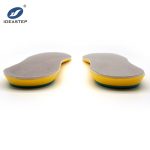
Footcare distributors, podiatry clinics and footwear brands build dependable custom insole programs around controlled material specs and repeatable design engineering. Many projects hit delays when suppliers skip validation and move straight to moulding, without checking material hardness, layer bonding and biomechanical geometry first. Our development workflow connects material specification, iterative design tuning and pre-production validation. This approach helps your custom made foot insoles progress smoothly from initial requirements to mass production, with stable, predictable performance across batches.
Material Selection Guided By Clinical And Commercial Requirements
No single material works for every application. We match each layer to your target use case, load demands and expected service life for your market.
EVA serves as our most flexible base substrate. Our team adjusts its density and Asker C hardness for accommodative comfort, mild arch correction or sport-focused shock absorption. It thermoforms cleanly and fits mid-volume product lines with controlled cost targets.
TPU support shells deliver firm arch and rearfoot control. We specify these components for corrective orthotics, heavy-duty occupational insoles and high-impact athletic ranges where long-term shape retention matters most.
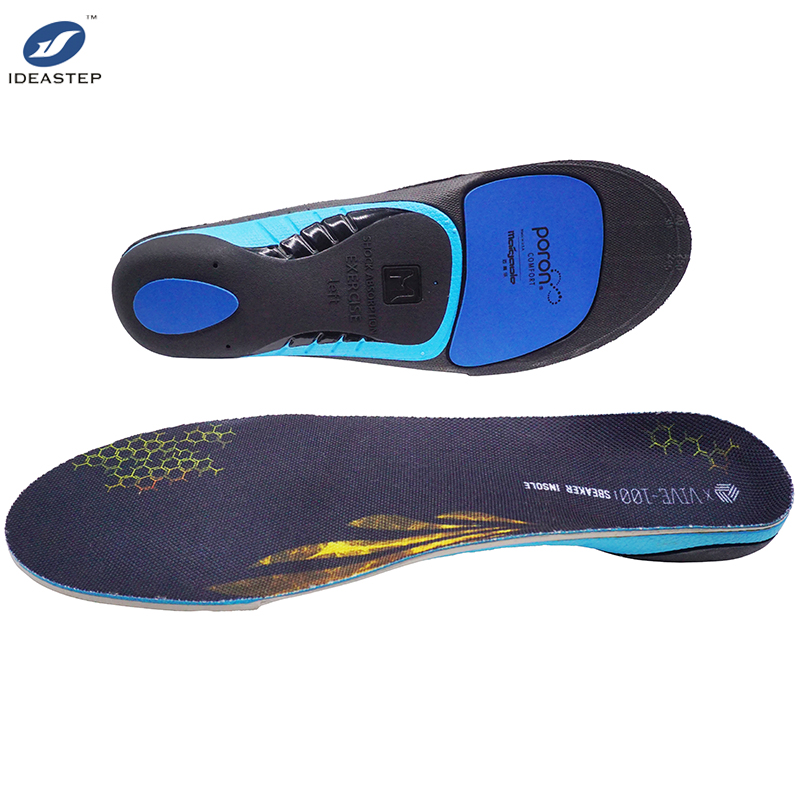
PU and PORON foam layers offer high resilience and low compression set. These materials suit premium lines for users who stand for long hours or require steady cushioning under repeated load.
Cork blends provide natural rigidity and stable performance across temperature changes. Clinics often select this option for semi-rigid support with moderate thermoformability.
Top cover fabrics finish the layered stack. We pick breathable mesh, anti-odour knit, moisture-wicking polyester or soft medical-grade liners based on your end use: retail comfort, diabetic care or athletic recovery.
Our engineering team spots material compatibility issues early. Different substrates require matching adhesives and lamination settings to prevent delamination under cyclic loading, one of the most common failure points for low-quality custom insoles.
Design Engineering For Production Ready Geometry
Raw foot scans or prescription notes only mark the starting point. Our designers convert these inputs into manufacturable 3D files that balance biomechanical goals with tooling limitations.
We refine arch height, heel cup depth, metatarsal pad placement and zone-specific thickness. We avoid overcomplicated profiles that fail to fit standard shoe lasts, a recurring headache for clinic and brand buyers.
We run finite element checks on key support zones to validate pressure distribution before cutting tooling. For OEM partners, we build reusable design libraries. These pre-approved templates cut development time when you release new SKUs for flat feet, high arches, diabetic care or athletic segments.
Every finished design package includes annotated drawings, layer stack details, hardness values and tolerance ranges. Your team gains full visibility, instead of only receiving finished samples.
Prototyping And Validation Before Full Production
Prototyping separates theoretical design from real-world performance. We produce first-run samples with your exact bill of materials, no substitute foam.
We complete three core validation stages. First, dimensional checks confirm compatibility with target footwear. Second, compression and fatigue tests benchmark long-term durability. Third, we collect feedback from your clinical or product team to guide revisions.
This phase locks the design for production. Once you sign off, we freeze material grades, cutting paths and lamination sequences to minimise batch variation. This level of control carries critical value for medical distributors and clinics that need consistent clinical outcomes across every shipment.
Mass Production Controls For Consistent Custom Insoles
After approval, designs move to CNC milling, compression moulding or 3D printing, based on order volume and design complexity. Our quality team inspects incoming raw material batches, verifies hardness and monitors lamination strength through each production run.
We integrate private branding, custom packaging and sizing configurations directly into the workflow. Your brand or clinic labels attach to finished units without extra handling that creates defects or slows lead times.
We keep full documentation for every production batch. Material certificates, test summaries and batch records attach to each order and simplify compliance work for medical device resellers.
How This Workflow Benefits Your Footcare Business
This structured process lowers your commercial risk. You avoid expensive rework after you invest in tooling and moulds. It also lets you expand your product portfolio efficiently. You launch multiple custom insole lines built on validated material and design logic, rather than testing unproven variants.
Clinics receive orthotic devices that align closely with their prescription goals. Brands and distributors secure stable supply chains with clear specs they can share with retail and clinical customers.
Next Steps For Your Custom Insole Project
If you want to launch custom made foot insoles under your private label or expand your clinic product lineup, share your target applications, performance priorities and volume roadmap. Our biomechanics and manufacturing team will map out a suitable material stack, outline design boundaries and provide sample timelines matched to your launch schedule. We prioritise clear specifications and iterative validation so you move into production with full confidence in every finished unit.
Frequently Asked Questions
Can you adjust material stacks separately for medical prescription insoles and retail comfort lines?
Yes. We maintain independent specification frameworks for clinical corrective devices and retail comfort products, alongside matching testing and documentation standards for each category.
What files do you deliver once a design reaches production ready status?
Approved deliverables include STL manufacturing files, 2D engineering drawings, complete BOM, hardness and tolerance specs, plus test reports compiled during validation.
How many revision rounds come with prototyping?
We include two standard revision cycles for each custom development project. We track all changes clearly so you control project scope and sampling costs.
Related Reading:
Massage Insoles Wholesale: Material Features and Product Applications
High Heel Insoles with Metatarsal and 3/4 Arch Support