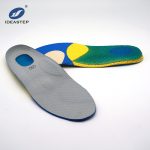
Developing custom insoles starts with understanding the product, its intended application and the requirements of the target market. Material selection is only one part of the process. Construction, component placement, thickness and manufacturing methods all affect the final design.
For orthotic product distributors, podiatry suppliers and footwear brands, customization provides a way to develop products that match specific market needs. A clear development process also helps reduce unnecessary sample revisions and makes the transition to bulk production more manageable.

1. Define the Product Requirements
Every custom insole project begins with a product brief. Before discussing materials or manufacturing methods, buyers should establish where the insole will be used and what the finished product needs to offer.
Key details include:
- Target application: Podiatry, sports footwear, work shoes, casual footwear or other product categories.
- Product construction: Full-length, 3/4-length, flat, contoured or multi-component designs.
- Target market: Size range, regional requirements and product positioning.
- Design priorities: Cushioning, flexibility, structural support, durability or reduced weight.
- Order requirements: Target price, estimated volume, packaging and branding.
Existing products, technical drawings and physical samples can all serve as useful references. Providing these details at the beginning gives the manufacturer a clearer understanding of the project and helps avoid repeated changes later.
2. Build the Insole Structure Around the Application
Once the requirements are established, the next step is to determine the insole construction. Each component should have a clear purpose, and its dimensions and position need to work with the rest of the design.
A custom orthotic insole may include:
- A fabric or microfiber top cover
- An EVA or PU cushioning layer
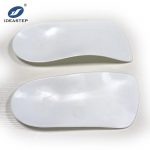
- A semi-rigid or rigid support shell
- A molded arch profile
- A deep or contoured heel cup
- Metatarsal pads or other localized support components
The construction varies from one product to another. A basic cushioning insole may use only a few layers, while a more structured orthotic design can combine several materials and support components.
Overall thickness, heel depth, arch geometry and edge shape also need attention. These details affect both the finished product dimensions and its compatibility with the intended footwear.
3. Choose the Right Starting Point for Customization
Not every project begins with a finished design. Some buyers have an existing product that needs modification, while others have only a concept or a set of initial requirements.
Three common approaches can help move a project forward.
Reference-Based Customization
An existing insole or physical sample provides a practical starting point. The manufacturer can review its dimensions, materials and construction before discussing possible changes. This approach works well when buyers want to update an established product without developing an entirely new design.
Drawing-Based Development
Technical drawings provide specific information about dimensions, component positions and structural details. They are useful when the buyer has already established the design and needs a manufacturing partner to assess its feasibility.
Concept-Based Development
Some projects begin with an application requirement, product idea or collection plan rather than a complete specification. The manufacturer can discuss possible constructions and materials with the buyer before preparing an initial design.
The amount of reference information available will influence the development process. Clear drawings and samples make it easier to identify design requirements and assess whether the proposed construction can be manufactured consistently.
4. Select Materials for Each Component
Different insole components have different material requirements. A top cover needs suitable surface properties and bonding compatibility, while a cushioning layer or support shell must meet its own physical specifications.
Common materials used in custom insole production include:
| Material | Typical Application | Key Specifications |
|---|---|---|
| EVA Foam | Cushioning layers and molded bases | Density, hardness and thickness |
| PU Foam | Cushioning components | Formulation, resilience and durability |
| Poron-type Materials | Localized cushioning | Compression response and thickness |
| TPU | Flexible or structural components | Hardness, flexibility and material grade |
| PP | Rigid or semi-rigid support shells | Rigidity, thickness and forming requirements |
| Microfiber and Fabric | Top covers | Surface texture, color and bonding compatibility |
Material selection should account for how the components work together. For example, the cushioning layer, support shell and top cover must be compatible with the intended construction and assembly process.
Buyers should confirm material grades and physical specifications during development. General material names alone do not provide enough information to establish consistent product requirements.
5. Develop and Review the Sample
A physical sample allows both parties to examine the proposed design before bulk production. It is also the stage where construction details can be checked and adjusted.
During sample review, buyers should pay attention to:
- Overall length, width and thickness
- Arch profile and heel cup dimensions
- Position and alignment of support components
- Material hardness and density
- Bonding between layers
- Edge finishing and surface quality
- Compatibility with the intended footwear
Feedback should identify specific issues wherever possible. If a metatarsal pad sits too high, a cushioning layer is too thick or the heel cup needs a different profile, these details give the manufacturer a clear basis for revision.
Once the sample meets the agreed requirements, it should be approved as the reference for production. The related drawings and material specifications should be kept alongside it.

6. Check Manufacturing Feasibility Before Production
A design that works as a sample must also be suitable for repeatable manufacturing. Before production begins, the manufacturer needs to review the processes, materials and assembly requirements involved.
Common manufacturing methods include:
- Die cutting: Produces components in defined shapes and dimensions.
- Thermoforming: Shapes suitable thermoplastic materials into the required profiles.
- Compression molding: Forms selected foam and molded components.
- Injection molding: Produces specific plastic components using dedicated molds.
- CNC processing: Machines compatible materials to achieve controlled shapes and dimensions.
A single insole may involve several of these processes. The manufacturing plan should account for component compatibility, assembly sequence and dimensional requirements.
If a design contains details that are difficult to reproduce consistently, it is better to address them before mass production. Adjusting the construction at this stage can help avoid production delays and unnecessary rework.
7. Keep Specifications Consistent Across Orders
For wholesale buyers, consistency matters just as much as the initial product design. Repeat orders should match the approved sample unless both parties have agreed to a revision.
A complete production reference should include:
- Approved sample and technical drawings
- Material types, grades and specifications
- Product dimensions and tolerances
- Component positions and construction details
- Color and surface finish requirements
- Packaging and labeling instructions
- Quality inspection criteria
Production checks should cover materials, dimensions, bonding and finished-product appearance. Comparing completed products with the approved sample also helps identify differences between batches.
When a buyer requests a change to an existing model, the updated specifications should be documented clearly. This avoids confusion between previous versions and newly revised products.
8. Custom Insole Development with Ideastep
Ideastep works with distributors, podiatry suppliers, footwear manufacturers and private-label brands on customized insole projects.
Our product development capabilities cover different orthotic constructions, material combinations and component configurations. Projects can include full-length and 3/4-length designs, molded arch profiles, heel cup structures, cushioning layers and customized support components.
Available customization options include:
- EVA, PU and other suitable material combinations
- Customized arch profiles and heel cup structures
- Different cushioning and support configurations
- Adjusted dimensions, thickness and material density
- Customized top covers, colors and surface finishes
- Logo application and private-label packaging
Buyers can submit technical drawings, reference samples or initial product requirements for review. Our team can discuss the proposed construction, assess manufacturing options and arrange sample development.
For OEM and ODM projects, the process can be coordinated around the product specifications, sample approval and planned order volume.
Develop Your Custom Insole Project
A successful custom insole depends on more than an individual material or component. The structure, dimensions, material combinations and manufacturing process all need to work together.
Whether you are updating an existing orthotic product or developing a new private-label range, a clearly defined specification provides a practical starting point for sample development and bulk production.
Share your drawings, reference samples or product requirements with our team to discuss your project.
Contact our team to discuss custom insole designs, OEM/ODM development and wholesale production.
Related Post:
Source Orthopedic Insoles Custom Made for Your Footwear & Clinic Product Lines
Flat Feet Corrective Insoles Custom Arch‑Support Orthotic Shoe Inserts