Semi custom insoles combine standardized product structures with selected design modifications. Instead of developing every product from scratch, manufacturers can use an existing insole platform and adjust specific features to meet different market requirements.
For orthotic brands, distributors, and wholesale buyers, this approach offers a practical balance between product flexibility and production efficiency. It allows businesses to develop multiple product variations without creating an entirely new design for each SKU.
1. What Are Semi Custom Insoles?
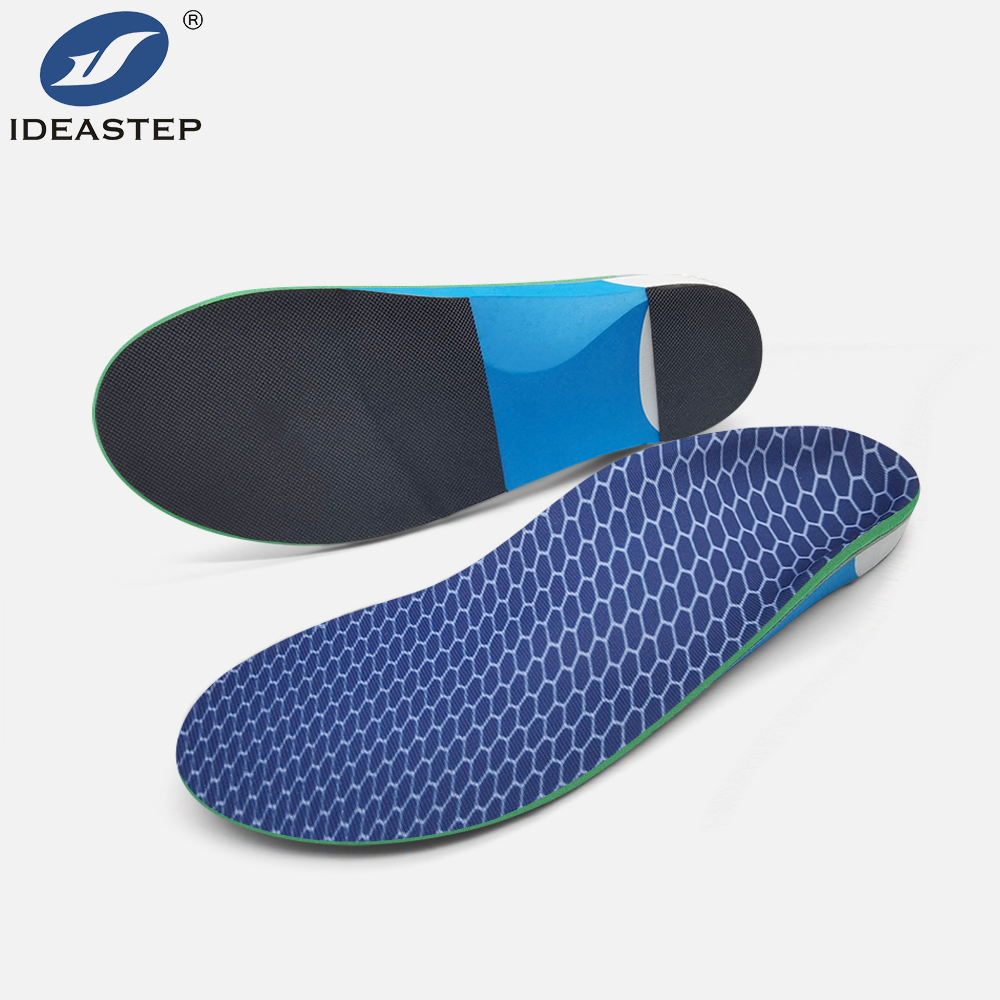
Semi custom insoles are developed from an existing product design, with selected components or specifications adjusted to suit different applications.
The basic structure remains largely unchanged, while manufacturers modify features such as:
- Arch height and contour
- Heel cup depth and shape
- Cushioning material and thickness
- Top cover material and color
- Insole length and size range
- Forefoot padding and component placement
For example, one standard insole design can be adapted into several versions with different arch profiles, cushioning layers, or surface materials.
Unlike fully custom insoles, semi custom products do not require a completely new structure for every project. They also offer more flexibility than standard products with fixed specifications.
2. Semi Custom vs. Standard and Fully Custom Insoles
The right development model depends on the required level of customization, target market, and production volume.
| Comparison Factor | Standard Insoles | Semi Custom Insoles | Fully Custom Insoles |
|---|---|---|---|
| Design Basis | Fixed specifications | Existing design platform | Project-specific design |
| Structural Changes | Limited | Selected adjustments | Extensive modifications |
| Material Options | Predefined | Selected combinations | Project-specific |
| Development Work | Minimal | Moderate | More extensive |
| Product Differentiation | Limited | Moderate to high | High |
| Typical Application | General wholesale | Multiple product segments | Specialized projects |
Semi custom development works well when buyers need several product variations without investing in completely new designs.
For simpler wholesale requirements, standard products may be sufficient. Projects involving unique geometry or specialized construction may require fully custom development.
3. Which Insole Features Can Be Customized?
The main advantage of semi custom development is the ability to modify selected components while retaining the core product structure.
Arch Support
Arch support can be adjusted through different heights, contours, and support lengths. For example, a product range may include low, medium, and higher arch profiles based on a shared design platform.
Manufacturers should define arch position, height, width, and the transition into the heel and forefoot sections.
Heel Cup
Heel cup depth, width, wall height, and rearfoot contour can be modified to suit different product requirements.
These changes should also account for the internal dimensions of the intended footwear.
Cushioning Layers
Different cushioning materials and thicknesses can create distinct product configurations without changing the entire insole structure.
Common options include EVA foam, PU foam, and PORON-type materials. Manufacturers can also adjust cushioning placement, such as adding localized padding to the heel or forefoot.
Top Cover and Size
Top covers can be customized through material, color, texture, thickness, and branding. Common options include microfiber, polyester fabric, and mesh.
Size grading and product length can also be adjusted. Full-length and 3/4-length versions may be developed where the base structure and manufacturing requirements allow.
4. Developing Multiple Products from One Design Platform
A shared design platform allows manufacturers to create several product versions using common structural elements.
For example, a wholesale product range might include:
| Product Version | Arch Configuration | Cushioning | Top Cover |
|---|---|---|---|
| Version A | Standard profile | EVA foam | Microfiber |
| Version B | Higher arch profile | EVA and PU foam | Microfiber |
| Version C | Standard profile | Localized heel cushioning | Fabric |
| Version D | Modified arch and heel | Multi-layer foam | Mesh |
This is an illustrative configuration. Actual specifications should be confirmed through design review and sample approval.
A modular approach can simplify product planning and make better use of shared components. However, each version still needs a separate product code, material specification, size definition, and approved sample.
Without clear product records, similar SKUs can become difficult to distinguish during manufacturing and inventory management.
5. Material Options for Semi Custom Insoles
Material combinations should reflect the function of each component and the requirements of the finished product.
| Material | Typical Application | Adjustable Properties |
|---|---|---|
| EVA Foam | Base layers and cushioning | Density, hardness, thickness, color |
| PU Foam | Cushioning components | Density, formulation, thickness |
| Polypropylene (PP) | Rigid and semi-rigid support shells | Thickness and structural profile |
| TPU | Flexible structural components | Material grade and geometry |
| PORON-type Materials | Localized cushioning | Thickness and placement |
| Microfiber and Fabric | Top covers | Color, texture, thickness, finish |
For multi-layer constructions, material compatibility and bonding methods require particular attention.
A change in foam type or thickness may affect the overall insole profile, compression characteristics, and bonding requirements. Manufacturers should therefore evaluate material changes as part of the complete product construction.
6. Manufacturing Considerations
Semi custom production requires a balance between product variation and manufacturing consistency. The selected process should match the material, structure, and order volume.
Common manufacturing methods include:
- Die cutting: Used for shaping foam sheets, top covers, and flat components.
- Thermoforming: Used to form thermoplastic materials into defined contours.
- Compression molding: Suitable for molded foam structures and shaped components.
- CNC machining: Used for tooling, molds, and suitable materials requiring precise machining.
Some product versions may share existing tooling and production steps. However, significant changes to arch height, heel geometry, or dimensions may require tooling adjustments.
Before bulk production, manufacturers should confirm the following specifications:
- Product dimensions and size range
- Material type, density, hardness, and thickness
- Arch and heel configurations
- Component positioning
- Surface finish and color
- Packaging and branding requirements
These details provide a consistent reference for production and repeat orders.
7. Semi Custom Insoles for Wholesale and Private-Label Projects
Semi custom development is useful for brands and distributors that need a broader product range without managing a completely separate design for every item.
Expanding an existing range: An established insole can be adapted with different arch profiles, cushioning materials, or top covers.
Private-label development: Buyers can customize colors, logos, labels, and packaging while retaining an existing product structure.
Serving different footwear markets: Selected modifications can create versions for athletic, casual, and work footwear.
Managing SKUs: A shared design platform can simplify product planning, provided the number of variations remains manageable.
For repeat wholesale orders, buyers should maintain approved samples and specifications for each product version. This helps reduce confusion and control differences between production batches.

8. What Buyers Should Confirm Before Ordering
Clear specifications help manufacturers evaluate feasibility, prepare samples, and plan production.
| Project Information | Details to Confirm |
|---|---|
| Base Product | Existing model or reference sample |
| Structural Changes | Arch, heel, forefoot, and overall profile |
| Materials | Base material, cushioning, and top cover |
| Size Range | Required sizes and grading |
| Product Versions | Number of variations and their differences |
| Branding | Logo, color, label, and packaging |
| Order Quantity | Quantity per size and product version |
| Sample Approval | Reference sample and revision requirements |
Buyers should also confirm whether requested changes can use existing tooling or require additional development.
MOQ may vary according to materials, production methods, tooling, and the number of customized versions. Confirming the quantity for each configuration helps avoid misunderstandings during order planning.
9. Working with a Semi Custom Insole Manufacturer
A suitable manufacturing partner should be able to manage standardized production alongside controlled product variations.
When evaluating suppliers, buyers should consider:
- Experience with different orthotic insole constructions
- Availability of existing product platforms
- Material and structural customization options
- Sample development procedures
- Tooling and manufacturing capabilities
- Wholesale production capacity
- Quality control across product versions
- OEM/ODM and private-label support
Ideastep supports B2B orthotic insole projects involving structural adjustments, material combinations, and private-label requirements. Buyers can provide an existing product reference, technical drawing, or sample for evaluation before development begins.
The objective is to establish practical product specifications that meet customization requirements while remaining suitable for repeat production.
Discuss Your Semi Custom Insole Requirements
Semi custom insoles allow brands and distributors to develop differentiated product ranges from established designs. Adjusting selected structures, materials, and finishes can provide greater product flexibility without requiring a completely new design for every SKU.
If you are planning a semi custom orthotic insole range, contact our team to discuss your base design, required variations, target quantities, and OEM/ODM specifications.
Related Post: Semi-Custom Orthotic Insoles for OEM Projects: Balancing Customization and Production Efficiency.