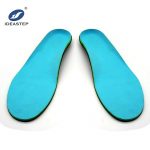
The heel is one of the most important areas in an orthotic insole. Its construction affects how the insole absorbs repeated loading, supports the rearfoot, and fits inside the shoe. A simple cushioning insert and a structured heel cup may look similar at first, but they serve different purposes and require different material choices.
For orthotic manufacturers and footwear brands, heel orthotic development involves balancing cushioning, structural support, thickness, and material performance. The design also needs to work with the arch section and the overall footwear construction.
Understanding these factors helps when developing heel orthotics for medical footwear, sports insoles, work shoes, and everyday footwear.
1. Understanding Heel Orthotics
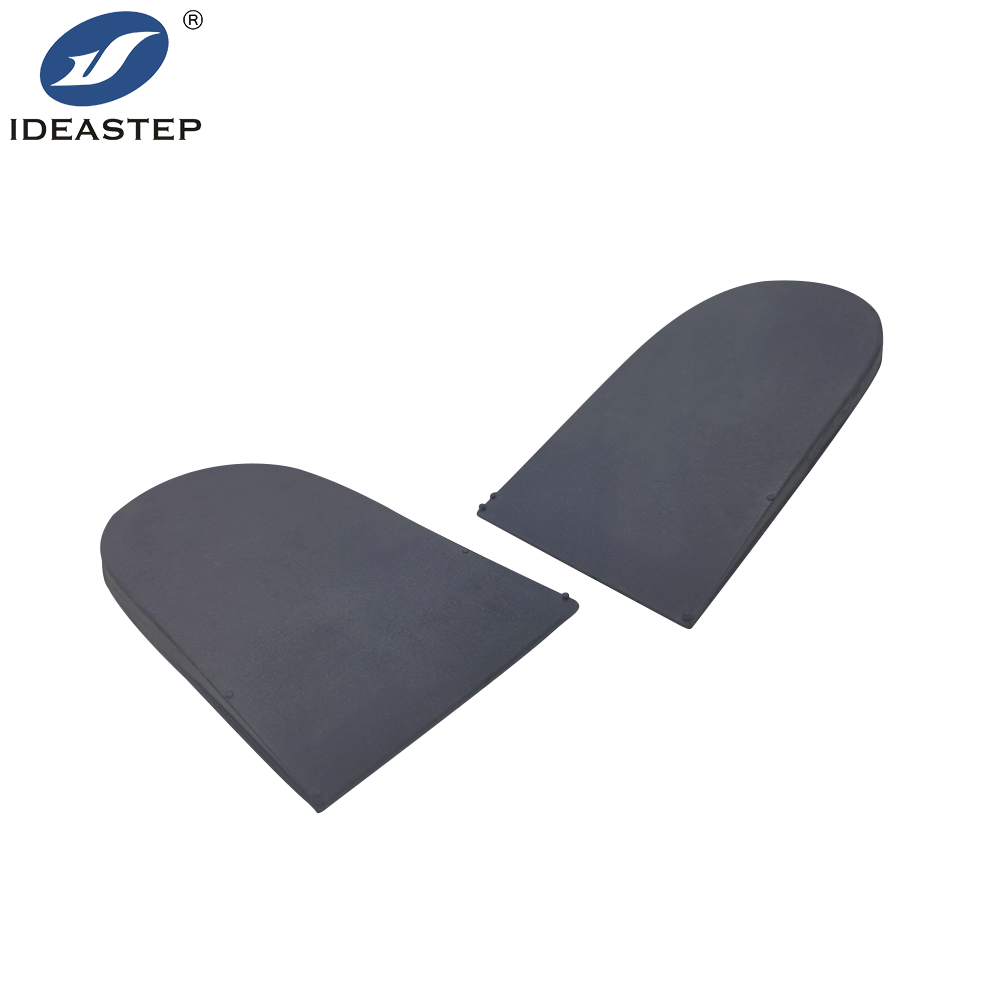
Heel orthotics include cushioning inserts, shaped heel cups, and supporting components designed for the rearfoot area. Some products focus mainly on cushioning, while others use a defined structure to provide additional heel support.
Common designs include:
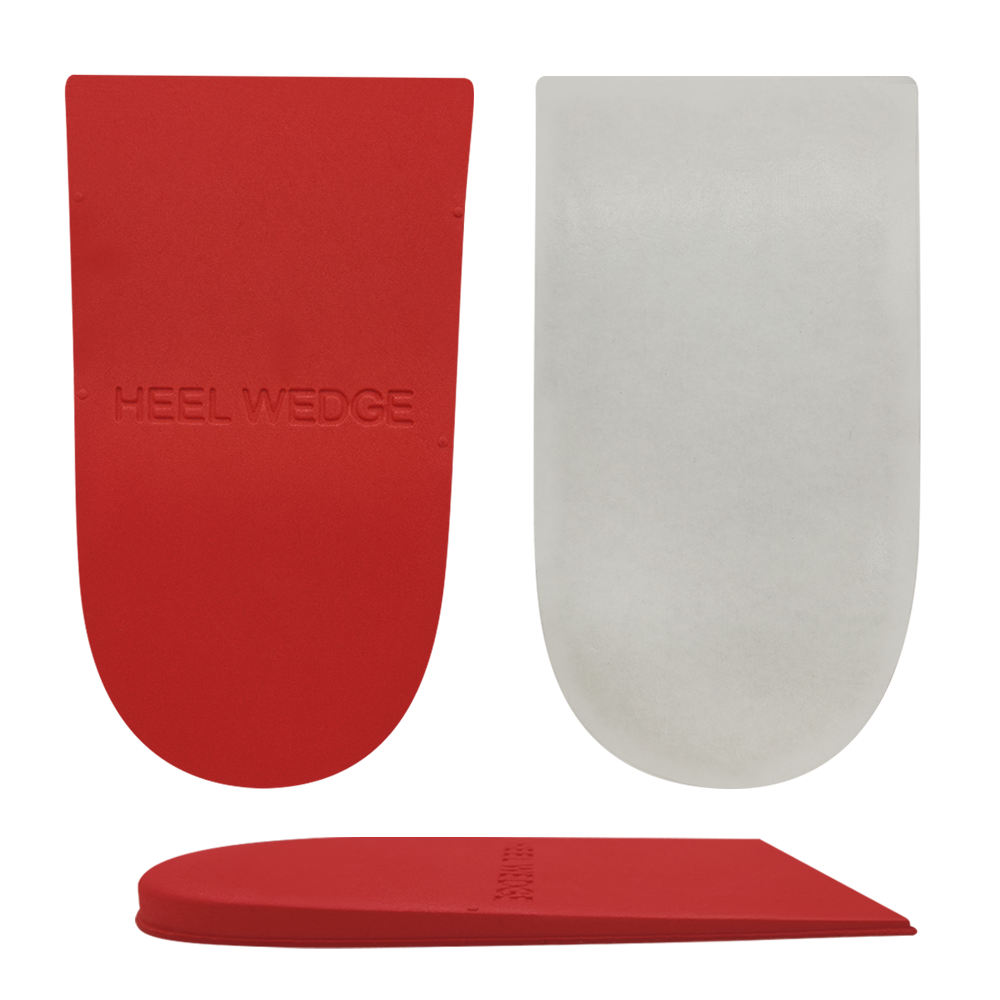
- Heel cushions: Soft inserts placed beneath the heel to provide cushioning.
- Heel cups: Contoured components that surround part of the heel and help maintain its position within the insole.
- Heel stabilizers: Structured components designed to provide additional rearfoot support.
- Full-length orthotic insoles: Complete insole constructions that combine heel features with arch and forefoot support.
These components are not interchangeable. A soft heel cushion mainly addresses cushioning, whereas a deep heel cup or semi-rigid shell adds a more defined structure.
This distinction should be established early in product development because it affects material selection, component geometry, and the manufacturing process.
2. Materials Used for Heel Cushioning
Heel cushioning depends on more than material softness. Density, hardness, thickness, compression behavior, and recovery all influence how a cushioning layer performs under repeated loading.
EVA Foam
EVA foam is widely used in heel cushions and orthotic insoles because it is lightweight and available in different densities and hardness levels.
Depending on the product design, EVA can serve as a cushioning base, a molded heel cup, or part of a multi-density construction. It can also be processed through cutting and molding methods to achieve different shapes and thicknesses.
The selected grade should match the intended cushioning response and support requirements. A softer EVA formulation will behave differently from a firmer one under compression, so hardness should not be considered independently of density and thickness.
PU Foam
PU foam offers another option for heel cushioning. Its cushioning and resilience characteristics vary according to formulation and density.
It can be used as a cushioning layer or combined with EVA to create a multi-material construction. In some designs, PU is selected for its particular compression response and surface feel.
During development, manufacturers should check thickness consistency, compression behavior, and compatibility with adjacent layers.
PORON and Microcellular Urethane
PORON and other microcellular urethane materials are used in selected cushioning applications. Their cellular structure can provide controlled compression characteristics, depending on the specific grade.
Rather than covering the entire insole, these materials are often incorporated into targeted areas. A localized insert beneath the heel, for example, can be combined with an EVA base to create a different cushioning profile.
Material grade and thickness should be confirmed before production, as performance can vary between formulations.
Gel Materials
Gel components are sometimes incorporated into heel cushions to provide a different cushioning feel. They may be positioned directly beneath the heel or combined with foam layers.
Their suitability depends on weight, thickness, bonding compatibility, and long-term material stability. Gel is therefore best evaluated as part of the complete insole construction rather than as an independent solution.
3. Heel Stability and Structural Design
Cushioning and stability serve different functions. While foam layers manage compression, shaped supporting components help define the position and structure of the rearfoot area.
Deep Heel Cup Design
A deep heel cup surrounds part of the heel and creates a more defined rearfoot contour. It is commonly incorporated into structured orthotic insoles.
Its geometry involves several important parameters:
- Heel cup depth
- Internal width and contour
- Rearfoot wall height
- Shell thickness
- Transition between the heel cup and arch section
These dimensions need to match the intended footwear and product specification. Increasing heel cup depth does not automatically improve the design; an unsuitable profile may affect fit or interfere with the surrounding insole structure.
Semi-Rigid Heel Shell
Some orthotic insoles use a semi-rigid shell beneath the heel and arch. Compared with foam alone, this component provides a more defined supporting structure.
TPU and polypropylene (PP) are two possible material options. TPU formulations offer different levels of flexibility and elastic behavior, while PP is generally selected for applications requiring greater rigidity.
The finished shell is influenced by more than the material grade. Thickness, curvature, edge profile, and forming conditions all affect its structural characteristics.
Integration with the Arch Section
The heel structure should be developed together with the arch section. These two areas form part of the same supporting structure, and changes in one area can influence the shape and flexibility of the other.
An abrupt transition between the heel cup and arch may affect the finished profile. For this reason, prototype evaluation should consider the complete orthotic insole rather than treating the heel component as an isolated part.
4. Comparing Materials for Heel Orthotics
Different materials offer distinct properties for heel cushioning and structural support. The following comparison provides a practical reference for product development.
| Material | Main Characteristics | Common Applications |
|---|---|---|
| EVA foam | Lightweight, available in different densities and hardness levels | Heel cushions, molded heel cups, orthotic bases |
| PU foam | Cushioning and resilience depending on formulation | Heel cushioning layers and comfort insoles |
| PORON / microcellular urethane | Controlled compression characteristics depending on grade | Localized heel cushioning |
| Gel | Flexible cushioning component | Targeted heel inserts |
| TPU | Thermoplastic material with adjustable flexibility depending on grade | Flexible and semi-rigid support shells |
| PP | Generally rigid and structurally stable | Rearfoot shells and orthotic support components |
A finished product may combine several of these materials. For example, an EVA base can provide the main cushioning structure, a microcellular urethane insert can add localized cushioning, and a TPU or PP component can define the rearfoot profile.
The combination should be selected according to the intended function, overall thickness, manufacturing process, and target cost. Material compatibility also matters, particularly when different components need to be bonded together.
5. Manufacturing Methods for Heel Orthotics
Heel cushions, molded heel cups, and full-length orthotic insoles do not necessarily follow the same production process. The method depends on the selected material, component geometry, and order volume.
Foam Cutting and Layering
Foam sheets can be cut into specific shapes and assembled into single-layer or multi-layer products.
This method is suitable for heel inserts and cushioning components with relatively straightforward geometries. Cutting accuracy, thickness control, and bonding quality are important, especially when producing multiple sizes.
Compression and Molding
Molding processes are used to produce shaped heel cups and contoured orthotic components. The mold determines key features such as cup depth, wall profile, and overall dimensions.
Material selection must be compatible with the forming method. Temperature, pressure, and cycle conditions should follow the relevant material specifications.
Thermoplastic Forming
TPU and PP components can be formed into supporting shells using suitable thermoplastic processing methods.
Processing conditions vary according to the material grade and component thickness. Controlled forming conditions help maintain the intended shape and reduce dimensional variation.
CNC and Digital Manufacturing
CAD and CNC processes can help define and reproduce heel cup contours, shell geometry, and size variations.
Digital models are useful during product development, particularly when adapting an existing design to different footwear platforms. However, a digital model alone cannot confirm finished-product performance. Physical samples still need to be checked for fit, thickness, material behavior, and structural accuracy.
6. Quality Control for Heel Orthotics
Material consistency and dimensional accuracy are important when heel orthotics are produced for wholesale orders or regular footwear production.
Quality checks should cover both individual components and the finished insole.
Material inspection: Check foam density, hardness, thickness, and appearance against approved specifications. Verify the grades of TPU, PP, gel, and other supporting materials.
Dimensional inspection: Measure heel cup depth, width, wall height, shell thickness, and overall product dimensions against approved drawings or samples.
Compression and recovery: Evaluate cushioning materials under specified test conditions. Repeated compression testing may be included where required by the product specification.
Structural integrity: Inspect molded heel cups and supporting shells for shape consistency, deformation, and dimensional variation.
Bonding performance: Check the adhesion between cushioning inserts, foam bases, and support components in multi-layer constructions.
Size consistency: Confirm that heel geometry and support features remain consistent across the complete size range.
Approved samples and documented technical specifications provide a reliable reference for production inspection and repeat orders.
7. Heel Orthotics for Different Footwear Markets
The construction of a heel component should reflect the footwear category, available internal space, and intended product function.
Medical and Orthotic Products
Medical and orthotic footwear may require shaped heel cups, semi-rigid shells, or combinations of cushioning and structural components.
The design should follow the customer’s technical requirements, including material specifications, heel geometry, and support characteristics. Any medical or clinical performance claims should be supported by appropriate product validation.
Sports and Running Insoles
Sports insoles generally balance heel cushioning, flexibility, and weight. EVA and PU foam are common options, while localized cushioning materials can be added where the design requires them.
The heel construction should also work with the shoe’s existing midsole. Excessive thickness or unsuitable stiffness may affect the overall footwear design.
Work and Safety Footwear
Work footwear often requires durable cushioning that can withstand repeated loading. Material compression behavior, thickness, and structural integrity are important considerations.
A shaped heel component may be incorporated when additional rearfoot support is specified. Its dimensions should remain compatible with the available shoe volume and other footwear components.
Everyday and Casual Footwear
Everyday footwear offers a wider range of possible insole constructions, although internal shoe volume remains an important consideration.
EVA or PU cushioning can be combined with a shaped heel section to achieve the required balance of cushioning, support, and fit. The final profile should be checked against the intended shoe model.
8. OEM and ODM Development for Heel Orthotics
For footwear brands, orthotic manufacturers, and wholesale distributors, OEM and ODM development provides a way to adapt heel orthotics to specific product requirements.
Before sample production, the buyer and manufacturer should confirm the main technical details:
- Intended footwear category and product function
- Heel cup depth and geometry
- Required cushioning characteristics
- Material type, density, and hardness
- Supporting shell material and thickness
- Heel-only or full-length construction
- Size range and dimensional tolerances
- Top-cover materials and branding requirements
- Target order quantity and production schedule
Prototype evaluation should include both the heel component and the complete insole. This helps identify problems with thickness, fit, material compatibility, and the transition between heel and arch structures before bulk production.
For repeat wholesale orders, approved samples and clear technical specifications also help maintain consistency between production batches.
9. Developing Heel Orthotics for Wholesale Production
A reliable heel orthotic design comes from balancing cushioning materials, rearfoot geometry, and structural support. EVA, PU, and microcellular urethane can serve different cushioning requirements, while TPU and PP offer options for shaped supporting components.
The key is to match each material and structural feature to the intended footwear application. Adding more layers or using a stiffer shell does not necessarily produce a better insole; the finished construction must meet the required fit, thickness, and performance specifications.
Ideastep develops custom orthotic insoles and wholesale insole products using different cushioning materials, shaped support structures, and multi-layer constructions.
Contact Ideastep to discuss your heel orthotic requirements, material specifications, and OEM or ODM production projects.
Related Post: Reduce Heel Pain: How Orthotics Can Help You.