Work boots are built for protection and durability, but their enclosed construction can restrict airflow. During long shifts, heat and moisture may accumulate inside the footwear, particularly when thick uppers, protective components, and limited ventilation are involved.
Insole design is one factor that influences the internal footwear environment. Breathable top covers, suitable foam materials, and carefully designed surface structures can help manage moisture while maintaining cushioning and dimensional stability.
For industrial footwear, the challenge is to balance these properties without compromising fit, durability, or compatibility with protective components.
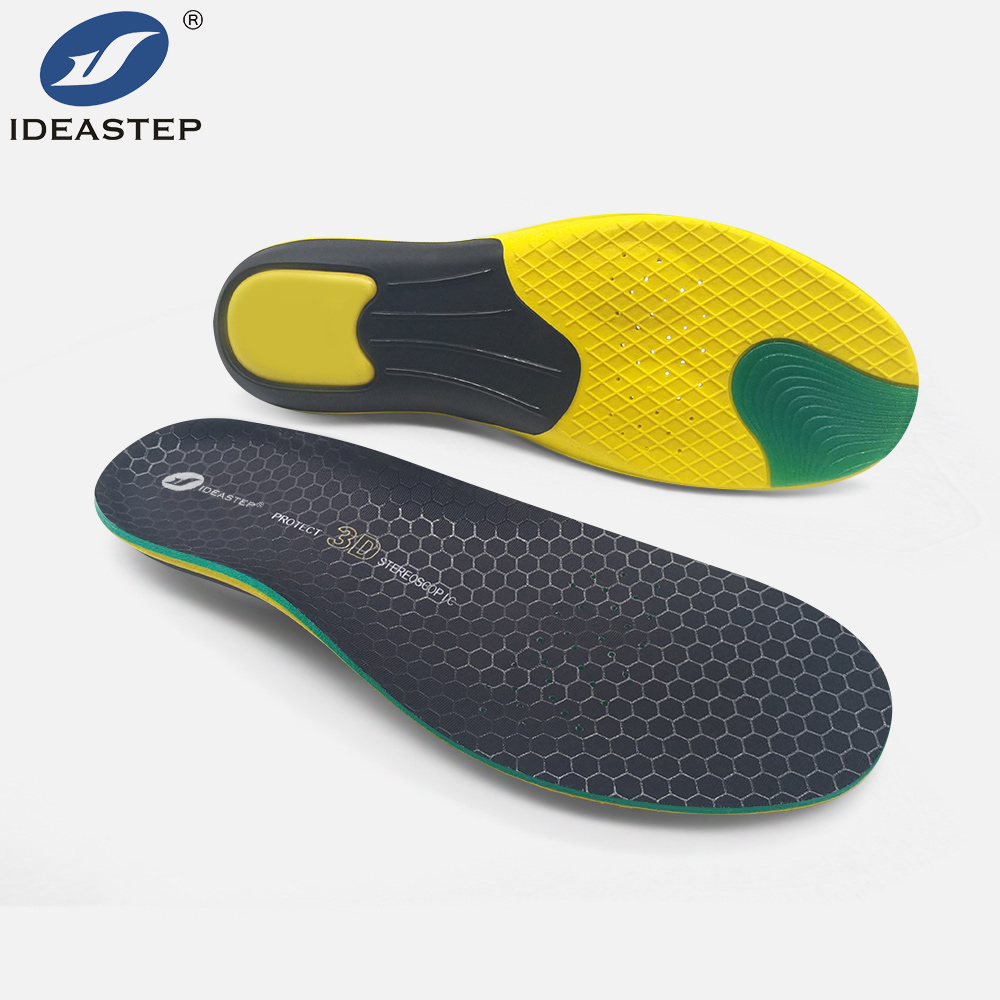
1. Why Moisture Management Matters in Work Boot Insoles
Work boots often have less internal ventilation than lightweight footwear. Moisture from perspiration can accumulate around the foot-insole interface, especially during extended periods of standing and walking.
An insole that retains moisture or has a surface that wears quickly may become less suitable for demanding working conditions.
Several factors influence the performance of a work boot insole:
- Air permeability of the top-cover material.
- Moisture absorption and transfer properties.
- Foam structure and thickness.
- Surface friction and abrasion resistance.
- Compression performance under repeated loading.
These properties should be evaluated together. A breathable top fabric does not necessarily make the entire insole breathable, particularly when it is bonded to a dense, non-permeable foam layer.
2. Materials Used in Breathable Work Boot Insoles
Different materials perform different functions within an insole. The choice depends on the required surface properties, cushioning level, and construction.
Mesh and Technical Fabrics
Mesh is commonly used as an insole top cover because its open structure allows air to pass through the fabric. Some technical textiles are also designed to transfer moisture away from the contact surface.
Material selection should take account of:
- Air permeability and moisture-handling properties.
- Abrasion resistance under repeated friction.
- Fabric thickness and surface texture.
- Bonding compatibility with foam.
- Resistance to deformation during production.
Fabric performance can change after lamination. A material that is breathable on its own may offer less airflow when bonded to an underlying layer.
EVA Foam
EVA is widely used in footwear insoles because its density, hardness, and thickness can be adjusted for different constructions.
In work boot applications, EVA can serve as a cushioning layer or a firmer base. Perforations and molded channels can also be incorporated into selected designs.
The main considerations are compression behavior, material recovery, dimensional stability, and the effect of any openings on structural strength.
PU Foam
PU foam is used in cushioning components where its formulation provides the required compression and recovery characteristics.
Different PU grades vary in density, resilience, and fatigue behavior. Selection should be based on the intended loading conditions and the performance of the finished construction.
Moisture-Management Materials
Certain fabrics and surface treatments are designed to absorb or transfer moisture. Their effectiveness depends on fiber composition, fabric structure, and finishing methods.
Moisture absorption, moisture transfer, and drying rate are separate properties. They should not be treated as interchangeable claims when comparing materials.
3. Design Features That Improve Airflow
Material choice alone does not determine airflow. The geometry and arrangement of the insole layers also influence ventilation.
Perforated Foam
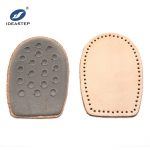
Perforations create openings through selected areas of the foam. Their size, spacing, and position need to be matched to the material thickness and load-bearing requirements.
Too many or poorly positioned openings can weaken the structure, particularly around the heel and other high-pressure areas.
Molded Air Channels
Grooves and channels can be formed on the upper or lower surface of an insole. These features create pathways for air movement within the available space.
Their effectiveness depends on channel depth, layout, footwear fit, and whether the channels remain open under compression.
Breathable Top Covers
An open mesh or suitable technical fabric provides a more permeable surface than many tightly woven materials.
However, the top cover must also withstand friction and remain securely bonded to the foam. Air permeability should be checked on the finished laminate, not just the original fabric.
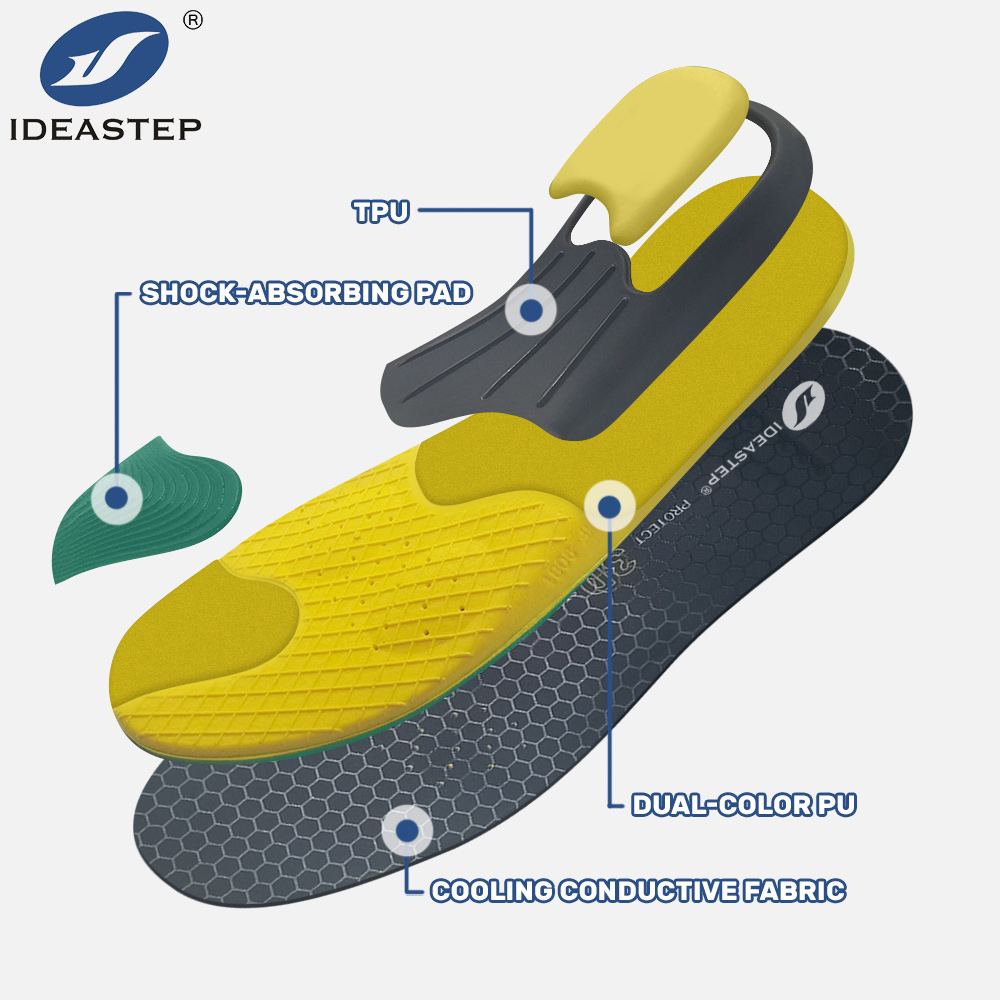
Multilayer Construction
A multilayer insole separates surface, cushioning, and structural functions.
A typical construction may include:
- Top cover: Mesh or technical fabric for surface durability and moisture management.
- Cushioning layer: EVA or PU selected according to the required compression characteristics.
- Base layer: A material with sufficient stability to maintain the intended shape.
Layer thickness and material compatibility affect the overall result. Adding more layers does not automatically improve breathability; each additional interface can change airflow and moisture movement.
4. Balancing Breathability, Cushioning, and Durability
Cooling insole development involves several properties that can compete with one another.
| Design factor | Key considerations |
|---|---|
| Air permeability | Fabric structure, perforations, and channel design |
| Moisture management | Absorption, transfer, and drying characteristics |
| Cushioning | Foam density, hardness, and thickness |
| Compression performance | Compression set and recovery |
| Durability | Abrasion, tear strength, and bonding |
| Structural stability | Base material and insole geometry |
| Fit | Overall thickness and available footwear volume |
For example, a softer foam may provide greater initial deformation but may not maintain its thickness under repeated loading. Similarly, increasing perforation can create more openings but may reduce material strength.
The most suitable design is not necessarily the one with the greatest airflow or softest foam. It is the construction that meets the footwear’s ventilation, cushioning, durability, and fit requirements together.
5. Compatibility with Industrial and Safety Footwear
Work boot insoles must fit within the footwear’s existing construction. This is particularly important for safety footwear, where changes to internal dimensions can affect fit and protective performance.
Several points require attention:
Internal volume: Insole thickness should be checked against the available space inside the boot. Excessive thickness may alter fit or create unwanted pressure.
Toe-cap clearance: The shape and thickness of the insole should be compatible with the footwear’s toe protection structure.
Antistatic and ESD properties: Where electrical performance is required, the complete footwear system must be assessed against the relevant requirements. Breathable fabric or ordinary EVA does not automatically provide antistatic or ESD performance.
Component compatibility: The insole should not interfere with the footwear’s intended protective features or construction.
Replacement dimensions: For removable insoles, length, width, heel shape, and thickness should match the target footwear model.
Any modification to a certified safety shoe should be assessed carefully. An insole replacement or redesign must not be assumed to preserve the footwear’s original protective certification.
6. Testing Breathable Work Boot Insoles
Testing the finished insole provides a more useful assessment than relying on individual material descriptions.
Depending on the design, relevant checks include:
- Air permeability: Measures airflow through the fabric or finished insole structure.
- Moisture management: Evaluates absorption, transfer, or drying characteristics using appropriate methods.
- Compression set: Measures permanent deformation after compression.
- Abrasion resistance: Assesses wear on the top-cover material.
- Bonding strength: Checks adhesion between fabric, foam, and supporting layers.
- Dimensional stability: Evaluates whether the insole retains its specified shape and dimensions.
Testing conditions should reflect the intended application. For example, the air permeability of an unlaminated mesh fabric may differ considerably from that of the completed insole.
7. Material and Design Considerations for Different Work Boot Applications
Not all industrial footwear requires the same insole construction. Material selection should reflect the footwear design and working environment.
| Application | Possible material direction | Main design priority |
|---|---|---|
| General industrial work boots | Mesh + EVA | Airflow and cushioning |
| Heavy-duty work boots | Durable fabric + EVA or PU | Compression performance and durability |
| Safety footwear | Compatible top cover + structured foam base | Fit and protective-component compatibility |
| Lightweight work footwear | Breathable fabric + lightweight EVA | Weight and ventilation |
| High-use industrial footwear | Abrasion-resistant fabric + resilient foam | Surface durability and recovery |
These are starting points rather than fixed specifications. Final material grades and layer dimensions should be confirmed through sample evaluation and testing.
Conclusion
Cooling insoles for work boots rely on the interaction between breathable fabrics, foam materials, surface geometry, and overall construction. Mesh, EVA, PU, perforations, and molded channels each offer different design possibilities, but none guarantees improved cooling on its own.
For industrial footwear, material selection must also account for repeated compression, abrasion, dimensional stability, and compatibility with protective components.
Evaluating the complete insole structure under relevant conditions provides a more reliable basis for developing breathable work boot insoles.
Related Insole Products: https://www.aideastep.com/product/ideastep-9081-dual-color-pu-insoles-with-tpu-support-and-cooling-conductive-fabric/.