Ankle support sleeves are used in sports protection and medical support products. Their performance depends on fabric elasticity, compression consistency, anatomical fit, and structural durability.
For sports protection brands and medical product manufacturers, product development requires a balance between flexibility, support, breathability, and shape retention. Material selection and knitting structure should be matched to the intended application rather than based on elasticity alone.
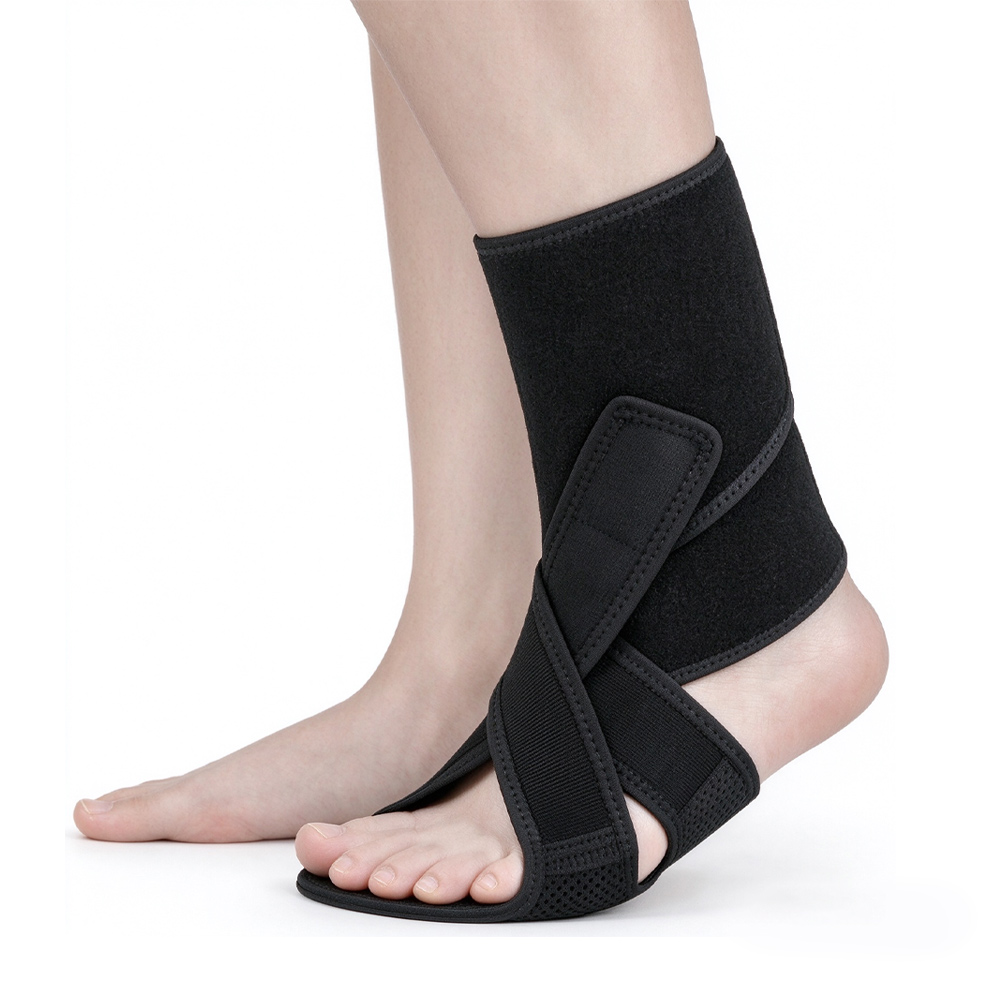
1. Materials Used in Ankle Support Sleeves
Fabric composition affects stretch, recovery, durability, and moisture management. The most common materials include nylon, polyester, elastane, and neoprene.
Nylon
Nylon offers good tensile strength, abrasion resistance, and flexibility. It is commonly blended with elastane to produce durable knitted fabrics with controlled stretch.
Yarn quality, fabric density, and knitting structure influence the finished sleeve’s fit and recovery.
Polyester
Polyester provides dimensional stability, abrasion resistance, and relatively low moisture absorption. It is widely used in sports support products where fabric durability and moisture transfer are required.
Its moisture-management performance depends on yarn type and fabric construction. Fiber composition alone does not determine drying speed or breathability.
Spandex or Elastane
Spandex, also known as elastane, provides the stretch and recovery required for compression garments. It is usually blended with nylon or polyester to achieve the desired elasticity.
The percentage of elastane does not directly determine compression pressure. Fabric construction, yarn specifications, sleeve dimensions, and finishing processes also affect the final result.
Neoprene
Neoprene is used in thicker ankle support designs that require additional material coverage and cushioning. Compared with lightweight knitted fabrics, it offers a more substantial structure but generally provides less ventilation.
Material selection should reflect the intended product design, weight requirements, and thermal characteristics.
2. Compression Levels and Performance Requirements
Compression is a key specification in ankle support sleeve development. Actual pressure depends on fabric tension, garment dimensions, and the shape of the ankle.
Product developers should distinguish between fabric elasticity and finished-garment compression. High fabric stretch does not automatically produce consistent pressure.
Light Compression
Light compression designs prioritize flexibility and a close fit. They generally use softer knitted structures and moderate elastic tension.
Fabric weight, stretch recovery, and edge construction should be controlled to maintain consistent fit across sizes.
Moderate Compression
Moderate compression requires closer control of fabric density, elastane content, and garment dimensions. The sleeve should provide consistent contact without excessive restriction.
Size grading and knitting parameters need to be evaluated together because changes in circumference can affect the pressure delivered by the finished product.
Firm Compression
Firm compression designs require more precise material specifications and pressure testing. Excessive fabric tension can create localized pressure and affect product fit.
For products carrying defined medical compression claims, pressure levels must be established through appropriate testing of the finished sleeve. They should not be assigned solely from fabric composition or subjective tightness.
3. Knitting Structures and Support Features
Knitting structure determines much of an ankle sleeve’s elasticity, thickness, breathability, and pressure distribution.
Uniform Knitting
Uniform knitting provides consistent fabric coverage and relatively straightforward production control. It is suitable for basic sleeve designs that require balanced compression and flexibility.
Fabric density and elastic yarn distribution should remain consistent across production batches.
Zoned Compression
Zoned compression uses different knitting densities or elastic structures in selected areas. The ankle section, for example, may have different tension requirements from the upper sleeve.
This construction allows more targeted pressure distribution but requires accurate pattern development and production control. The finished garment should be tested to verify the intended compression characteristics.
Reinforced Support Areas
Some designs incorporate elastic straps, cross-wrap structures, or reinforced panels around the ankle. These features create a more structured construction than a basic knitted sleeve.
Their position, width, and tension should match the product’s intended support requirements without adding unnecessary bulk or restricting movement.
Heel and Foot Opening
The heel and foot openings affect sleeve positioning and overall fit. Incorrect dimensions can cause fabric folding, twisting, or displacement.
Pattern development should account for foot shape, ankle circumference, sleeve length, and the intended size range.
4. Breathability and Moisture Management
Fabric construction has a direct effect on ventilation and moisture behavior. Common options include:
- Moisture-management yarns: Selected polyester and blended yarns can help transfer moisture across the fabric surface.
- Open-knit structures: More open knitting patterns can improve air movement in selected areas.
- Lightweight fabrics: Lower fabric weight reduces bulk, provided adequate strength and recovery are maintained.
- Smooth inner surfaces: Appropriate yarn and knitting choices can help reduce friction against the skin.
Air permeability, moisture absorption, and drying speed are separate properties. They should be evaluated individually when specifying fabric performance.
5. Fit, Sizing, and Construction Quality
Ankle sleeve performance depends on accurate pattern dimensions and consistent fabric behavior.
Key development factors include:
- Size grading: Define ankle circumference, foot dimensions, and sleeve length for each size.
- Elastic recovery: Check whether the fabric returns to its original dimensions after repeated stretching.
- Seam construction: Evaluate seam placement, thickness, and strength. Flat seams or seamless knitting may suit different product structures.
- Edge finishing: Control cuff tension to reduce rolling and slippage without creating excessive pressure.
- Shape retention: Assess dimensional changes after repeated stretching, washing, and wear.
These specifications should be confirmed during sample development before bulk production.
6. Quality Control and Product Testing
Quality inspection should cover raw materials, knitted fabrics, garment construction, and finished-product performance.
Important evaluation areas include:
- Fabric composition: Verify fiber content and material specifications.
- Stretch and recovery: Measure extension and recovery after repeated loading.
- Compression performance: Test pressure distribution under defined measurement conditions.
- Dimensional stability: Check size changes after washing and conditioning.
- Abrasion resistance: Evaluate fabric durability under friction.
- Seam strength: Inspect stitching or bonding under repeated loading.
- Colorfastness: Check resistance to color transfer and fading.
- Batch consistency: Compare fabric weight, dimensions, elasticity, and finished-product measurements across production lots.
For products with specific compression claims, testing must be performed on the finished sleeve using an appropriate method. Fabric stretch measurements alone cannot establish a medical compression rating.
7. Manufacturing Considerations for OEM and ODM Projects
Before sampling, sports protection brands and medical product suppliers should define the main product specifications:
- Target application and support structure
- Fabric composition and knitting method
- Compression requirements, where applicable
- Sleeve length and size range
- Color, logo, and packaging requirements
- Order quantity and quality standards
Sample evaluation should focus on fit, elasticity, pressure distribution, seam quality, and dimensional stability. Fabric density, pattern dimensions, or elastic yarn content may need adjustment before approval.
For bulk production, consistent yarn specifications, knitting parameters, garment dimensions, and inspection procedures are essential to maintaining product quality across batches.
Custom Ankle Support Sleeve Manufacturing
For brands and wholesale buyers developing ankle support products, material selection and compression specifications should be established before production.
Ideastep provides custom foot-support product development and can discuss related project requirements, including material selection, product structure, and OEM/ODM arrangements.
Contact Ideastep to discuss your ankle support sleeve project, request a quotation, or inquire about sample availability and bulk orders.
Related Articles: Ankle Support Brace Wholesale: Product Selection and Sourcing Guide.