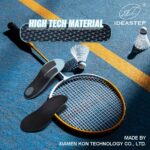
Cleats require insoles that balance low weight, breathability, cushioning, and stability. Their compact fit and limited internal volume leave little room for bulky materials, while repeated acceleration, turning, and forefoot loading place specific demands on insole construction.
For sports footwear manufacturers, developing cooling insoles is not simply a matter of adding breathable fabric. Material selection, layer thickness, airflow structure, and shoe compatibility all affect the performance of the finished product.
1. Key Requirements for Cleat Insoles
Compared with standard athletic footwear, cleats often have a tighter internal fit and a more specific relationship between the insole and outsole structure. Insole development should focus on four areas:
- Lightweight construction: Minimize unnecessary material weight without compromising durability.
- Moisture management: Select top covers and foam layers that support moisture absorption, transfer, or drying.
- Breathable structure: Use suitable fabrics, perforations, or channels to support airflow.
- Stable fit: Maintain the required cushioning and support while preventing excessive movement inside the shoe.
Thickness is a critical consideration. Excessive cushioning can reduce internal volume and affect shoe fit, while an overly soft structure may lack the stability required for rapid directional changes.
2. Lightweight Materials for Cooling Insoles
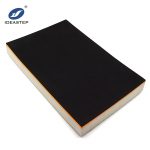
Material selection determines much of an insole’s weight, flexibility, cushioning, and moisture behavior. Combining materials with different functions is often more practical than relying on a single layer.
EVA Foam
EVA is widely used in sports insoles because it is lightweight, flexible, and available in different densities and hardness levels. It can provide cushioning in a relatively thin structure and is suitable for die-cut or molded insole designs.
For cleat applications, density and hardness should be selected according to the required cushioning and compression resistance. Perforations or shaped structures can be added where appropriate, as solid EVA does not inherently provide high airflow.
Open-Cell PU Foam
Open-cell PU foam offers cushioning and a cellular structure that can support air movement. It may be suitable for selected cushioning layers where flexibility and moisture management are required.
Its performance varies by formulation. Density, compression recovery, thickness, and durability should be checked before use in a finished cleat insole.
Mesh and Technical Fabrics
Mesh and lightweight technical fabrics are common top-cover options. Their open structures can support ventilation, while certain fabric constructions can help manage moisture at the contact surface.
Selection should consider air permeability, drying behavior, abrasion resistance, surface friction, and bonding compatibility. A breathable fabric may lose some of its airflow advantage when laminated with dense foam or excessive adhesive.
Perforated Foam and Structured Materials
Perforations can create additional airflow pathways through foam layers. Their size, spacing, and position should be designed around the insole’s thickness and loading areas.
Too many perforations can weaken the structure or affect cushioning consistency. For this reason, airflow features should be concentrated in suitable areas rather than added without considering mechanical performance.
3. Breathable Design Features
The breathability of a finished insole depends on the complete construction, not just the top-cover material.
Breathable top covers: Mesh and technical fabrics can support surface ventilation. Their performance should be evaluated after lamination, since adhesives and backing materials may restrict airflow.
Perforated foam: Strategically placed holes can create pathways through the cushioning layer. The design needs to retain sufficient material in high-pressure areas.
Molded air channels: Shallow grooves or channels can create space for air movement beneath the foot. Their depth and layout must suit the limited internal volume of cleats.
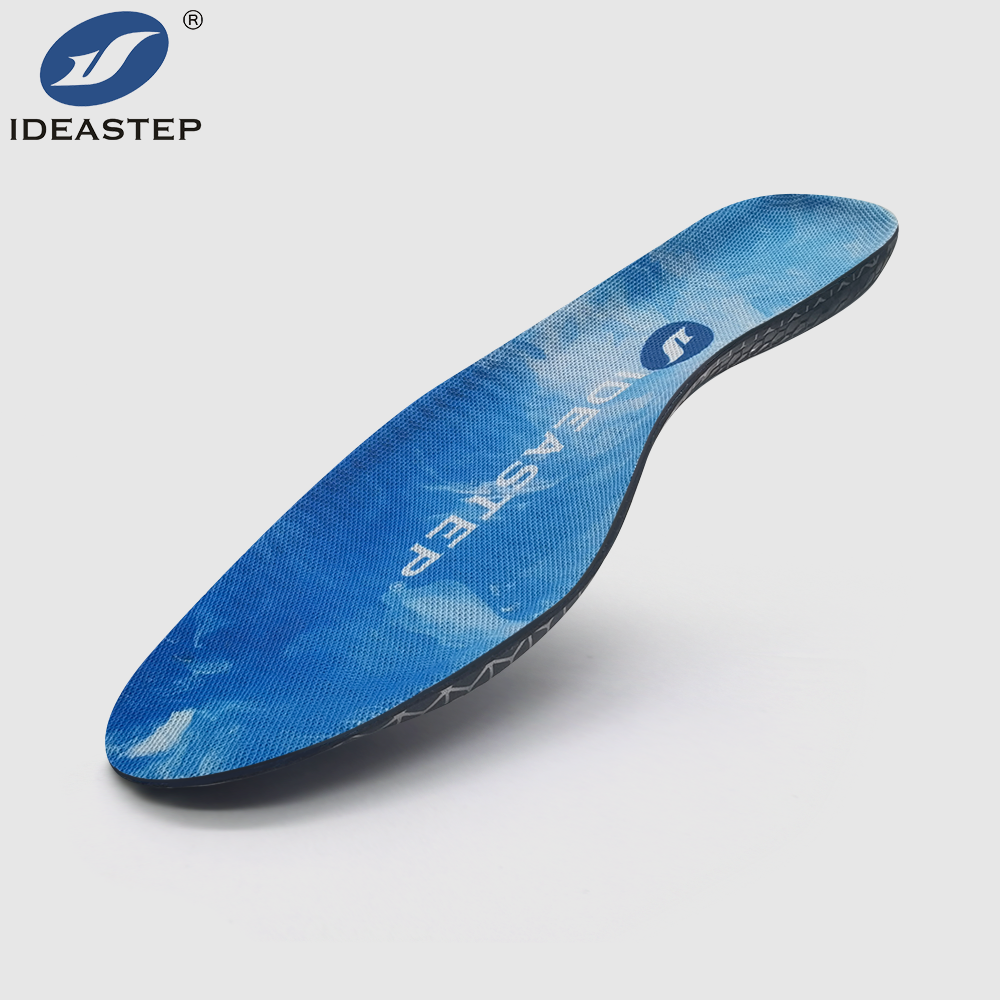
Multilayer construction: A typical design may combine a breathable fabric top cover, a thin EVA or PU cushioning layer, and a shaped support component where needed. Layer thickness and bonding coverage should be controlled to avoid unnecessary weight and bulk.
4. Balancing Cushioning, Weight, and Stability
Breathability should not come at the expense of structural performance. Cleat insoles need to withstand repeated loading while maintaining their shape and position.
| Material or feature | Main function | Key consideration |
|---|---|---|
| Low-density EVA | Lightweight cushioning | Compression resistance and durability |
| Open-cell PU | Cushioning and potential airflow | Density and recovery |
| Mesh top cover | Surface ventilation | Abrasion and moisture behavior |
| Perforated foam | Airflow pathways | Structural strength |
| Shaped support layer | Localized stability | Thickness and added weight |
The right combination depends on the sport, cleat geometry, target price, and intended product positioning. Soccer, football, and rugby footwear may require different balances of flexibility, cushioning, and support.
5. Cleat Compatibility and Insole Geometry
A cleat insole must match the footwear’s internal dimensions and construction. Several details should be checked during development:
- Heel profile: Match the heel cup to reduce unwanted movement.
- Forefoot flexibility: Ensure the insole works with the shoe’s bending characteristics.
- Overall thickness: Keep the complete laminate within the available internal volume.
- Edge finishing: Maintain accurate trimming to reduce lifting and friction.
- Position retention: Consider bottom-layer texture, material friction, and shape to help keep the insole in place.
For replacement insoles and private-label projects, a physical shoe sample or accurate dimensional reference can help confirm fit before bulk production.
6. Testing the Finished Insole
Raw material specifications do not fully represent the performance of a laminated insole. Testing should cover the complete construction.
Key evaluation areas include:
- Air permeability: Measures airflow through the material or finished structure.
- Moisture management: Evaluates absorption and transfer through the top cover and foam layers.
- Drying performance: Measures how quickly retained moisture is released under defined conditions.
- Compression set: Checks permanent deformation after compression.
- Flex resistance: Evaluates performance under repeated bending.
- Abrasion resistance: Checks wear on the top cover and exposed surfaces.
- Bonding strength: Assesses adhesion between fabric, foam, and support layers.
- Dimensional stability: Checks whether the insole retains its shape.
Testing the finished laminate is particularly important because adhesive coverage, lamination pressure, and surface treatments can change the properties of the original materials.

7. Manufacturing Considerations
Sports footwear brands and insole manufacturers should define the product requirements before sampling. Important specifications include the target cleat model, size range, insole thickness, material combination, cushioning requirements, and expected order quantity.
During sample development, check the insole’s shape, fit, flexibility, edge quality, and bonding. Adjustments may be necessary to achieve the right balance between breathability, cushioning, and stability.
For bulk production, consistent foam thickness, hardness, fabric specifications, cutting accuracy, and lamination quality are essential. These factors help maintain product consistency across sizes and production batches.
Custom Cooling Insoles for Cleats
Ideastep supplies custom insole solutions for sports footwear brands, manufacturers, and wholesale buyers. Material options include EVA, PU foam, mesh fabrics, and multilayer constructions for different cleat designs.
For OEM and ODM projects, we can discuss material combinations, insole thickness, structural details, and product specifications based on your requirements. Contact Ideastep to discuss your cooling insole project, request a quotation, or ask about sample availability and bulk orders.
Related Insole Products: https://www.aideastep.com/product/ideastep-d-061-dynamic-comfort-insole/.