Standard insoles suit many footwear applications, but fixed specifications may not meet every product requirement. As footwear brands and orthotic product suppliers develop more specialized collections, demand for customized materials, dimensions, and structural designs continues to shape product development.
Custom orthopedic inserts allow manufacturers and B2B buyers to define insole specifications around specific footwear models and production requirements. Material selection, structural design, manufacturing feasibility, and quality control all influence the final product.
Why Standard Insoles May Not Meet Every Market Requirement
Standardized insoles offer advantages in cost control, inventory management, and large-volume production. However, a fixed design may not accommodate different shoe constructions, thickness requirements, or structural specifications.
Different Footwear Categories Require Different Designs
Running shoes, work footwear, casual shoes, and specialized orthopedic footwear have different construction requirements. Available internal space, insole thickness, material combinations, and component placement can vary by shoe model.
For example, a shoe with limited internal volume may require a thinner insole, while another design may call for a specific heel cup or arch profile. These differences often require adjustments to the insole’s dimensions and construction.
Customization Supports Product Differentiation
Footwear brands may need distinctive product specifications, while orthotic product suppliers may require defined structural features and tighter dimensional controls. Wholesalers and distributors must also consider product variety, purchase costs, and supply consistency.
Custom orthopedic inserts offer flexibility in:
- Insole outline, length, and thickness
- Material grades and layer combinations
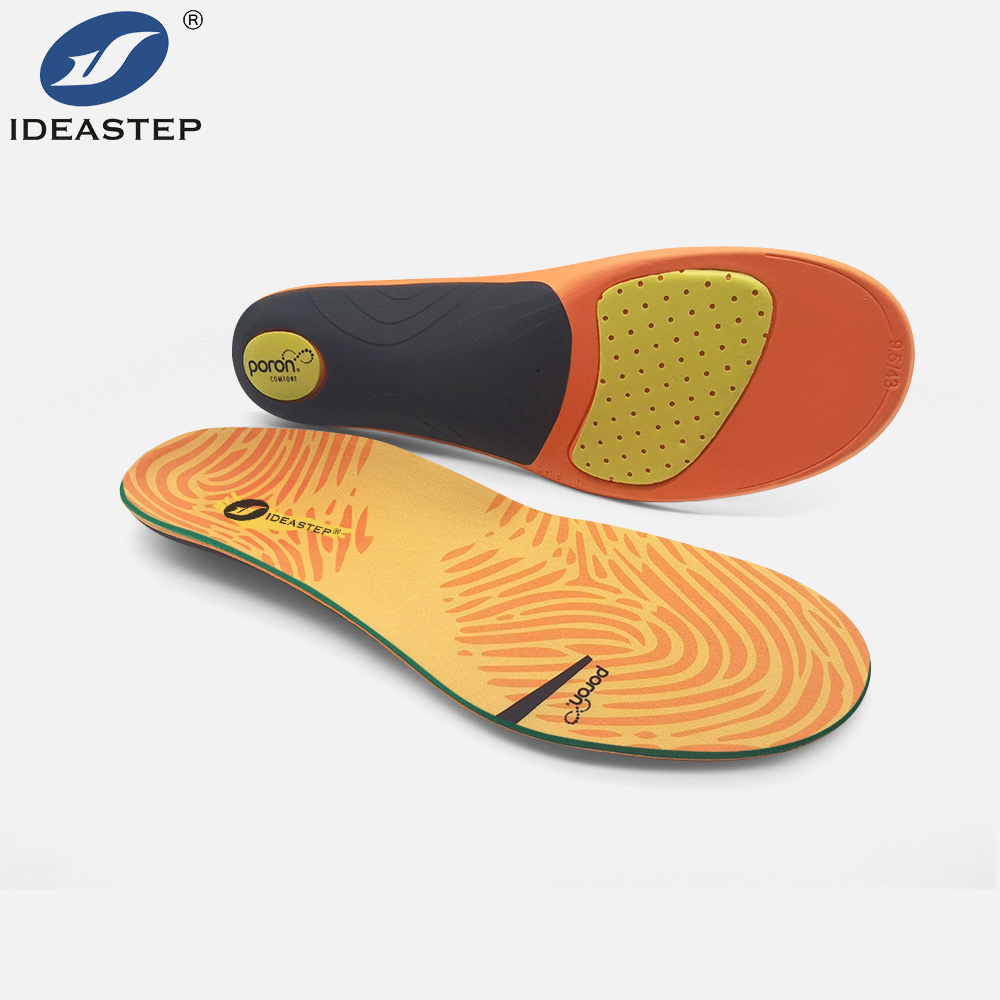
- Arch profiles and structural components
- Surface finishes, branding, and packaging
Not every project requires a completely new design. Modifying an existing construction may meet the requirements with less development time and cost.
Material Selection for Custom Orthopedic Inserts
Material selection should reflect the intended construction, required properties, processing methods, and target manufacturing cost. Material names alone are not sufficient to define a production specification.
EVA Foam
EVA foam is available in different densities, hardness levels, and thicknesses. Depending on the selected grade, it can be used in full-length insoles, layered constructions, and customized components.
Buyers should specify the required material grade, hardness, density, thickness, and relevant compression characteristics. These details help manufacturers evaluate suitability and maintain consistency across repeat orders.
PU Foam
PU foam properties vary according to formulation, density, and manufacturing method. Its suitability depends on the product’s construction and specified material requirements.
For multi-layer insoles, buyers and manufacturers should confirm thickness, surface characteristics, and bonding compatibility before approving the complete assembly.
TPU Components
TPU components can be incorporated into designs requiring defined structural elements. Their geometry, thickness, and position must match the approved design and available footwear space.
Technical drawings should clearly identify component dimensions and placement to support accurate production and inspection.
Top Covers and Multi-Layer Construction
Custom insoles may combine textile top covers, foam layers, structural components, and bottom materials. Each layer must be compatible with the surrounding materials and selected assembly process.
Adhesive selection, surface preparation, bonding conditions, and layer thickness can affect the finished construction. Evaluating the complete assembly during sample development helps identify potential issues before mass production.
Balancing Material Choices and Production Costs
Material price is only one part of manufacturing cost. Cutting yield, lamination, bonding, tooling, shaping, inspection, and packaging also affect the quotation.
Manufacturers can assess alternative material grades or layer arrangements to identify more practical production options. Any substitution should meet the approved specifications and receive buyer approval before implementation.
Key Design Considerations for Custom Orthopedic Inserts
A production-ready design must define the dimensions, structural features, and assembly requirements needed for consistent manufacturing.
Dimensions, Thickness, and Insole Outline
Buyers should specify the insole outline, length, thickness, size range, and critical tolerances. The specification should also identify the required format, such as full-length or three-quarter-length inserts.
For multi-size projects, the manufacturer needs to understand whether each size follows a scaled outline or requires individual adjustments. Thickness changes must also be evaluated against shoe volume, layer alignment, and component placement.
Arch Profiles and Structural Components
Depending on the approved design, custom orthopedic inserts may include arch profiles, heel cups, metatarsal elements, or support shells.
Each feature affects the overall geometry and assembly process. Changes to a structural component may require adjustments to surrounding layers, thickness, or edge transitions.
For orthopedic applications, design parameters should follow the intended use and applicable professional requirements. Manufacturers should confirm that the approved specifications can be produced consistently.
Layer Construction and Component Placement
Multi-layer designs require clear instructions for layer order, thickness, component positioning, edge profiles, and bonding methods.
Defining critical measurements and acceptable tolerances helps reduce assembly errors and provides a consistent reference for production inspection.
Matching the Design to the Footwear Category
Different footwear categories impose different construction requirements.
- Sports footwear: Coordinate insole thickness, structural components, and internal volume with the shoe design.
- Work and safety footwear: Confirm material requirements and compatibility with applicable footwear specifications.
- Casual footwear: Consider outline, thickness, surface finish, and target production cost.
- Orthopedic footwear: Define contours, component positions, and dimensional tolerances according to the approved design.
The final specification should reflect the actual footwear model rather than rely on one standard construction for every application.
From Design Concept to Bulk Production
Custom insole development requires a clear process for translating product requirements into manufacturing specifications.
Technical Review and Manufacturing Feasibility
Projects may begin with technical drawings, reference samples, existing footwear, or preliminary concepts. The manufacturer should review the available information and identify missing dimensions, material requirements, tolerances, and construction details.
Production methods may include foam cutting, die cutting, lamination, bonding, shaping, CNC processing, and custom finishing. The appropriate process depends on the design, materials, and required production volume.
Early technical review helps identify constraints involving material availability, tooling, bonding, and dimensional accuracy.
Prototype Development and Sample Approval
Samples should be evaluated against the agreed specifications, including:
- Overall dimensions and critical tolerances
- Thickness and layer alignment
- Material identification and surface finish
- Structural component placement
- Bonding quality and edge consistency
- Fit within the intended footwear
- Manufacturing feasibility and target cost
Required revisions should be documented in the technical drawing or product specification. The approved sample should be identified by version and retained as the reference for bulk production.
Quality Consistency in Bulk Production
Repeat production depends on controlled material specifications, assembly instructions, dimensional requirements, and inspection criteria.
For projects involving multiple sizes or SKUs, each version should have a clearly defined specification. Changes to materials, components, or construction should follow an agreed approval process to prevent unplanned differences between batches.
OEM and ODM Solutions for Custom Insole Projects
OEM and ODM arrangements support different stages of product development. The appropriate model depends on the buyer’s existing design and the level of development support required.
OEM Manufacturing
OEM projects generally follow buyer-supplied drawings, reference samples, material requirements, dimensions, and packaging specifications.
The manufacturer reviews production feasibility, clarifies incomplete requirements, develops samples, and produces the product according to the approved specifications.
Complete technical documentation supports more accurate quotations, quality control, and repeat orders.
ODM Product Development
ODM projects may begin with an initial concept rather than a finalized technical drawing. Depending on the agreed scope, development support may include material selection, structural adjustments, prototype production, and manufacturing review.
Buyers should provide the target footwear category, design requirements, estimated order quantity, target cost, and expected schedule. Design responsibilities, tooling arrangements, revision procedures, and approval requirements should be agreed upon at the beginning of the project.
Branding, Packaging, and Product Variations
Customization may include logo printing, labels, packaging, and product identification.
For projects involving multiple sizes, colors, or material combinations, each variation should have a defined specification. Artwork approval and packaging procurement should also be included in production planning.
How to Evaluate a Custom Orthopedic Insole Manufacturer
A suitable manufacturing partner must understand technical requirements, assess production feasibility, and maintain consistent specifications throughout the project.
Material Sourcing and Processing Capabilities
Confirm that the supplier can source the required materials and perform the necessary processes, such as foam cutting, lamination, bonding, shaping, and CNC processing.
The supplier should also identify material limitations and production constraints that could affect the proposed design.
Technical Communication and Quality Control
The manufacturer should be able to review drawings, clarify tolerances, identify missing information, and explain potential manufacturing issues.
Inspection requirements should reflect the actual product construction. Depending on the design, checks may cover dimensions, thickness, material identification, component placement, bonding, and surface finish.
Buyers should also understand how the supplier manages specification updates, material substitutions, nonconforming products, and repeat orders.
MOQ, Lead Time, and Production Planning
Minimum order quantity (MOQ) and lead time depend on material availability, tooling, design complexity, production methods, SKU count, and packaging requirements.
Before placing an order, confirm sample timing, tooling costs, bulk production lead time, order quantities, and delivery arrangements. For multi-SKU projects, the quotation should clarify the quantity and cost basis for each version.
What to Prepare Before Requesting a Custom Insole Quotation
A clear inquiry helps the manufacturer assess feasibility and prepare a relevant quotation. Buyers should provide the following information where available:
- Footwear application: Target shoe category and model.
- Drawings or reference samples: Technical drawings, existing insoles, or shoe samples.
- Material specifications: Foam grades, top-cover fabrics, structural components, and layer construction.
- Dimensions and size range: Outline, thickness, sizes, and critical tolerances.
- Estimated order quantity: Expected volume and number of SKUs.
- Branding and packaging: Logo artwork, labels, and packaging requirements.
- Target cost and delivery schedule: Budget expectations and required delivery date.
- Quality requirements: Inspection criteria and relevant testing specifications.
Clearly identify any unresolved requirements so the manufacturer can address them during technical review. This helps reduce assumptions and improves quotation accuracy.
Frequently Asked Questions About Custom Orthopedic Inserts
What Is the Difference Between Standard Insoles and Custom Orthopedic Inserts?
Standard insoles generally use established dimensions, materials, and constructions. Custom orthopedic inserts can be developed around specific footwear requirements, material specifications, and structural design parameters.
The appropriate option depends on the intended application, required customization, production volume, and target cost.
Which Materials Are Commonly Used in Custom Orthopedic Inserts?
Common materials include EVA foam, PU foam, textile top covers, and TPU structural components. Selection depends on the required material properties, construction, processing methods, and manufacturing cost.
Can Custom Orthopedic Inserts Be Developed for Different Footwear Models?
Yes. Different footwear models may require different outlines, thicknesses, material combinations, or component positions. Each design should be reviewed against the corresponding shoe construction before sample approval.
What Is the Difference Between OEM and ODM Insole Manufacturing?
OEM manufacturing generally follows buyer-supplied specifications. ODM projects may include additional support with material selection, structural design, prototyping, and manufacturing feasibility. The exact scope depends on the supplier’s capabilities and the project agreement.
What Affects the Cost and Lead Time of Custom Insoles?
Key factors include material grades, construction complexity, tooling, processing methods, order quantity, SKU count, packaging, and sample revisions.
How Can Buyers Maintain Consistent Quality Across Bulk Orders?
Use an approved sample, controlled technical drawings, defined material specifications, critical dimensions, and agreed inspection criteria. Material or design changes should be reviewed and approved before implementation.
Develop Custom Orthopedic Inserts with the Right Manufacturing Partner
Custom orthopedic inserts give footwear brands and orthotic product suppliers greater flexibility in material selection, structural design, and product specifications. Successful development depends on matching these requirements with manufacturing capabilities, cost targets, and quality controls.
A clear technical brief, documented sample approval, and consistent production specifications help reduce revisions and support repeat orders.
Contact our team with your technical drawings or reference samples, material requirements, size range, and estimated order quantity to discuss custom orthopedic inserts and OEM/ODM manufacturing options.
Related Post: Custom Orthopedic Inserts That Help Footwear Brands Stand Out in a Crowded Market.