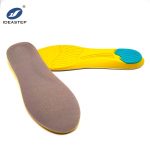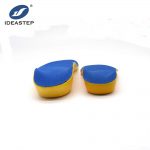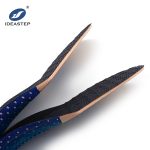
An insole is more than a layer placed inside a shoe. Its material, shape, thickness, and support structure all affect how the finished footwear feels and performs. In an insole system, different materials can be combined to handle cushioning, support, stability, and surface comfort.
EVA is one of the most practical materials for this type of construction. It is lightweight, easy to shape, and available in different hardness and density specifications. For OEM and wholesale production, these properties make EVA suitable for developing both simple comfort insoles and more structured orthotic designs.
Why EVA Works Well in an Insole System
EVA can be used as the main body of an insole, a cushioning layer, or part of a multi-layer structure. The material can be selected according to the required firmness, weight, cushioning, and thickness.
Hardness has a direct effect on how firm the insole feels, while density influences its weight and material characteristics. Thickness also needs to be considered carefully because an insole that is too thick may reduce the available space inside the shoe. Rebound and compression resistance become more important when the product is designed for footwear that receives frequent or prolonged use.
For this reason, choosing an EVA specification is not simply a matter of selecting a hardness number. The material needs to work together with the overall insole design and the footwear construction.
Building Support into the Insole Structure
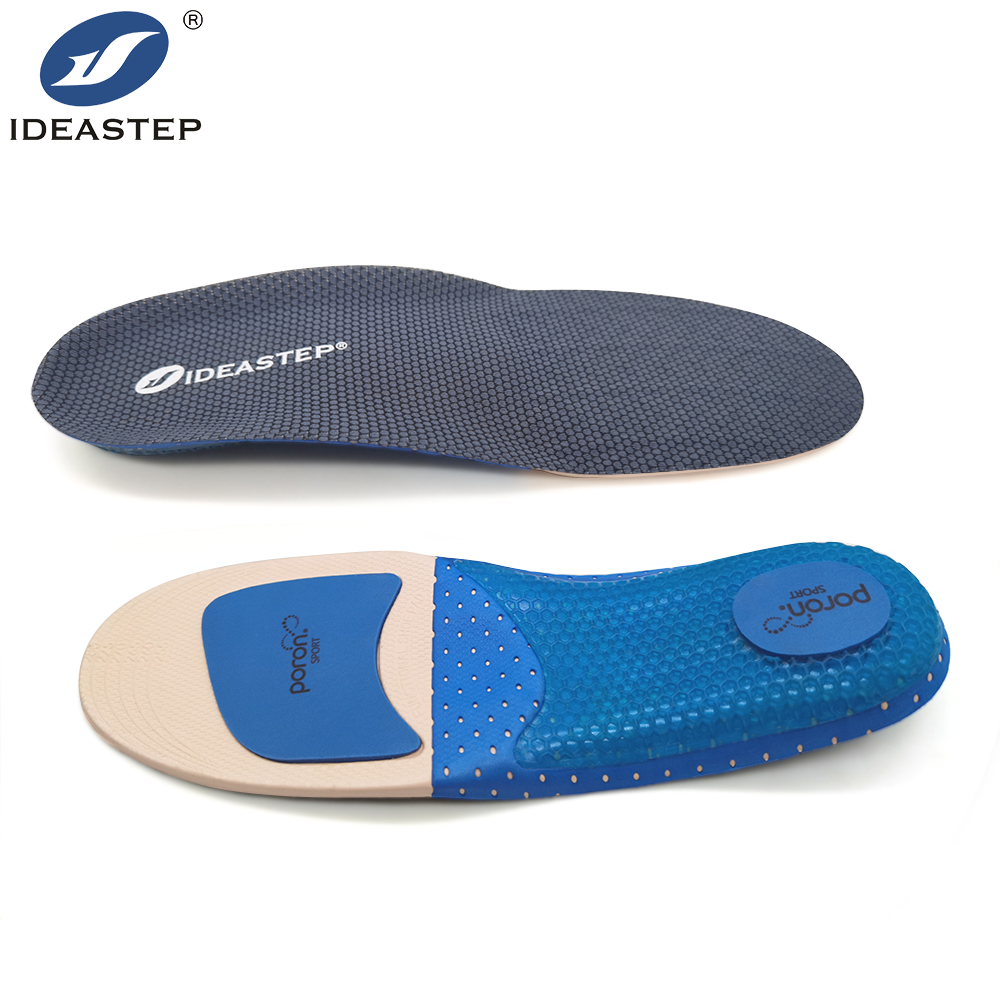
For orthotic applications, the shape of the insole is just as important as the material itself. An EVA insole can be molded with a defined arch profile, heel cup, rearfoot structure, and different thickness zones.
The design can remain relatively simple for comfort footwear or become more structured when additional support is required. EVA can also be combined with TPU, PU, foam, or other materials to create different functional areas within one insole.
For example, a softer layer may be used for cushioning while a firmer component provides additional structural support. A fabric or microfiber top cover can then be added to create the desired surface finish.
From a Standard Insole to a Custom OEM Design
Not every OEM project needs to start from scratch. An existing insole sample, drawing, CAD file, or basic specification can provide a useful starting point.
The design can then be developed around the actual requirements of the footwear. Size, arch height, heel cup, thickness, EVA hardness, density, top-cover material, and surface details can all be specified during development.
This approach is particularly useful for private-label buyers who already have a product concept but need a manufacturer to turn the design into a repeatable production specification.
How the EVA Insole Is Developed for Production
Once the basic requirements are clear, material selection and structural design can be confirmed before samples are produced. The sample provides an opportunity to check the dimensions, fit inside the shoe, material combination, appearance, and overall construction.
After approval, the confirmed sample becomes the reference for mass production. Important details such as EVA hardness and density, product dimensions, thickness, arch profile, top-cover material, logo placement, and packaging should remain clearly defined.
This is especially important for repeat orders. A detailed product specification makes it easier to maintain consistency when the same insole is manufactured in different production batches.
Where EVA Insole Systems Are Used
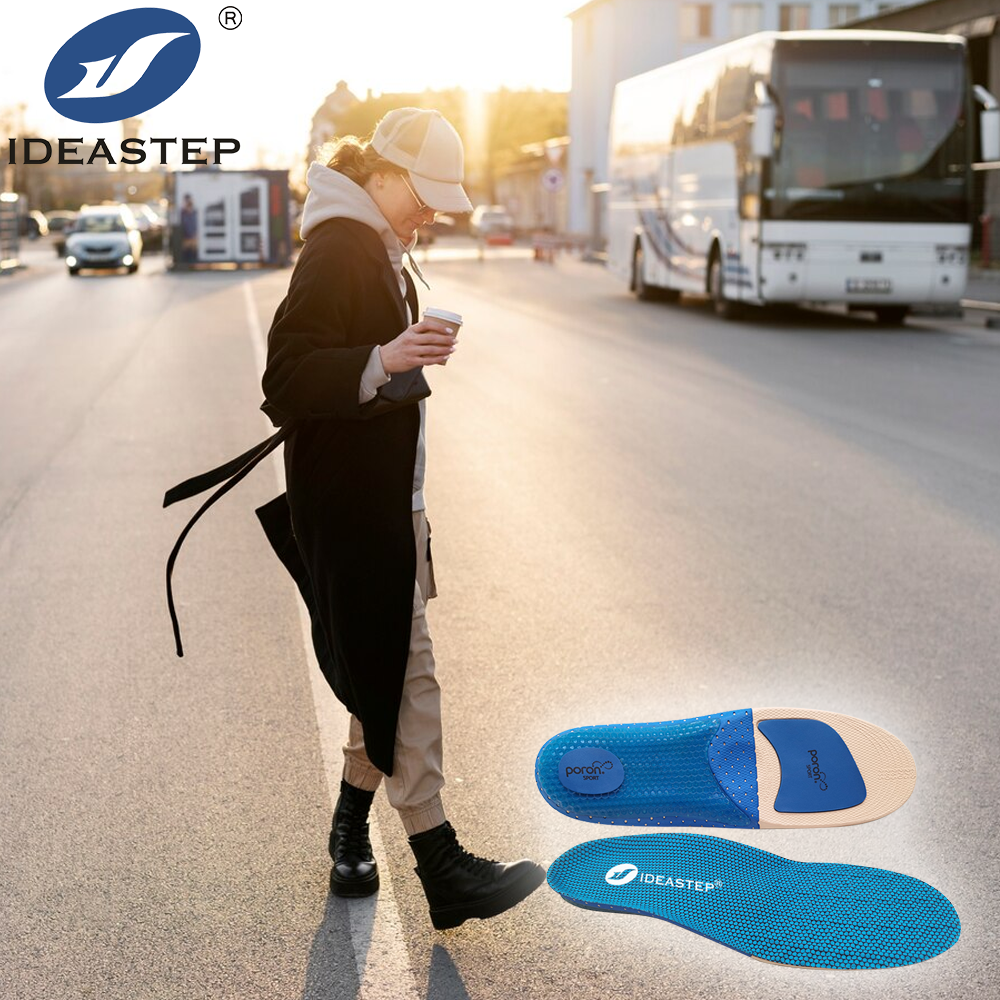
The flexibility of EVA construction allows the same basic material concept to be developed for different footwear categories. Typical applications include orthotic footwear, comfort shoes, work footwear, sports shoes, walking shoes, and private-label footwear products.
The final design depends on the space available inside the shoe, the required support level, cushioning requirements, material combination, and target cost. There is no single EVA specification that fits every application.
What B2B Buyers Should Confirm Before Bulk Production
Before placing a wholesale or OEM order, it is useful to confirm the product specifications rather than evaluating the insole only by appearance.
- Size range and overall dimensions
- EVA hardness and density
- Thickness and structural profile
- Arch and heel design
- Additional support or cushioning materials
- Top-cover material and finish
- Logo and branding requirements
- Packaging and estimated order quantity
Providing an existing sample or technical drawing can make the development process more straightforward. Once the construction is confirmed and the sample is approved, the product can move into bulk manufacturing according to the agreed specifications.
Custom EVA Insole Systems for Wholesale
A well-designed EVA insole system starts with the footwear application rather than the material alone. By matching EVA specifications with the right structure and supporting materials, manufacturers can develop products for different levels of cushioning, support, and price positioning.
For OEM and wholesale projects, a clear product specification, sample approval, and consistent production process provide a practical foundation for long-term supply.
Related Solutions:
EVA Foam Outsole Material for Sports, Casual and Industrial Shoe Applications
Understanding What an EVA Insole Is and Its Industrial Uses