Introduction
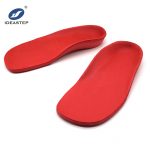
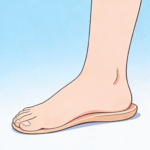
Arch support is an important part of a running insole, but simply making the arch higher does not necessarily create a better product. The support profile needs to work with the cushioning system, shoe shape, and the way the foot moves during running.
For sports footwear brands and insole distributors, the main challenge is finding a practical balance between support, cushioning, flexibility, weight, and durability. These factors also need to fit the intended shoe and price range.
What to Consider When Designing Running Insoles with Arch Support
Arch Structure
The arch profile should follow the shape of the footbed rather than simply increasing its height. An overly aggressive arch can feel uncomfortable, while insufficient support may not provide the stability the product is designed to deliver.
During development, attention is usually given to:
- Arch height and length
- Support firmness
- Midfoot width
- Transition from the heel to the arch
The preferred profile depends on the application. A daily running shoe may use moderate support, while a more structured insole can incorporate firmer reinforcement through the midfoot.
Cushioning
Running produces repeated impact, so cushioning needs to be effective without making the insole unnecessarily soft or heavy.
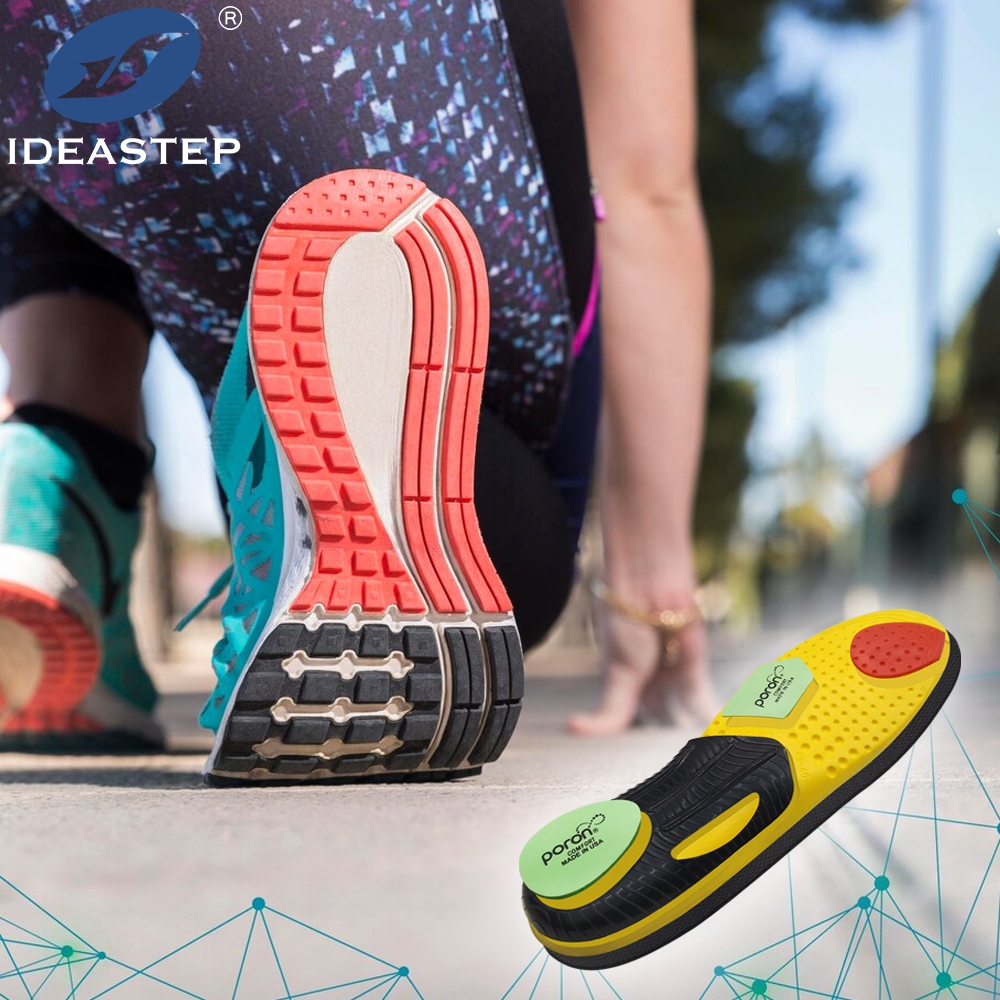
EVA, PU foam, and PORON are commonly used for this purpose. By changing foam density, thickness, and layer placement, the insole can be tuned for different levels of cushioning and responsiveness.
Heel Structure
The heel section helps keep the foot positioned inside the shoe. A shaped heel cup or reinforced heel area can add stability, provided it works with the shoe’s existing heel counter.
The goal is to provide a secure fit without adding unnecessary material or bulk.
Flexibility
An insole still needs to move with the shoe. One common approach is to reinforce the midfoot while keeping the forefoot more flexible.
This gives the structure enough support without making the entire insole feel rigid.
Materials Used in Running Insoles
Different materials contribute different properties to the finished product.
| Material | Typical Function |
|---|---|
| EVA Foam | Lightweight cushioning and adjustable firmness |
| PU Foam | Cushioning and long-term comfort |
| PORON | Localized impact absorption |
| TPU | Structural reinforcement |
| Thermoplastic Sheet | Arch and midfoot support |
| Mesh / Breathable Fabric | Lightweight and breathable top cover |
| Microfiber | Smooth surface and finished appearance |
Running insoles are often built from several of these materials rather than relying on one layer. The final combination depends on the shoe construction, expected performance, target price, and intended service life.
Running Insole Designs for Different Applications
Performance Running Shoes
For performance-oriented footwear, keeping the insole light and flexible is often a priority. A lightweight EVA base with a relatively thin support component can add structure without significantly increasing the overall weight.
Daily Training Shoes
Daily training shoes generally call for a more balanced construction. Cushioning, durability, and support all matter, so multi-density foam or layered constructions can be used to achieve the desired feel.
Walking and Active Lifestyle Shoes
These products tend to focus more on everyday comfort and breathability. Moderate arch support, lightweight cushioning, and breathable top covers are common choices.
OEM & ODM Customization
When an insole is being developed for a particular shoe model or product line, off-the-shelf specifications may not always be suitable. OEM and ODM manufacturing allows the construction to be adjusted around the actual footwear requirements.
Structure
Possible adjustments include:
- Arch profile
- Heel cup geometry
- Cushioning thickness
- Support layer position
- Forefoot flexibility
Materials
Different EVA densities, cushioning foams, support components, and top covers can be combined to meet specific performance and cost targets.
Private Label
Depending on the project, customization may also cover:
- Logo application
- Custom colors
- Surface materials
- Size ranges
- Packaging
Running Insole Development Process
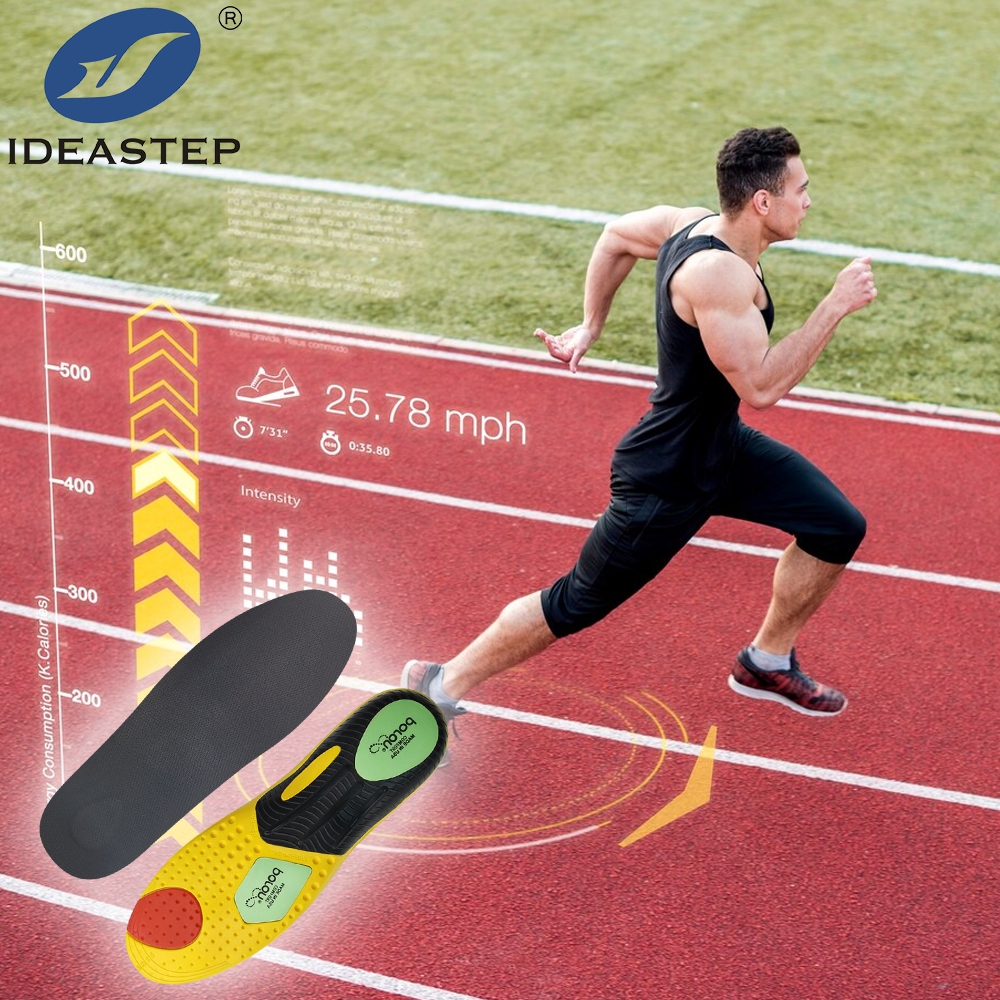
A practical development process usually starts with the shoe and its intended use rather than choosing materials first.
1. Define the Product
Start with the basics: shoe type, target users, desired support level, cushioning requirements, and target price.
2. Develop the Structure
The arch, heel, foam layers, and support components are then designed around those requirements.
3. Prototype and Evaluate
Samples can be checked for:
- Fit inside the shoe
- Arch support
- Cushioning
- Flexibility
- Overall thickness
If the fit or feel is not right, the structure or material combination can be adjusted before production.
4. Move to Production
Once the design is approved, production focuses on material consistency, dimensional accuracy, bonding, finishing, and final inspection.
Choosing a Running Insole Manufacturer
Price matters, but it should not be the only consideration when sourcing running insoles. Development experience can make a significant difference, particularly when the product requires structural or material customization.
Useful capabilities include experience with:
- Running insole construction
- EVA and cushioning materials
- TPU or thermoplastic support
- Footwear integration
- Prototype development
- OEM/ODM production
For repeat orders, consistent material properties, dimensions, bonding, and finishing are equally important. A product that performs well in the first sample still needs to remain consistent throughout volume production.
Conclusion
Good running insoles with arch support need to balance support, cushioning, flexibility, weight, and compatibility with the shoe. The best construction depends on the intended application, whether it is performance running, daily training, or active lifestyle footwear.
For sports footwear brands and distributors, OEM and ODM manufacturing provides room to adjust the arch profile, cushioning system, materials, and overall construction around a specific product.
Starting with the footwear requirements and working through structure development, sampling, and production is a practical way to turn an insole concept into a consistent commercial product.
Related Post:
Running Insoles for Overpronation
Best Running Insoles: Key Design Factors for Brands and Footwear Companies