Traditional orthotic insole manufacturing relies heavily on manual thermoforming, trimming, and hand shaping. While these conventional processes work for standard foam insoles, they often lead to long lead times, minor fitting inconsistencies, and limited design flexibility — pain points that hold back professional foot care brands and clinic suppliers. This real OEM case study focuses on a cooperative project with a European foot care brand, detailing the full workflow, customized solutions, material optimization, and actual business improvements brought by 3D printed orthotic insoles.
Project Background & Client Pain Points
Our cooperative client runs multiple local podiatry clinics and provides supporting orthotic products for regional footwear retailers. For a long time, the brand depended on traditionally handmade orthotic insoles to serve individual patients and small-batch wholesale orders. However, traditional production gradually failed to match its growing market demands.
Manual fabrication required tedious repeated adjustments, resulting in slow order turnaround and unstable batch consistency. Slight differences in arch contour, heel cup fitting and surface finishing often occurred between different batches, causing occasional customer complaints and product returns. Meanwhile, customized handmade orthotics required high order thresholds, making it difficult for the brand to flexibly respond to personalized small-batch orders and one-off patient customization needs.
Core OEM Customization Requirements
To solve the above problems, the client turned to 3D printed orthotic insole OEM services, with clear customized demands. First, the new insoles needed to accurately match 3D foot scan data, achieving personalized arch support and pressure distribution for different foot types. Second, the printed insoles had to maintain stable support, good wearing comfort and long-term durability to meet clinical-level foot care needs.
In addition, the client hoped to add exclusive brand logos and surface markings on the insole surface to enhance product premium sense and brand recognition. Flexible order quantities were also required to support both small-batch clinic customized orders and standardized retail batch production, helping the brand expand its product service scenarios.
Optimized OEM Workflow for 3D Printed Orthotic Insoles
We tailored a complete digital production workflow for the client’s project, completely breaking away from the limitations of manual manufacturing. The whole process is data-driven, precise and repeatable. First, the client collected accurate foot scan data through clinic scanning equipment and transmitted the complete data set to our technical team.
Our engineers adjusted key parameters such as arch height, heel cup depth and forefoot pressure zone according to actual foot characteristics, and completed digital modeling optimization. After the client confirmed the design draft, we started formal 3D printing production. After printing, each insole underwent fine surface finishing, brand printing and strict quality inspection to ensure no burrs, accurate fitting and stable performance before final packaging and delivery.
Professional Material Selection & Performance Verification
In view of the clinical application scenario, we adopted high-quality flexible TPU printing material for this project. This material features moderate hardness, excellent toughness and outstanding compression resistance. It can provide targeted supportive performance for high arch, flat foot and other different foot types, while ensuring soft and comfortable daily wear without rigid pressure.
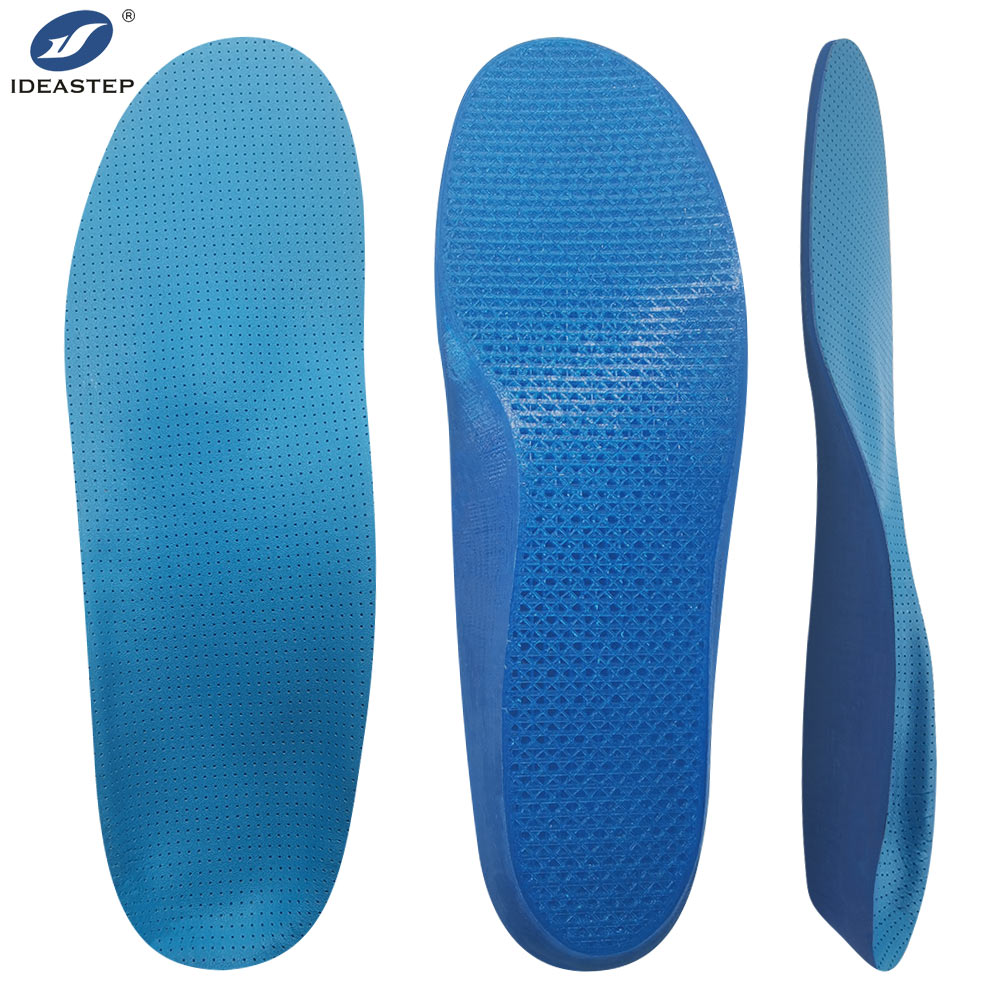
Before mass production, we completed multiple rounds of performance tests, including long-term walking fatigue test and compression rebound test. Compared with traditional EVA orthotic insoles, 3D printed insoles achieve layered zoning support through precise lattice structure design, effectively dispersing plantar pressure and better fitting personalized foot biomechanical needs.
Actual Project Results & Business Improvements
After officially launching 3D printed orthotic insoles, the client’s overall business efficiency has been significantly improved. The digital production process greatly shortens the product development cycle and order lead time. Design modification only needs to adjust digital files, without repeated mold opening and tooling costs, realizing fast product iteration.
Standardized 3D printing production completely solves the problem of inconsistent batch quality. The fitting degree and support performance of each pair of insoles are highly unified, effectively reducing after-sales problems caused by product differences. More importantly, flexible OEM order modes enable the client to take both personalized clinic orders and large wholesale orders, greatly enriching its business scope and improving market competitiveness.
Conclusion & Custom OEM Cooperation Support
This case fully proves that 3D printed orthotic insoles have unique advantages in personalized customization, batch stability and flexible production. It is an ideal upgrade solution for professional foot care clinics, high-end footwear brands and customized orthotic suppliers.
If you are looking for reliable OEM solutions for 3D printed orthotic insoles, we provide one-stop services including data docking, personalized modeling, material customization, brand printing and batch production. Contact our team to get project cases, technical parameters and competitive wholesale quotations.
Related Articles:
3D Printed Orthotic Insoles Benefits for Podiatry Clinics and Footwear Brands
3D Printed Insoles Price What Wholesale Buyers Need To Know