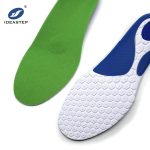
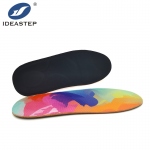
Orthotic insole development involves more than selecting cushioning materials. Arch geometry, pressure distribution, structural reinforcement, and material compatibility all influence the final product design. For manufacturers and wholesale buyers, these factors determine how an insole fits into a specific footwear or orthotic product range.
The IDEASTEP JH-049-1 combines a 7-point pressure distribution system with four materials: PU, gel, velvet, and TPU. This construction brings together arch support, cushioning components, and structural reinforcement in one product.
Available in sizes S–L, with a weight of approximately 130–150g per pair and an MOQ of 1,000 pairs, the JH-049-1 is developed for orthopedic footwear brands, medical footwear distributors, and wholesale insole suppliers.
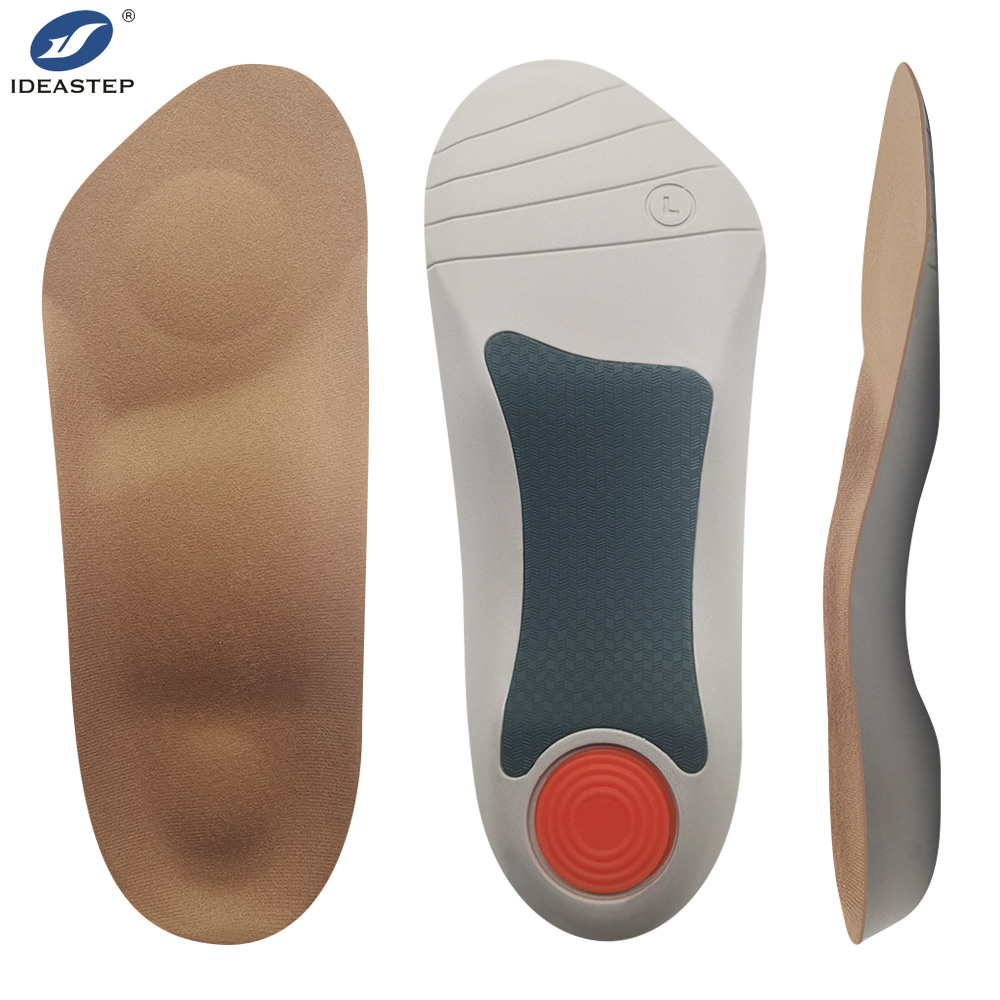
7-Point Pressure Distribution in Orthotic Insole Design
A 7-point pressure distribution system uses multiple designated contact areas as part of an insole’s support structure. Rather than relying entirely on a single raised arch section, this design considers the interaction between different contact regions.
In orthotic insole manufacturing, pressure distribution needs to work alongside arch geometry, material properties, and overall product construction. The arrangement of support components affects how the insole interacts with different areas of the foot.
For product developers, a 7-point system provides a defined design approach that can be evaluated through structural drawings, sample inspection, and pressure distribution testing.
Support Across Different Foot Regions
The heel, midfoot, and forefoot have different structural requirements. Their configuration should be considered together during insole development.
- Heel area: The rearfoot section requires appropriate cushioning and contact characteristics.
- Midfoot area: Arch height, contour, and positioning define the central support profile.
- Forefoot area: Material flexibility and contact distribution influence the front section’s construction.
The seven-point concept coordinates these areas within one insole design. The exact position and configuration of each contact point should follow the product’s technical drawings or approved sample.
Arch Geometry and Structural Coordination
Arch support is a central component of orthotic insole construction. Its height, contour, width, and positioning influence the overall support profile.
However, arch geometry cannot be evaluated independently. It needs to work with the heel section, cushioning materials, and reinforcement components.
For manufacturers, maintaining consistent arch geometry across different sizes is particularly important. Design adjustments should account for dimensional changes while preserving the intended structural configuration.
Multi-Material Construction of the JH-049-1
Material selection affects an insole’s physical properties, processing requirements, and finished structure. The JH-049-1 combines PU, gel, velvet, and TPU to address different construction requirements within one product.
PU Foam
Polyurethane (PU) foam is widely used in insole manufacturing. Its density, hardness, and thickness can vary according to formulation and production requirements.
In the JH-049-1, PU forms part of the cushioning structure. Material specifications should be established according to the required product characteristics and confirmed during sample development.
Gel Component
Gel is commonly incorporated into multi-material insole designs as a cushioning component. Its physical properties differ from conventional foam, making material compatibility and component placement important considerations.
For the JH-049-1, the gel layer forms part of the overall cushioning system. Its dimensions, position, and integration with surrounding materials should be included in the product specification.
Velvet Top Cover
The velvet layer provides the insole’s surface covering. Its texture, appearance, and processing characteristics contribute to the finished product.
For wholesale production, buyers should confirm fabric specifications, color requirements, surface finish, and bonding quality. These details should remain consistent with the approved sample.
TPU Reinforcement
Thermoplastic polyurethane (TPU) is used in footwear components where flexibility and structural support are required. Its physical properties depend on formulation, thickness, and component design.
In the JH-049-1, TPU forms part of the structural reinforcement system. Its configuration works alongside the arch support and cushioning components to create the overall insole structure.
Material Integration and Manufacturing Considerations
Combining four materials requires attention to component compatibility and processing consistency. Material thickness, positioning, bonding, and dimensional accuracy all influence the finished construction.
For manufacturers and buyers, the complete insole should be evaluated as one integrated product. Reviewing individual materials alone does not provide enough information about the quality of the finished structure.
Key Design Considerations for Orthotic Arch Support Insoles
A well-defined product specification helps manufacturers maintain consistency between development samples and bulk production. Several technical factors deserve attention during product development.
Arch Support Geometry
Arch height, contour, width, and positioning should follow the approved design requirements. For multi-size products, manufacturers should also establish how the arch profile changes across the available size range.
Cushioning and Structural Reinforcement
The relationship between cushioning materials and reinforcement components affects the overall construction. PU and gel form part of the cushioning system, while TPU contributes to the structural design.
Material thickness, component placement, and bonding quality should be reviewed together during sample evaluation.
Product Weight and Dimensional Specifications
Weight and dimensions are important product parameters for wholesale sourcing, packaging, and inventory planning.
The JH-049-1 is available in sizes S–L, with a stated weight of approximately 130–150g per pair. Buyers should confirm the detailed dimensions and applicable weight specifications for each size before placing bulk orders.
Applications in Orthotic and Footwear Manufacturing
The JH-049-1 is positioned for professional businesses involved in orthotic products, footwear development, and wholesale distribution.
Orthopedic Footwear Brands
Orthopedic footwear brands can evaluate the JH-049-1 as an insole option for product lines requiring defined arch support and multi-material construction. Its 7-point design provides a specific structural concept for product selection and development.
Medical Footwear Distributors
Medical footwear distributors often evaluate products according to construction, material specifications, size availability, and supply arrangements. Clear technical documentation helps buyers compare models and organize their product portfolios.
Comfort Shoe Manufacturers
Comfort shoe manufacturers may consider multi-material insoles when developing footwear with specific cushioning and support requirements. Compatibility with the footwear’s internal dimensions and construction should be confirmed during product evaluation.
Wholesale Foot Care Suppliers
Wholesale foot care suppliers can include orthotic arch support insoles in their existing product ranges. The JH-049-1 offers a combination of arch support, cushioning materials, and structural reinforcement for professional product sourcing.
What B2B Buyers Should Consider When Sourcing Orthotic Insoles
Product sourcing requires more than reviewing a product description. Buyers should confirm technical specifications, material quality, size availability, and production requirements before placing an order.
Material Specifications and Quality Control
Buyers should request available specifications for the PU, gel, velvet, and TPU components. Relevant parameters may include:
- Material thickness
- PU density and hardness
- Gel component dimensions
- Velvet fabric specifications
- TPU thickness and structural configuration
- Bonding and finishing quality
For repeat orders, the approved sample should serve as the reference for material selection, dimensional inspection, and production consistency.
Size Range and Product Weight
The JH-049-1 is available in sizes S, M, and L, with a stated weight of approximately 130–150g per pair.
Before confirming an order, buyers should verify:
- Detailed dimensions for each size
- Weight specifications and applicable tolerances
- Size labeling requirements
- Consistency between approved samples and bulk production
Accurate specifications help distributors prepare product information and manage inventory.
MOQ and Bulk Purchasing
The JH-049-1 has a minimum order quantity of 1,000 pairs. This requirement should be considered when planning purchasing quantities and inventory allocation.
Before placing an order, buyers should confirm the size breakdown, production lead time, packaging arrangements, and shipping details with the supplier.
OEM and ODM Customization
OEM and ODM services allow brands and distributors to develop products according to their business requirements.
IDEASTEP provides customization options that include:
- Custom branding
- Structural adjustments
- Packaging solutions
The available customization scope and technical feasibility should be confirmed during project discussions. Final specifications should be approved before bulk production.

IDEASTEP JH-049-1 Orthotic Arch Support Insoles
The IDEASTEP JH-049-1 combines a 7-point pressure distribution system with PU, gel, velvet, and TPU materials. Its construction is intended for professional buyers sourcing orthotic arch support insoles for footwear and foot care product ranges.
Product Specifications
| Specification | Details |
|---|---|
| Brand | IDEASTEP |
| Model Number | JH-049-1 |
| Product Type | Orthotic Arch Support Insole |
| Support Design | 7-Point System |
| Material | PU + Gel + Velvet + TPU |
| Available Sizes | S–L |
| Weight | 130–150g per pair |
| MOQ | 1,000 pairs |
| Origin | Fujian, China |
Three features define the product’s positioning:
- 7-Point Pressure Distribution System: A multi-contact approach to insole support and pressure distribution.
- Multi-Material Construction: PU, gel, velvet, and TPU combined within one insole design.
- OEM and ODM Options: Custom branding, structural adjustments, and packaging solutions for qualified projects.
For detailed technical information, buyers can contact IDEASTEP to discuss product specifications, sample evaluation, and wholesale order requirements.
OEM and ODM Orthotic Insole Manufacturing by IDEASTEP
IDEASTEP works with professional buyers seeking orthotic insole products for wholesale distribution and footwear applications.
For the JH-049-1 and related projects, OEM and ODM cooperation can cover branding, structural adjustments, and packaging solutions. Buyers can discuss their technical requirements with the team to confirm available development options.
Before bulk production, both parties should establish the approved material specifications, structural details, and product requirements. This provides a clear reference for sample approval and subsequent orders.
Request a Wholesale Quote for JH-049-1
The IDEASTEP JH-049-1 features a 7-point pressure distribution design and a PU, gel, velvet, and TPU material combination.
Available in sizes S–L, with a weight of approximately 130–150g per pair and an MOQ of 1,000 pairs, it is an option for orthopedic footwear brands, medical footwear distributors, and wholesale foot care suppliers.
Contact IDEASTEP to discuss product specifications, OEM and ODM options, and bulk purchasing requirements.
Related insoles selling links: https://www.aideastep.com/product/ideastep-jh-049-1-orthotic-arch-support-insoles-7-point-pressure-relief-system/.