A Complete Guide to Evaluating OEM and ODM Partners for Long-Term Success
In the custom orthopedic shoe inserts industry, product quality alone is rarely the main reason a project fails. Based on real-world OEM and ODM experience, common challenges often arise from inconsistencies between samples and mass production, inadequate quality control, poor communication, or delayed deliveries.
For footwear brands, medical distributors, podiatry clinics, retail chains, and e-commerce sellers, selecting a reliable manufacturer affects far more than product quality. It directly impacts brand reputation, customer satisfaction, and supply chain stability.
However, with so many suppliers in the market, how can businesses determine whether a manufacturer truly has the expertise and capabilities required, rather than simply owning production equipment and offering attractive marketing materials? This guide explores the key factors buyers should evaluate, including industry experience, product development capabilities, quality management systems, production capacity, and long-term partnership value.
Why Choosing the Right Manufacturer Matters
Many companies focus primarily on pricing and lead times during the sourcing process. However, from a long-term business perspective, a manufacturer’s overall capabilities are often far more important than short-term procurement costs.
Product Quality Directly Impacts Brand Reputation
End users may not understand the materials or structural design inside an orthopedic insole, but they can immediately recognize whether a product feels comfortable, provides effective support, and maintains its performance over time.
Common product issues include:
- Insufficient arch support
- Support structures collapsing after use
- Delamination or adhesive failure
- Reduced cushioning performance
- Inconsistent support between left and right insoles
These issues can increase return rates and negatively affect customer reviews and repeat purchases.
Some brands have discovered that products performing well during sampling developed hardness variations or structural inconsistencies during mass production, leading to customer complaints and warranty claims. This highlights the importance of evaluating a manufacturer’s ability to maintain consistency across production batches.
Supply Chain Stability Supports Business Growth
For growing brands, suppliers must be capable of supporting future expansion, not just current demand.
Many businesses experience situations such as:
- Successful sample development
- Smooth small-batch production
- Insufficient capacity when demand increases
The consequences may include:
- Inventory shortages
- Delayed shipments
- Lost sales opportunities
When evaluating a manufacturer, businesses should assess long-term production capabilities rather than focusing solely on current pricing.
Low Prices Do Not Always Mean Lower Costs
Price is naturally an important factor in supplier selection, but the lowest quotation does not necessarily result in the lowest overall cost.
Potential hidden costs include:
- Reduced product lifespan due to lower-quality materials
- Increased rework caused by inconsistent quality
- Delayed deliveries disrupting sales plans
- Higher customer service and warranty expenses
The true focus should be the total cost of ownership rather than the unit price alone.
Define Your Business Requirements Before Searching for a Manufacturer
Many sourcing projects encounter difficulties because business requirements are not clearly defined from the beginning.
Before contacting suppliers, companies should answer several key questions.
What Is Your Target Market?
Different markets prioritize different product characteristics.
Medical and Podiatry Markets
Primary considerations include:
- Arch support performance
- Biomechanical effectiveness
- Long-term durability
- Clinical suitability
Sports and Athletic Markets
Primary considerations include:
- Dynamic stability
- Shock absorption
- Lightweight construction
- Athletic comfort
Retail Markets
Primary considerations include:
- Value for money
- Comfort
- Product appearance
- Consumer acceptance
Clearly identifying your target market helps guide product development and supplier selection.
What Is Your Product Positioning?
Different market segments require different development strategies.
Entry-Level Products
Focused primarily on cost efficiency and mass-market demand.
Mid-to-High-End Products
Designed to balance comfort, support, and durability.
Professional Orthotic Products
Focused on:
- Foot biomechanics
- Customized support structures
- Functional performance validation
What Is Your Expected Order Volume?
Businesses should estimate:
- Sample quantities
- Pilot order sizes
- Annual purchasing plans
- Projected market growth
These factors directly influence supplier resource allocation and partnership models.
How to Evaluate a Manufacturer’s Industry Experience and Expertise
Not every factory producing insoles has the capability to manufacture orthopedic products.
This is one of the most commonly overlooked factors during supplier selection.
What Is the Difference Between a Standard Insole Factory and a Professional Orthotic Manufacturer?
Standard insole manufacturers typically focus on:
- Cushioning performance
- General comfort
- Visual design
Professional orthopedic insole manufacturers must also consider:
- Arch support angles
- Heel stabilization structures
- Pressure distribution pathways
- Gait control requirements
- Solutions for different foot types
Orthotic insoles are not simply production items; they require an understanding of foot biomechanics and functional design principles.
Do They Have Expertise in Foot Biomechanics?
Experienced manufacturers typically understand:
- Plantar pressure distribution
- Arch structure variations
- Overpronation issues
- Gait stability requirements
They can optimize designs according to different applications and user needs rather than simply replicating existing products.
Do They Have International Market Experience?
Customer expectations vary significantly across regions.
For example:
- North America often prioritizes comfort and performance.
- Europe places greater emphasis on environmental compliance.
- Asian markets frequently favor lightweight product designs.
Manufacturers with international experience are generally better equipped to meet diverse market requirements.
Research and Customization Capabilities Determine Product Competitiveness
For brands seeking differentiation, manufacturing capability alone is not enough.
The most valuable partners contribute to product innovation and development.
OEM Capability: Turning Designs into Consistent Products
OEM projects require manufacturers to accurately execute customer specifications.
Key evaluation areas include:
- Technical drawing interpretation
- Manufacturing process control
- Production consistency
ODM Capability: Supporting New Product Development
For businesses without in-house R&D teams, ODM services can be particularly valuable.
Mature manufacturers often assist with:
- Product structure design
- Material recommendations
- Performance optimization
- Market trend analysis
For example, companies specializing in foot health products often refine designs using pressure-mapping data, arch structure analysis, and user behavior insights. During international OEM and ODM projects, Ideastep adjusts support structures and material combinations according to market-specific needs to improve product performance and market suitability.
Material Selection Expertise Is Equally Important
High-quality orthopedic insoles often incorporate multiple materials.
EVA
Advantages include:
- Lightweight properties
- Cost efficiency
- Ease of processing
Commonly used in sports and mass-market products.
PU (Polyurethane)
Advantages include:
- Stable rebound performance
- Excellent compression resistance
- Long service life
Frequently used in medical and premium products.
TPU Support Structures
Advantages include:
- High stability
- Strong structural support
Ideal for products requiring enhanced arch control.
Carbon Fiber Components
Advantages include:
- High strength
- Lightweight construction
- Excellent energy return
Often found in premium athletic orthotics.
Leading manufacturers not only provide material options but also recommend optimal combinations based on market positioning and functional goals.
How to Evaluate Quality Management Systems
Strong sample performance does not automatically guarantee reliable mass production.
The key lies in the manufacturer’s quality control system.
Raw Material Inspection
Professional manufacturers typically conduct:
- Density testing
- Rebound testing
- Abrasion testing
- Environmental compliance verification
Production Process Control
Quality management should cover:
- Mold control
- Forming processes
- Bonding procedures
- Dimensional inspections
Finished Product Testing
Common evaluations include:
- Compression recovery testing
- Fatigue testing
- Rebound testing
- Flex resistance testing
These tests help simulate real-world usage conditions.
Batch Consistency Management
Many sourcing issues emerge during mass production rather than product development.
Buyers should verify:
- Sampling procedures
- Quality documentation
- Batch traceability systems
- Corrective action processes
Common Procurement Mistakes We Frequently See in OEM Projects
Focusing Only on Unit Price
The lowest quotation is not always the most cost-effective solution.
Many downstream issues result from excessive cost-cutting.
Skipping Proper Sample Validation
Some businesses move directly to production without sufficient testing, increasing the risk of costly corrections later.
Overlooking MOQ Requirements
Excessive inventory increases financial pressure, while insufficient order quantities can affect manufacturing efficiency and pricing.
Ignoring Regulatory Requirements
Export markets often require specific compliance documentation. Failing to address these requirements early can lead to significant delays and additional costs.
How to Evaluate Production Capacity and Delivery Reliability
As businesses grow, production and logistics capabilities become increasingly important.
Areas to evaluate include:
Monthly Production Capacity
Can the supplier support future growth?
Production Planning Systems
Look for:
- Raw material inventory management
- Production scheduling systems
- Risk mitigation procedures
Peak-Season Production Capability
Can the manufacturer maintain reliable delivery during periods of increased demand?
International Logistics Experience
For export projects, consider:
- Packaging solutions
- Customs documentation expertise
- International freight coordination
Communication and Technical Support Often Determine Partnership Success
Communication quality is frequently underestimated but plays a critical role in long-term cooperation.
Reliable manufacturers typically demonstrate:
Fast Response Times
Timely updates and clear communication throughout the project lifecycle.
Technical Support Capabilities
Including:
- Product optimization recommendations
- Alternative material suggestions
- Performance improvement proposals
Proactive Problem-Solving Skills
Rather than simply identifying problems, experienced suppliers actively propose practical solutions.
This is often one of the clearest distinctions between average suppliers and strategic manufacturing partners.
Essential Questions to Ask Before Selecting a Supplier
- Can samples be provided for testing?
- What is the minimum order quantity (MOQ)?
- How is production consistency maintained?
- What testing capabilities are available?
- Can the supplier support future product upgrades?
- What certifications and test reports are available?
- How are quality issues handled?
- Do they have experience with international exports?
These questions help businesses evaluate both technical capability and operational reliability.
FAQ: Common Questions About Custom Orthopedic Insole Manufacturing
What Is the Typical MOQ for Custom Orthopedic Insoles?
MOQ requirements vary depending on materials, structural complexity, and packaging specifications. Manufacturers should provide project-specific details during initial discussions.
How Long Does OEM Product Development Take?
Development timelines typically range from several weeks to several months, depending on design complexity, testing requirements, and revision cycles.
Can Manufacturers Provide Custom Packaging?
Most professional OEM and ODM manufacturers offer customized packaging, branding, labeling, and retail-ready solutions.
How Can Product Quality Be Evaluated Before Placing a Bulk Order?
Businesses should conduct sample testing, material verification, and functional performance evaluations while confirming mass-production quality standards.
What Certifications Are Commonly Required for Export Markets?
Requirements vary by country, but common standards include REACH, RoHS, and other environmental compliance documents.
What Information Should Be Prepared Before Starting a Custom Orthotics Project?
Key information includes target market, product positioning, structural requirements, estimated sales volume, and branding objectives.
Building Long-Term Partnerships Is More Important Than Finding a Supplier
From a long-term business perspective, the best manufacturers do far more than fulfill purchase orders. They help brands improve product performance, strengthen market competitiveness, and reduce supply chain risks.
A truly reliable partner contributes ongoing value through product development, quality improvement, market feedback analysis, and operational optimization.
For businesses seeking OEM or ODM orthopedic insole manufacturing partners, the focus should extend beyond pricing comparisons. The real objective is to identify suppliers with strong R&D capabilities, reliable quality systems, and a commitment to long-term collaboration.
The most successful partnerships often create value that far exceeds the cost of procurement itself.
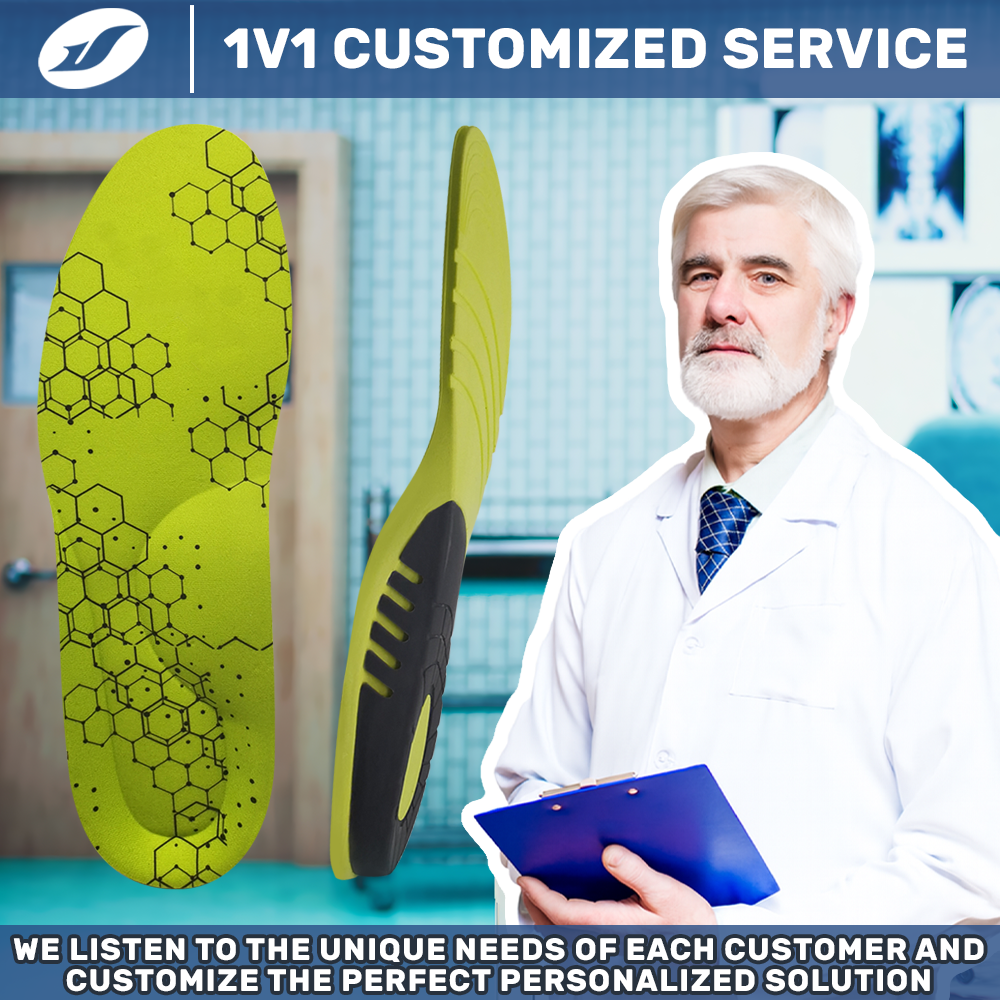
Looking for a reliable custom orthopedic shoe inserts manufacturer? Ideastep provides OEM and ODM solutions for brands, distributors, and healthcare professionals worldwide. Contact our team today to discuss your project, request samples, or receive a customized quotation.