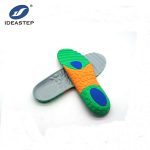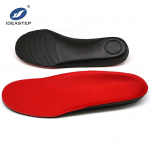
Plantar fasciitis is one of the most common foot conditions seen in runners, long-standing workers, and office professionals. It is estimated that around 10% of adults will experience plantar fasciitis during their lifetime. The typical symptoms include sharp heel pain in the morning and increased discomfort after prolonged walking or standing.
While prefabricated insoles are widely available, many patients report limited improvement when using them alone. In clinical practice, custom orthotics combined with rehabilitation exercises are often used to improve plantar load distribution, optimize gait mechanics, and reduce pain in a shorter timeframe.
This case study presents how custom orthotics helped reduce plantar fasciitis pain over a 6-week rehabilitation period and improved overall functional performance.

Patient Background
The patient is a 35-year-old female office worker who stands approximately 6 hours per day. She reported recurrent right heel pain for over one year, with the most severe pain occurring during the first steps in the morning.
Pain was rated at 7/10 on the Visual Analog Scale (VAS), and Foot Function Index (FFI) was 65%. Previous interventions included over-the-counter insoles, anti-inflammatory medication, and basic stretching exercises, with limited improvement.
The pain began to affect daily activities and gait stability, leading to a referral for biomechanical assessment and orthotic intervention.
Initial Assessment
- Foot structure analysis: Flat feet with visible arch collapse
- Gait and loading pattern: Excessive medial heel loading with overpronation
- Functional evaluation: Reduced ankle dorsiflexion and mild calf weakness
- Pain assessment: VAS 7/10, FFI 65%
Clinical findings indicated abnormal plantar load distribution and excessive strain on the plantar fascia. The treatment goal was to improve foot biomechanics, reduce pain, and restore functional mobility through combined orthotic and rehabilitation intervention.
Custom Orthotic Design and Fitting
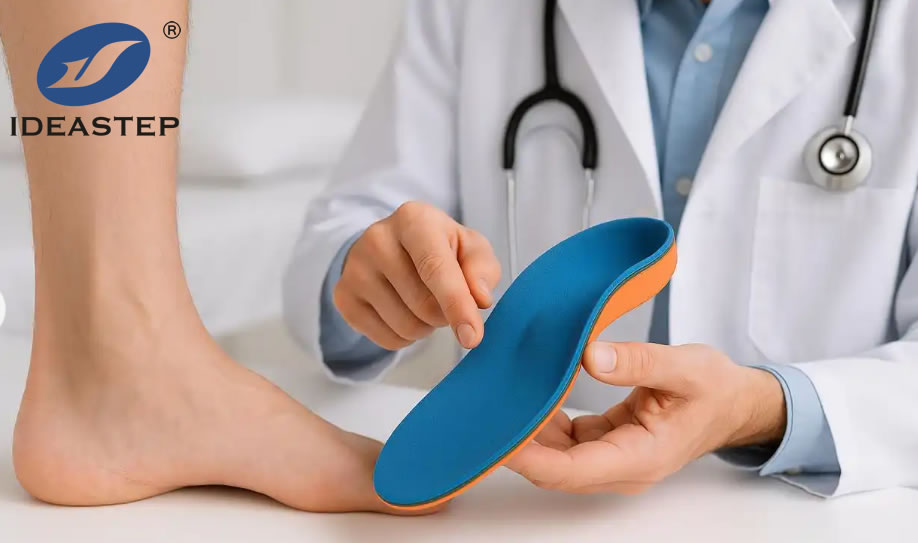
The orthotic device was designed based on the patient’s foot structure and gait analysis results:
- Moderate arch support to restore physiological foot alignment
- Medial heel cushioning to reduce plantar fascia loading
- Gait correction to reduce excessive pronation and improve lower-limb alignment
- Material combination of high-density EVA foam and thermoplastic components for both support and shock absorption
During fitting, minor adjustments were made based on patient feedback. Immediate improvements in pressure distribution and gait symmetry were observed after initial wear.
Rehabilitation Program
A 6-week structured rehabilitation plan was implemented alongside orthotic use:
- Plantar fascia stretching: twice daily, 30 seconds per session
- Calf and intrinsic foot strengthening exercises:
- Calf raises
- Short Foot Exercise
- Gait retraining with orthotic support
- Progressive loading of walking distance and activity level
The patient was reassessed weekly, and both exercise intensity and orthotic adjustments were modified based on symptom response.
Progress and Outcomes
| Week | VAS Pain Score | FFI (%) | Functional Status |
|---|---|---|---|
| Week 0 | 7/10 | 65 | Difficulty walking in the morning, limited standing tolerance (10 minutes) |
| Week 2 | 5/10 | 50 | Improved standing tolerance (15 minutes), mild gait improvement |
| Week 4 | 3/10 | 35 | Can walk moderate distances, improved stability |
| Week 6 | 1/10 | 15 | Normal gait pattern, minimal pain, standing tolerance over 1 hour |
The patient reported: “Walking and standing feel significantly easier. The morning heel pain has almost disappeared.”
Clinically, gait symmetry improved and plantar pressure distribution became more balanced.
Clinical Discussion
Custom orthotics work by reducing excessive plantar fascia strain through arch support, pressure redistribution, and gait correction. This helps improve lower-limb biomechanics and reduces repetitive tissue overload.
Compared to prefabricated insoles, custom orthotics provide individualized structural correction rather than simple cushioning, which may explain their greater effectiveness in chronic or structural cases.
This approach is most effective for patients with chronic plantar heel pain, flat feet, or significant biomechanical abnormalities when combined with rehabilitation exercises.
Clinical note: Orthotics should not be considered a standalone treatment. Without strengthening and movement retraining, symptoms may recur.
Research has shown that custom orthotic intervention can significantly reduce plantar pressure and improve gait stability in patients with plantar fasciitis (Wrobel et al., 2015).
Conclusion
This case demonstrates that a combination of custom orthotics and structured rehabilitation can significantly reduce plantar fasciitis pain within 6 weeks while improving functional outcomes.
Key recommendations include early biomechanical assessment, individualized orthotic design, and progressive rehabilitation rather than reliance on orthotics alone.
In summary: custom orthotics provide structural support and improved loading conditions, while rehabilitation training restores functional movement patterns for long-term recovery.
This page provides detailed information on plantar fasciitis: The Orthopedic Insoles That Offer Relief from Plantar Fasciitis