The orthotic insole industry is undergoing a major transformation driven by Insole Customization Technologies.
For B2B manufacturers, medical suppliers, and footwear brands, the focus is no longer just on cushioning or comfort.
Instead, it is about precision fit, biomechanical correction, and scalable OEM/ODM production capability.
As demand for foot health solutions continues to grow globally, manufacturers are increasingly adopting digital tools such as 3D foot scanning, CAD/CAM systems, and multi-density material engineering to deliver consistent and customized orthotic solutions at scale.
1. Industry Shift: From Standard Insoles to Data-Driven Customization
Traditional insole production relied heavily on manual molds and experience-based design.
While suitable for basic comfort products, this approach is no longer sufficient for today’s medical-grade orthotic requirements or performance-driven sports applications.
Modern custom orthotic insole manufacturing is now driven by data.
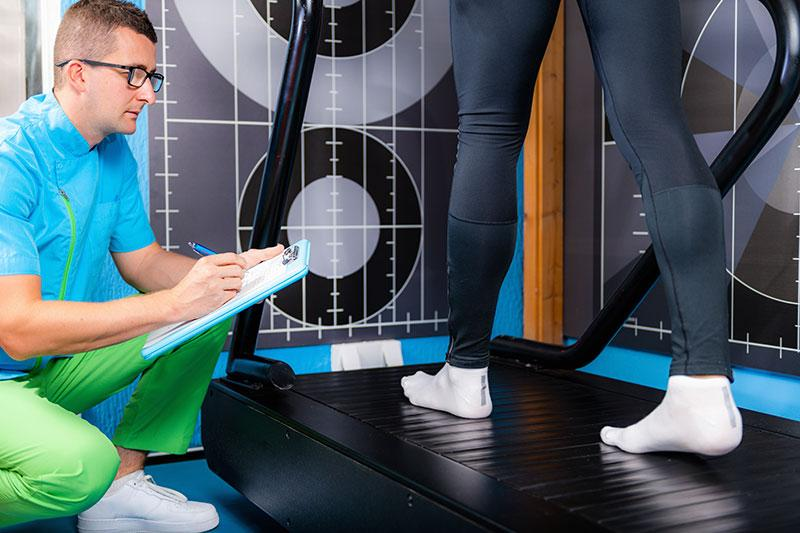
Foot structure, gait pattern, and plantar pressure distribution are digitally analyzed to guide product design with higher precision and repeatability.
This shift is especially important for OEM and ODM partners who need stable batch production, consistent quality, and fast product development cycles.
2. Core Technologies Behind Insole Customization Technologies
2.1 3D Foot Scanning and Digital Foot Modeling
High-resolution 3D foot scanning systems capture detailed anatomical data including arch height, heel angle, and pressure points.
This data is converted into digital models that serve as the foundation for orthotic design.
Compared with traditional plaster casting, digital scanning significantly improves efficiency and reduces human error, making it more suitable for scalable production environments.
2.2 CAD/CAM Design and CNC Manufacturing Systems
CAD/CAM technology allows designers to create structured orthotic solutions based on biomechanical principles.
Key functional zones such as arch support, heel stabilization, and forefoot pressure relief can be precisely defined.
Once finalized, designs are transferred to CNC machining or automated cutting systems, ensuring consistent output across large production batches.
This is a critical requirement for any orthotic insole factory serving global B2B clients.
2.3 Multi-Density Material Engineering
Modern insoles are no longer made from a single material.
Instead, manufacturers combine EVA, PU, memory foam, and other functional materials to achieve zonal performance.
For example:
EVA is commonly used for shock absorption,
PU enhances rebound and durability,
and memory foam improves long-term comfort and fit.
This multi-layer structure enables better pressure distribution and improves overall gait stability in real-world usage.
3. Manufacturing Workflow of Custom Orthotic Insoles
In professional production environments, insole customization typically follows a structured workflow designed for both precision and scalability:
- 3D foot scanning and plantar pressure data collection
- Biomechanical analysis and digital modeling
- Structural design and material selection
- CNC machining or 3D printing production
- Quality inspection and batch consistency control
This process is widely adopted by OEM insole manufacturers to ensure each product meets predefined technical specifications while maintaining stable performance across mass production.
4. Key Advantages of Insole Customization Technologies for B2B Buyers
4.1 Improved Biomechanical Performance
Data-driven design enables targeted support for common foot conditions such as flat feet, overpronation, and plantar pressure imbalance.
This helps improve posture alignment and reduce long-term injury risk in both medical and sports applications.
4.2 Scalable OEM/ODM Production Capability
Unlike traditional custom orthotics, modern systems support both individual customization and large-scale production.
This makes it possible for brands and distributors to scale globally without sacrificing consistency.
4.3 Enhanced Comfort and User Adaptation
By matching foot anatomy with multi-density materials and ergonomic design, customized insoles deliver significantly better comfort during long-term wear, especially in work boots, sports shoes, and medical footwear.
5. How B2B Buyers Should Evaluate Insole Customization Solutions
For B2B buyers, choosing the right partner is not only about product quality, but also about long-term manufacturing capability and supply chain reliability.
Key evaluation factors include:
- OEM/ODM customization capability and engineering support
- Production capacity and batch consistency control
- Material stability and long-term durability performance
- Prototype development speed for new product lines
- Quality assurance systems in mass production
High-end buyers such as medical brands and professional footwear companies typically prioritize technical depth and customization accuracy, while wholesalers focus more on scalability and delivery efficiency.
6. Application Areas of Modern Insole Customization Technologies
- Medical orthotic insoles – foot correction, rehabilitation, and clinical support
- Sports insoles – performance enhancement and injury prevention
- Industrial safety insoles – fatigue reduction for long-hour standing workers
- Children’s orthotic insoles – supporting healthy foot development and posture correction
7. Future Trends: AI-Driven and Fully Digital Orthotic Manufacturing
The next stage of insole customization is moving toward AI-powered analysis and fully digital manufacturing systems.
AI algorithms can automatically identify gait abnormalities and recommend optimized orthotic structures based on large datasets.
At the same time, advances in 3D printing materials are enabling lighter, more durable, and more adaptive insole structures.
Cloud-based design systems also allow global collaboration between manufacturers, clinics, and brands.
8. Conclusion: Why Insole Customization Technologies Matter for the Future
Insole Customization Technologies are redefining how orthotic insoles are designed, manufactured, and delivered.
The industry is moving away from traditional craftsmanship toward a fully data-driven manufacturing model.
For B2B companies, investing in advanced customization capabilities is no longer optional—it is a strategic requirement for long-term competitiveness in the global foot health market.
If you are looking for an OEM/ODM orthotic insole manufacturing partner, bulk production support, or customized foot care solutions, modern digital customization technologies provide a scalable and reliable foundation for your product development.
9. Frequently Asked Questions (FAQ)
Q1: What is Insole Customization Technologies?
Insole Customization Technologies refer to a set of digital manufacturing methods used to design and produce customized orthotic insoles. It typically includes 3D foot scanning, CAD/CAM design systems, and multi-density material engineering to achieve precise foot support and improved comfort.
Q2: What industries use custom orthotic insoles?
Custom orthotic insoles are widely used in medical rehabilitation, sports performance, industrial safety footwear, and children’s foot development. They are especially important for brands and suppliers focusing on foot health solutions and ergonomic footwear design.
Q3: Can OEM insole manufacturers support large-scale production?
Yes. Modern OEM insole manufacturers are equipped with CAD/CAM systems and automated production lines, allowing them to support both small-batch customization and large-scale bulk production with consistent quality control.
Q4: What materials are commonly used in custom orthotic insoles?
Common materials include EVA for shock absorption, PU for durability and rebound, and memory foam for enhanced comfort. Many advanced designs also use multi-density combinations to improve pressure distribution and gait stability.
Q5: What is the advantage of 3D scanning in insole customization?
3D foot scanning allows precise collection of foot geometry and pressure data. Compared with traditional plaster molds, it improves accuracy, reduces production time, and enables scalable digital customization for OEM/ODM manufacturing.
Q6: How do I choose a reliable orthotic insole factory?
A reliable orthotic insole factory should offer strong OEM/ODM capabilities, stable mass production, material consistency, and engineering support. Experience in digital customization technologies is also a key factor for long-term cooperation.