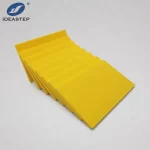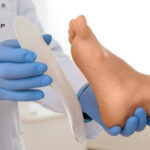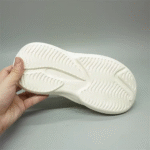
Arch support insoles play an important role in modern footwear systems, especially in athletic shoes, work footwear, and podiatry-related products. In real-world applications, they are not simply comfort inserts, but functional components designed to improve plantar pressure distribution and support more stable gait mechanics.
From an OEM/ODM manufacturing perspective, arch support insoles are developed through a combination of biomechanical analysis, material engineering, and precision production processes. This article explains how they are designed, what materials are used, and how they are manufactured in a professional insole factory environment.

1. What Are Arch Support Insoles?
Arch support insoles are functional footwear inserts designed to provide structural support to the medial arch of the foot. Unlike standard comfort insoles, their primary function is to influence foot alignment and improve pressure distribution during walking or standing.
In most applications, they are used in:
- Daily footwear for foot fatigue reduction
- Sports shoes for impact control and stability
- Work shoes for long-standing support
- Podiatry and foot care products as supportive solutions
2. Design Principles of Arch Support Insoles
In actual product development, arch support insole design is based on biomechanical data rather than simple cushioning requirements.
2.1 Biomechanical Foot Data Analysis
The design process typically starts with foot structure data, including arch height, plantar pressure distribution, and gait patterns. These parameters help determine where support and cushioning should be placed.
2.2 Foot Type Adaptation Design
Different foot types require different structural strategies:
- Flat feet: enhanced medial arch support
- High arch: improved shock absorption and pressure dispersion
- Neutral arch: balanced support and flexibility
2.3 Balance Between Support and Comfort
In real product development, one of the key challenges is balancing structural support with wearing comfort. Excessive rigidity may reduce comfort, while insufficient support may limit functional performance.
3. Material Selection for Arch Support Insoles
Material selection directly determines the performance, durability, and user experience of arch support insoles. Most products use a multi-layer material structure.
3.1 EVA – Primary Structural and Cushioning Material
EVA is widely used as the core material due to its lightweight nature, stable molding performance, and balanced cushioning properties. In many factory applications, it forms the base structure of the insole.
3.2 PU – Long-Term Structural Stability
Polyurethane (PU) is often used to enhance long-term support performance, especially in areas requiring higher load resistance.
3.3 TPU – Reinforcement and Anti-Torsion Control
TPU is commonly used as a reinforcement element to improve structural stability and reduce excessive twisting during movement.
In many advanced designs, EVA, PU, and TPU are combined to create a multi-density structure that separates cushioning, support, and stability functions.
4. Manufacturing Process of Arch Support Insoles
From a factory perspective, the production of arch support insoles involves multiple controlled steps to ensure consistency and functional performance.
4.1 Foot Data Collection and Analysis
Production begins with 3D foot scanning or pressure mapping systems. These tools help capture key structural data used for customized or semi-customized designs.
4.2 Structural Design and Engineering Modeling
Based on collected data, engineers design arch support curves, pressure zones, and layer thickness distribution. This stage directly influences final product performance.
4.3 Mold Development and Sample Prototyping
Molds are created according to the approved design. Sample units are then produced for testing and structural validation before mass production.
4.4 Material Forming and Processing
Common manufacturing methods include heat pressing, cold pressing, and CNC cutting depending on material type and product structure.
4.5 Layer Lamination and Assembly
Different functional layers are bonded together, typically including cushioning, support, and top comfort layers.
4.6 Trimming and Final Shaping
Edges are refined to ensure uniform shape, proper fitting, and consistent quality across batches.
4.7 Quality Control and Performance Testing
Key inspections include hardness testing, rebound performance, dimensional accuracy, and structural durability under repeated stress.
In practice, batch consistency is one of the most important quality indicators for OEM buyers.
5. OEM/ODM Development Workflow
For international B2B customers, arch support insole development typically follows a structured OEM/ODM process.
- Requirement analysis and application positioning
- Structural and biomechanical design
- Sample development and iterative adjustment
- Pilot production and validation
- Mass production and quality control
- Export packaging and delivery
6. Why B2B Buyers Focus on Manufacturing Capability
In global procurement, brands and distributors usually prioritize manufacturing capability over single product specifications.
Key concerns typically include batch consistency, long-term supply stability, customization capability, and production scalability. In many European and North American projects, stable seasonal supply is often more important than unit pricing.
7. Applications of Arch Support Insoles
- Daily footwear for comfort and support
- Sports footwear for impact reduction and stability
- Work shoes for long hours of standing
- Podiatry and foot care applications
8. How to Choose a Reliable Arch Support Insole Manufacturer
- Strong R&D and biomechanical design capability
- Material engineering and customization flexibility
- Stable mass production and quality control system
- Experience in international OEM/ODM projects
- Fast prototyping and development response time
9. Conclusion: Arch Support Insoles Are a Biomechanical Engineering Product
Arch support insoles should not be viewed as simple cushioning accessories. In modern footwear systems, they are biomechanical components that combine structural engineering, material science, and manufacturing precision.
For B2B buyers, the real value lies in a manufacturer’s ability to deliver consistent quality, scalable production, and reliable customization solutions rather than just product appearance or cost.
Related product links: https://www.aideastep.com/product/jf-4904-ergonomic-foot-correction-insoles-high-medium-low-arch/.