Introduction
Footwear requirements have changed quite a bit in recent years. Comfort is no longer something optional—it directly affects how a product performs in the market, especially in categories like work shoes, sports footwear, and daily wear sneakers.
For manufacturers and brands, the challenge is not only making shoes comfortable at first wear, but ensuring that comfort and structure remain stable after repeated use. This is where EVA foam shoe soles have become one of the most practical material choices in modern footwear production.
A well-designed EVA foam sole helps balance comfort, durability, and production cost, which is why it is widely adopted across global OEM and private label footwear projects.
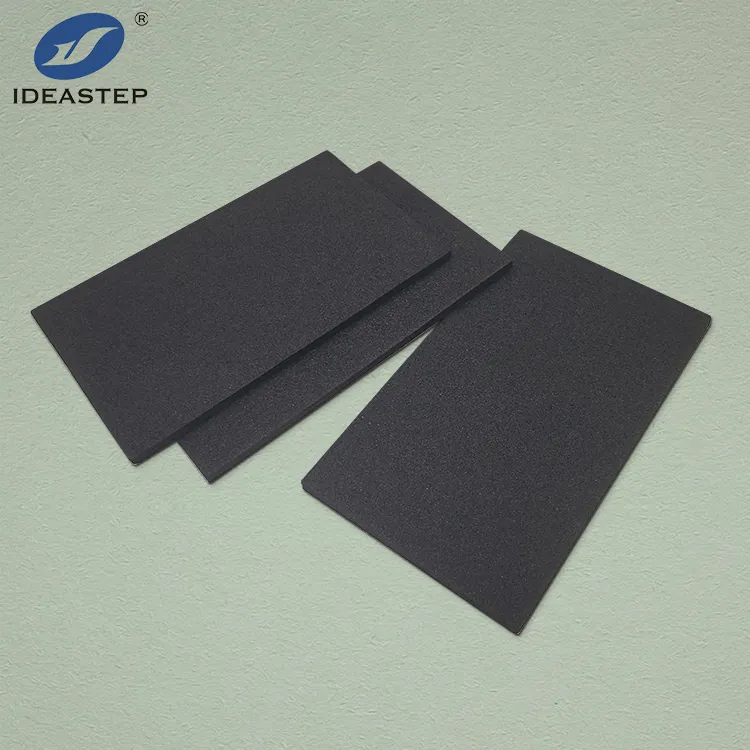
What Is EVA Foam Shoe Sole and Why It Is Widely Used
EVA (Ethylene Vinyl Acetate) is a lightweight foam material commonly used in footwear midsoles and outsoles. In most factories, it is selected because it offers a good balance between softness, weight, and manufacturability.
Compared with rubber or PU materials, EVA is easier to mold and adjust in density, which makes it more suitable for large-scale production and customized footwear development.
- EVA foam: lightweight, flexible, cost-efficient
- Rubber: durable but heavier and less flexible
- PU: good cushioning but more complex in processing
Because of this balance, EVA foam shoe soles are widely used in sports shoes, casual footwear, work boots, and orthopedic shoe designs.
Key Features of High Performance EVA Foam Shoe Soles
Lightweight Structure for Daily Use
EVA foam is naturally light, which helps reduce the overall weight of footwear. In real use, this becomes more noticeable during long walking or standing hours, where even small reductions in shoe weight can improve comfort over time.
Shock Absorption and Pressure Distribution
When the foot strikes the ground, impact forces travel through the sole and into the lower body. EVA foam helps reduce this pressure by absorbing part of the impact and spreading it across the sole instead of concentrating it in one area.
Durability and Compression Behavior
One common issue in low-grade EVA products is compression set, where the foam slowly loses its original shape after repeated loading. In higher quality EVA soles, density and structure are controlled more carefully so the material can maintain stability during longer use cycles.
Flexible Movement Support
A good EVA foam sole is not only about softness. It also needs controlled flexibility so the foot can move naturally during walking. This helps reduce stiffness and improves overall walking efficiency.
How EVA Foam Shoe Soles Are Manufactured
In production, EVA performance is not only determined by the material itself but also by how it is processed. Small changes in temperature, foaming ratio, or density control can affect the final feel of the product.
A typical manufacturing process includes the following steps:
- Material selection: choosing EVA compounds with stable density and controlled expansion behavior
- Foaming process: adjusting temperature and pressure to achieve target hardness and rebound
- Molding or cutting: forming soles based on design requirements and production volume
- Density control: ensuring consistency between batches
- Final inspection: checking shape, compression resistance, and surface quality
Instead of relying only on final inspection, most stable production systems control quality throughout the process, because EVA behavior is highly sensitive to processing conditions.
Performance Differentiation in EVA Foam Sole Design
In many OEM footwear projects, EVA soles are not designed with a single uniform density. Instead, different zones are adjusted based on pressure distribution during movement.
- Heel area: softer EVA for impact absorption
- Midfoot: balanced density for stability
- Forefoot: more flexible structure for push-off movement
This multi-zone approach allows the sole to respond differently during walking, which improves comfort and reduces fatigue in long-term use.
Applications Across Footwear Industries
- Sports and running shoes: lightweight cushioning and energy efficiency
- Work boots: long-hour standing comfort and fatigue reduction
- Casual footwear: everyday comfort and wearability
- Orthopedic footwear: pressure relief and support alignment
- Private label brands: scalable production with stable quality
Each application requires different adjustments in density, thickness, and structural design, depending on market positioning.
Why Work with a Professional EVA Foam Shoe Sole Manufacturer
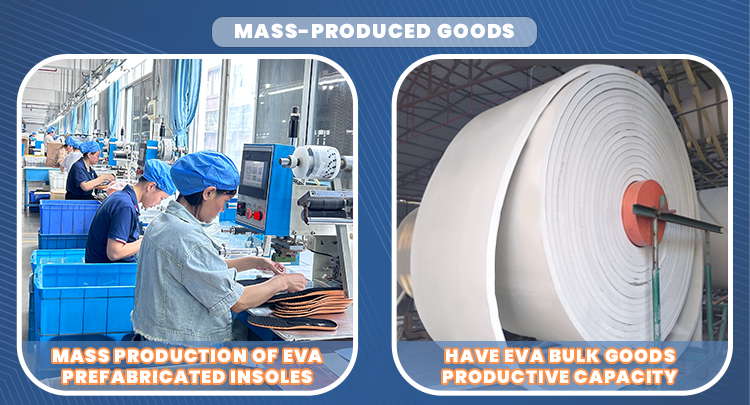
For most footwear brands, consistency is more important than anything else. A stable EVA sole supplier ensures that the same model performs the same across different production batches, which is often where quality issues appear when working with low-cost suppliers.
- Stable mass production capability for large orders
- Controlled EVA density formulation across product lines
- OEM/ODM development support for custom designs
- Consistent quality control across batches
- Experience in international footwear markets
This consistency is what allows brands to scale without risking product variation in different shipments.
Customization Options for B2B Clients
- EVA density selection (soft, medium, firm combinations)
- Thickness and shape customization for different shoe categories
- Surface texture and finishing options
- Branding and logo integration for private label programs
- Packaging design for retail or wholesale distribution
In many projects, small changes in density or structure can significantly affect how the final product is perceived in the market.
Quality Control and Testing Standards
To ensure stable performance, EVA foam shoe soles go through multiple testing stages during production.
- Compression set testing to evaluate deformation resistance
- Flexibility testing for long-term movement durability
- Abrasion resistance testing for surface wear
- Density and hardness consistency checks across batches
These tests help ensure that performance remains stable from sample stage to mass production.
Conclusion
High performance EVA foam shoe soles offer a practical solution for modern footwear manufacturing by combining comfort, durability, and production flexibility.
Rather than focusing on a single material property, the real value of EVA comes from how it is engineered, processed, and adjusted for different footwear applications.
For brands and OEM buyers, choosing the right manufacturer is not only about material selection but also about ensuring stable performance across production at scale.
If you are developing a new footwear line or evaluating EVA sole suppliers, sample testing is usually the best starting point. Density, hardness, and structure can be adjusted based on your target market before bulk production begins.
Want to know more about EVA? Read here for details: https://www.aideastep.com/product-tag/custom-eva/.