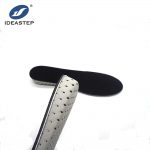
Foot comfort is not only about softness or cushioning. In real orthopedic design, the key factor is how accurately the insole adapts to the wearer’s foot biomechanics under load.
Heat moldable orthotic insoles are designed to bridge the gap between prefabricated inserts and fully custom orthotics. By using thermoformable materials, the insole can be reshaped under controlled heat and then locked into a stable support structure that follows the foot’s natural contour.
This makes them widely used in orthopedic clinics, occupational footwear programs, and performance footwear development where fit consistency and support accuracy matter more than generic cushioning.
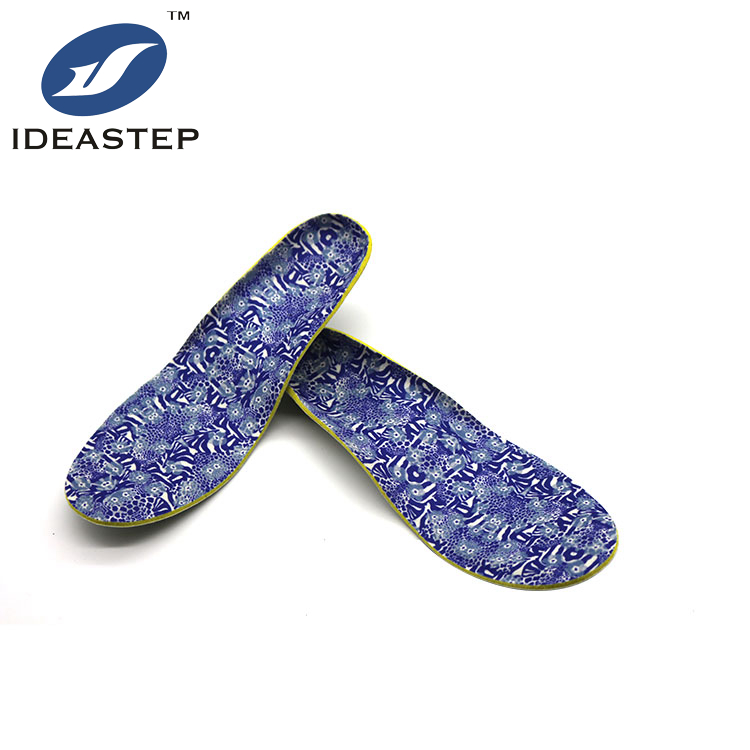
What Heat Moldable Orthotic Insoles Actually Are (From an Engineering Perspective)
Unlike standard EVA foam insoles, heat moldable orthotics integrate a thermo-reactive structural layer that changes stiffness under controlled temperature.
When heated, the polymer matrix softens and allows deformation. Once cooled, molecular re-stabilization occurs, locking the shape in place.
In practical use, this allows:
- Arch contour customization
- Heel cup reshaping for stability
- Forefoot pressure redistribution
This is why they are often described as semi-custom orthotic systems rather than simple insoles.
How Thermoforming Improves Fit Accuracy
The thermoforming process is not random shaping—it is based on load-bearing pressure mapping.
Step 1: Heat activation (material softening phase)
The thermoplastic layer becomes flexible within a controlled temperature range (typically 60–80°C depending on formulation).
Step 2: Functional foot loading
When the user stands on the softened structure, body weight naturally defines:
- Arch height
- Heel alignment angle
- Forefoot pressure zones
Step 3: Structural locking
After cooling, the internal EVA/TPU network stabilizes, preserving the corrected geometry.
This process creates a more anatomically responsive structure compared to pre-molded arch supports.
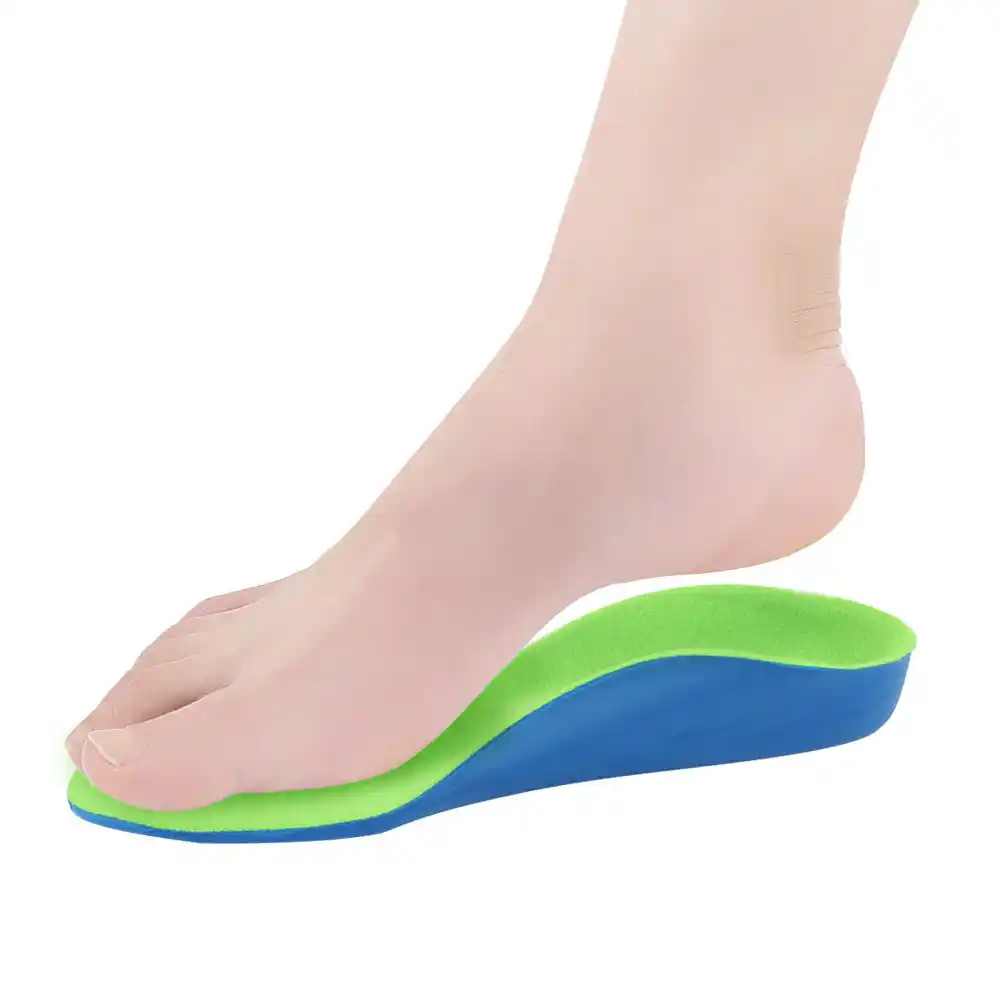
Why Precision Fit Matters in Orthotic Design
From a biomechanical standpoint, poor insole fit leads to micro-instability inside the shoe. Over time, this causes:
- Excess pronation or supination
- Plantar fascia overload
- Uneven knee tracking
- Increased muscle fatigue during stance phase
Heat moldable orthotic insoles reduce these issues by increasing contact surface stability between foot and support layer, improving motion efficiency during gait.
Key Functional Advantages
Semi-custom support without clinical production cycle
They provide clinic-level adaptation without full plaster casting or digital scanning workflows.
Improved arch engagement under load
Once molded, the arch zone maintains consistent structural resistance during walking and standing.
Shock absorption + structural stability balance
Most designs combine EVA cushioning with thermoplastic reinforcement for controlled flexibility.
Reduced internal shoe movement
A molded interface significantly improves foot-shoe synchronization, especially in work boots and running shoes.
Typical Application Scenarios in Global Markets
Heat moldable orthotic insoles are commonly used in:
- Occupational footwear programs (long standing industries)
- Sports footwear prototyping and performance tuning
- Retail orthopedic insole programs
- Postural support during mild foot discomfort cases
In B2B supply chains, they are often positioned as entry-level customizable orthotic solutions before full OEM orthotics development.
Structural Design Overview
A high-performance heat moldable insole typically includes:
- Thermoformable core layer (shape retention system)
- EVA or PU cushioning layer (impact absorption)
- Textile top cover (moisture and friction control)
- Anti-slip base layer (shoe stability interface)
Each layer is designed to balance mechanical support and wearable comfort under dynamic load conditions.
Correct Usage Process (Key for Performance Stability)
- Heat activation under controlled conditions
- Standing posture alignment during molding
- Full cooling before first use
- Optional re-heat adjustment depending on material grade
Incorrect molding is the main reason for performance inconsistency in low-quality products.
Selection Criteria for OEM / B2B Buyers
- Thermoplastic stability under repeated cycles
- EVA density consistency across batches
- Arch reinforcement rigidity range
- Compatibility with different shoe volumes
- OEM customization capability (logo, structure, hardness tuning)
Conclusion: Why Heat Moldable Insoles Are Becoming a Standard in Adaptive Footwear
Heat moldable orthotic insoles represent a practical shift toward adaptive, user-shaped support systems in modern footwear design.
Instead of relying on fixed geometry, they allow the support structure to be defined by the wearer’s actual biomechanics, improving both comfort and functional alignment.
In global B2B markets, this category is increasingly used as a cost-effective entry point into customized orthotic solutions and performance footwear systems.
Related product links: https://www.aideastep.com/product/wholesale-good-feet-arch-supports-adjustable-heat-moldable-orthotic-insoles/.