Developing custom fit arch supports for wholesale requires careful consideration of arch geometry, materials, shoe compatibility, and manufacturing methods. For orthotic wholesalers, footwear brands, and foot care suppliers, clear specifications help reduce revisions and maintain consistency across bulk orders.
This guide covers key design options, material selection, manufacturing processes, quality control, and purchasing considerations for custom arch support insoles.
What Are Custom Fit Arch Supports in Wholesale Insole Projects?
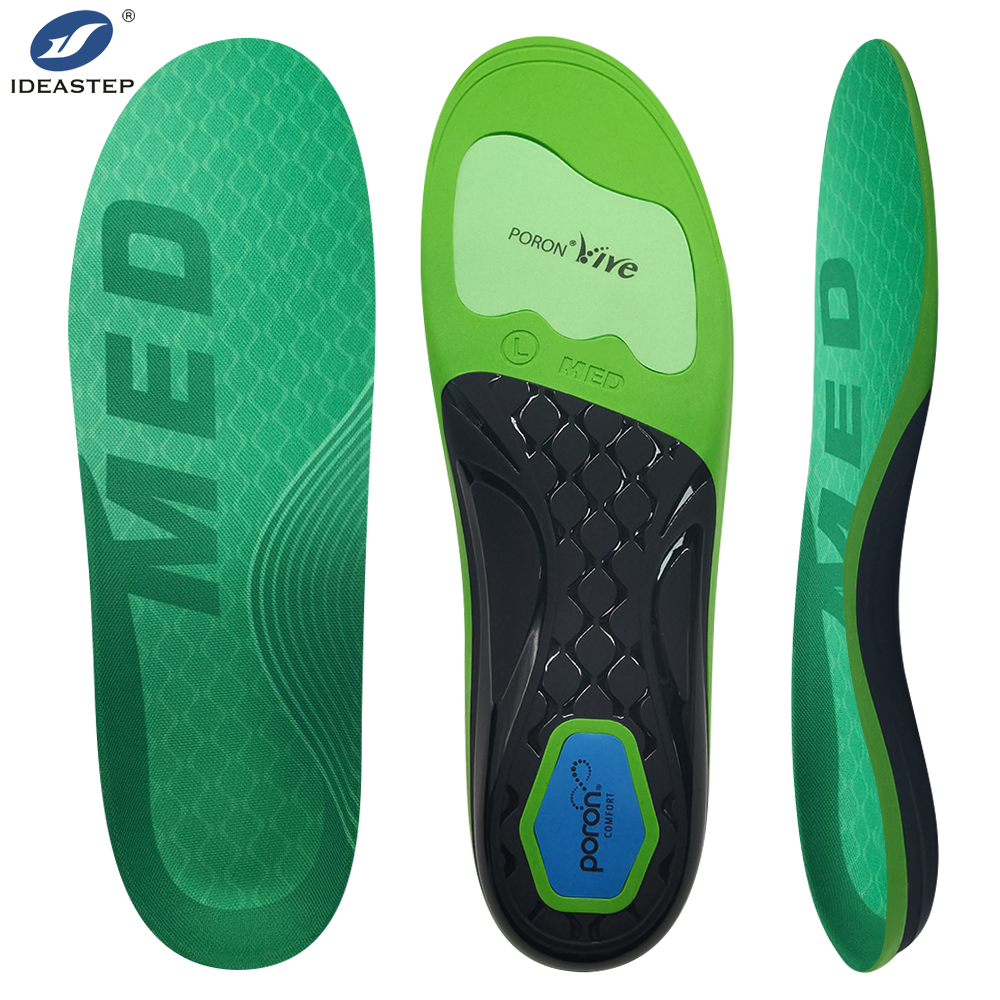
Custom fit arch supports are developed to meet specific requirements for arch contour, dimensions, stiffness, and construction. They may form part of a complete orthotic insole or serve as a separate support component.
Arch Support Design and Product Function
The arch section works with the heel cup, cushioning layers, and forefoot structure to determine the insole’s fit and mechanical behavior. Key factors include:
- Arch contour: Defines the shape and contact area of the support.
- Material stiffness: Influences structural response under loading.
- Heel cup geometry: Affects rearfoot positioning and stability.
- Overall thickness: Determines compatibility with available shoe space.
These features must be evaluated together. A higher arch does not automatically produce a better design; contour, material properties, and intended application also matter.
Standard vs. Custom-Designed Arch Supports
Standard insoles use established shapes and specifications, while custom designs allow adjustments to dimensions, materials, support geometry, branding, and construction. A footwear brand may need a thinner profile to preserve shoe volume, whereas an orthotic distributor may require a firmer shell.
Custom development should reflect the target market, expected order volume, and budget rather than adding features without a clear purpose.
Typical B2B Applications
Custom arch support projects serve orthotic wholesalers, foot care suppliers, footwear manufacturers, private-label brands, and sports product companies. Their requirements may differ in support structure, cushioning, shoe compatibility, packaging, and repeat-order consistency.
Key Design Options for Custom Fit Arch Supports
Low, Medium, and High Arch Profiles
Low, medium, and high arch profiles provide a starting point for product development, but they are not universal dimensional standards. Buyers should confirm actual measurements and reference drawings rather than rely on profile names alone.
Define arch height, support length, contact width, and contour transitions. The selected profile must also suit the intended footwear and available internal space.
Arch Shape, Length, and Contour
Two insoles with the same maximum arch height can have different contact patterns and mechanical characteristics. Specify the arch contour, support length, medial and lateral shape, and position of the highest point. CAD design, CNC milling, or shell modification can produce the required geometry, depending on the manufacturing process.
Heel Cup and Insole Length
The heel cup should complement the arch structure and fit the intended footwear. Its depth, width, stiffness, and transition into the arch affect the finished design. A deeper cup may require more internal shoe space, so sample evaluation is important.
Full-length insoles cover the heel, arch, and forefoot, while 3/4-length designs leave more forefoot space available. The choice affects material layout, assembly, thickness, and shoe compatibility.
Additional Support Features
Depending on the application, designs may include metatarsal support, heel cushioning, medial or lateral wedges, localized cushioning, or ventilation features. Each addition affects geometry, materials, and production cost, so it should address a defined requirement.
Material Selection for Wholesale Custom Arch Support Insoles
EVA Foam
EVA is widely used in insole manufacturing and is available in different densities, hardness levels, and thicknesses. It can serve as a cushioning layer or shaped component, depending on the material grade and construction.
Density measures mass per unit volume, while hardness measures resistance to indentation under a defined test method. Buyers should specify both where relevant, along with thickness, compression behavior, and bonding requirements. Dual-density or multi-density EVA can provide different material characteristics across selected zones.
PP and TPU Support Shells
PP is commonly used for relatively rigid thermoplastic components, while TPU grades offer varying levels of flexibility and mechanical performance. The finished behavior of either material depends on its grade, thickness, geometry, and processing conditions.
Specifications should define the shell’s function, dimensions, forming method, and relevant performance requirements instead of naming the material alone.
PU, PORON, Latex, and Top-Cover Materials
PU foam, PORON materials, latex, and textile covers may be used in cushioning or surface layers, depending on the design.
- PU foam: Used in cushioning and support layers.
- PORON materials: Selected for applications requiring defined compression and recovery characteristics.
- Latex: Used in certain cushioning constructions.
- Textile and microfiber covers: Influence surface feel, abrasion resistance, moisture management, and appearance.
Performance varies by grade and construction. Technical data and sample testing provide a sounder basis for selection than material names alone.
Multilayer Material Construction
A custom orthotic insole may combine a support shell, EVA cushioning, and a textile top cover. Material compatibility is particularly important in bonded constructions. Adhesives, surface preparation, and processing conditions should be checked during sampling to reduce delamination and assembly defects.
Manufacturing Methods for Custom Arch Support Insoles
CAD/CAM Design and CNC Milling
CAD/CAM workflows translate digital designs into manufacturing data. CNC milling can produce shaped foam components and selected orthotic structures to defined dimensions. Before approval, compare the physical sample with the digital model using consistent measurement references.
Thermoforming, Molding, and Assembly
Thermoforming shapes suitable thermoplastics through controlled heating and forming. Material grade, temperature, pressure, cooling conditions, and geometry all influence the result.
Molding, lamination, and bonding are used to produce components and combine shells, cushioning layers, and top covers. Common issues include dimensional variation, uneven bonding, wrinkles, and inconsistent thickness. Inspection criteria should address the relevant characteristics.
Prototype Development Before Bulk Production
Sampling helps verify the design before a larger production run. The process typically includes:
- Confirm drawings, materials, dimensions, and application.
- Produce an initial sample.
- Check dimensions, assembly, and shoe compatibility.
- Record feedback and revise the design if necessary.
- Approve the final sample and specifications before production.
Retain the approved sample and current drawings as references for repeat orders and design control.

Defining Specifications for a Custom Insole Project
Dimensions, Size Range, and Shoe Compatibility
Provide the required length, width, size range, and dimensional tolerances. For a specific footwear model, include relevant shoe measurements or a reference sample. Because arch geometry and support locations may not scale proportionally, review the complete size range before approval.
Arch Height, Hardness, Density, and Thickness
A technical specification should define the parameters that affect fit, function, and production, including:
- Arch height, contour, and measurement references.
- Material hardness, scale, and test method.
- Material density and applicable test method.
- Overall thickness, shell thickness, and tolerances.
- Size range, layer construction, and bonding requirements.
Consistent measurement methods reduce disputes during sample review and inspection.
Branding, Packaging, and Technical Documentation
Define colors, top-cover materials, logo placement, printing, packaging, and labeling. Private-label projects should include approved artwork and packaging files.
Provide available CAD files, drawings, reference samples, target quantities, material preferences, and destination markets. If only a physical sample is available, clarify whether measurement, reverse engineering, or new design development is required.
Quality Control for Wholesale Custom Arch Supports
Dimensional and Structural Inspection
Checks may cover length, width, thickness, arch height, heel cup dimensions, shell contour, and left-right consistency. Flexible materials can deform during measurement, so inspection procedures should define how components are positioned and measured. Multi-size projects should cover the approved range.
Material Performance and Durability
Depending on the construction and intended use, testing may include compression and recovery, layer adhesion, abrasion resistance, flexing, cyclic loading, and dimensional stability. Tests should use suitable methods and documented conditions, with performance claims supported by relevant results.
Production Inspection and Compliance
Quality control may include incoming material checks, first-article inspection, in-process checks, and final inspection. Maintain approved drawings, specification revisions, and relevant inspection records for repeat orders.
Documentation requirements depend on the destination market, product classification, materials, and intended claims. Verify the scope of material declarations, test reports, and quality-system certificates rather than assuming that one certificate covers every finished product.
MOQ, Lead Time, and Cost Factors
Design Complexity and Unit Cost
Custom insole pricing depends on materials, tooling, machining, assembly, inspection, packaging, and order quantity. Multiple layers, complex shell geometry, tight tolerances, and special packaging may increase costs.
Separate one-time development charges from recurring unit costs when comparing quotations. Simplifying a design can reduce expenses if the revised construction still meets the approved specifications.
Minimum Order Quantity and Production Planning
MOQ varies by material, process, tooling requirements, and supplier. Orders split across sizes, colors, or packaging versions may require additional setup and inventory planning. Confirm whether the minimum applies to the total order or each specification.
Sample and Bulk Production Lead Times
Sample development involves design review, material sourcing, production, evaluation, and possible revisions. Bulk production adds material planning, manufacturing, inspection, and packaging.
Agree on milestones for drawing approval, sample feedback, final approval, production, and shipment preparation. Material availability and design changes should be considered when setting delivery expectations.
Preparing a Wholesale RFQ
A useful request for quotation should include:
- Estimated quantity and size breakdown.
- Drawings, reference samples, or design requirements.
- Material and structural specifications.
- Branding, packaging, and labeling requirements.
- Destination market, required documentation, and target delivery date.
Identify unresolved details so the manufacturer can distinguish confirmed requirements from items needing further discussion.
Choosing a Manufacturing Partner for Custom Arch Support Insoles
Product Development and Material Capabilities
Check whether the supplier can work with the required foams, thermoplastics, covers, and bonding systems. Relevant capabilities may include CAD/CAM design, CNC machining, shell forming, lamination, and prototype development. Review relevant samples and technical documentation rather than relying on equipment lists alone.
Production Consistency and Long-Term Supply
Ask how the manufacturer controls material batches, dimensional tolerances, specification revisions, and production changes. Confirm how nonconforming products are handled and how changes to the approved design are communicated.
Before placing a bulk order, agree on sample approval, revision responsibilities, production references, and commercial terms. These measures help support consistent repeat orders.
Frequently Asked Questions About Wholesale Custom Fit Arch Supports
Can arch height and support firmness be customized?
Both can often be adjusted within the limits of the selected materials and manufacturing process. Define measurement references and confirm the design through sample evaluation.
Which materials are suitable for custom orthotic insoles?
EVA is commonly used for cushioning and shaped components. PP and TPU may serve as support structures, while PU, PORON materials, latex, and textiles are used in selected cushioning or surface applications.
What information is needed for a wholesale quotation?
Provide the estimated quantity, size range, material requirements, drawings or reference samples, packaging details, and destination market.
Can samples be developed before mass production?
Many custom insole projects include sampling to verify dimensions, construction, and footwear compatibility before bulk production.
How can buyers maintain consistent quality across repeat orders?
Use approved samples, controlled drawings, defined tolerances, and documented inspection criteria. Review material or process changes before implementation.
Discuss Your Custom Arch Support Insole Project
Successful custom fit arch supports depend on arch geometry, material selection, shell construction, and footwear compatibility. Defining these requirements early helps streamline sampling and gives bulk production a clear technical reference.
Ideastep can discuss project specifications, material options, and sampling requirements for custom insole development.
Contact Ideastep to discuss custom arch support designs and wholesale supply requirements.
Recommended Reading:
What Are the Signs You Need Arch Supports? Understanding Foot Pain and Stability
Arch Supports for Shoes: The Essential Guide