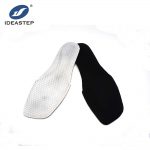
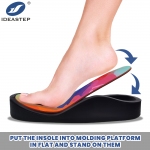
Custom diabetic insoles require careful material selection, structural design, and quality control. For wholesalers, foot care suppliers, and orthotic product distributors, understanding these factors is essential when developing a reliable product range.
Unlike standard cushioning insoles, diabetic insoles often need to address specific requirements related to foot shape, pressure distribution, material consistency, and surface comfort. Therefore, product development should follow clearly defined technical specifications rather than relying on general comfort claims.
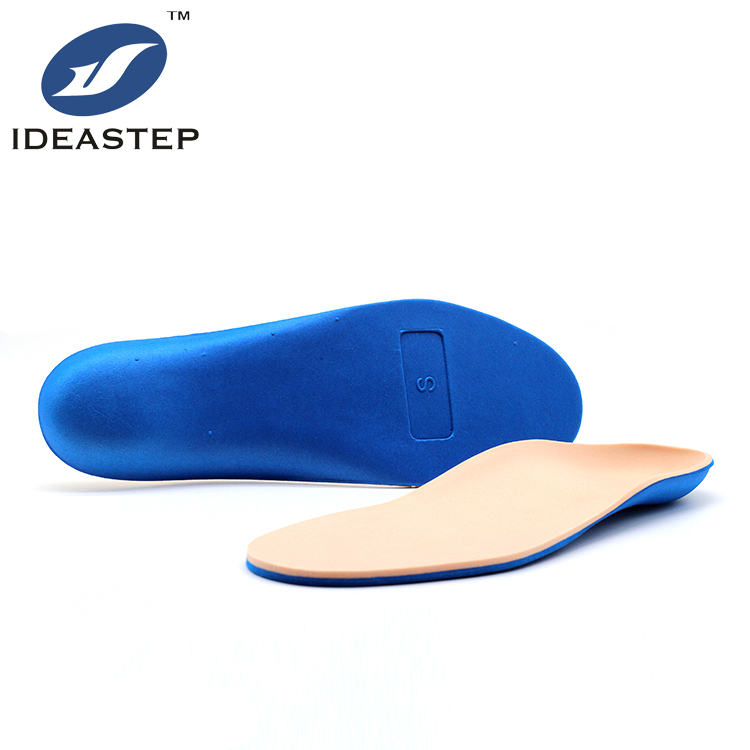
1. Understand the Design Requirements of Diabetic Insoles
Diabetic foot care products require careful consideration of pressure-related risks and individual foot conditions. Some users may have foot deformities, prominent areas, or a history of plantar ulcers. These factors can influence insole structure and material selection.
For manufacturers and B2B buyers, several design considerations are particularly important:
- Pressure distribution: The insole structure should help distribute plantar loading according to the intended design and application.
- Foot shape compatibility: The design should accommodate relevant foot dimensions and anatomical variations.
- Surface comfort: Materials and finishing should minimize rough edges, seams, and other potential sources of friction.
- Structural stability: The insole should maintain its intended shape and functional properties during normal use.
Product specifications should reflect the target application. A standard cushioning insole should not be presented as equivalent to a specialized pressure-relieving orthosis.
2. Select Suitable Materials for Diabetic Insoles
Material selection affects cushioning, durability, flexibility, and overall product performance. The choice should consider the intended use, construction method, and required service life.
Common materials include:
EVA
EVA is widely used in orthotic insole production because manufacturers can adjust its density, hardness, and thickness. Different EVA formulations can support multi-layer constructions and localized design requirements.
PU
PU materials offer different cushioning and compression characteristics. They can be considered when a softer contact layer or a specific cushioning response is required.
Memory Foam
Memory foam can provide a conforming surface layer. However, its compression and recovery characteristics should be evaluated to ensure they suit the intended application.
Top Cover Materials
The top cover should have a smooth surface and suitable wear resistance. Fabric selection, bonding quality, and edge finishing also affect the finished product.
Material selection should be supported by relevant technical data and testing. No single material is suitable for every diabetic insole design.
3. Key Structural Features to Consider
A diabetic insole may combine several layers and structural elements. Each component should serve a defined purpose within the overall design.
Multi-Layer Construction
Different materials can be combined to balance cushioning, support, and durability. For example, a softer top layer may sit above a firmer base layer. The final construction depends on the intended pressure-management requirements.
Arch and Heel Support
Arch contours and heel cup geometry should match the product design and target foot shape. Excessive or poorly positioned support may create unwanted pressure, so dimensions and contours require careful evaluation.
Localized Pressure-Relief Areas
Some designs include softer zones or modified contours around specific areas. Their placement should follow the intended application and, where required, professional assessment.
Smooth Surface Finishing
Edges, joints, and material transitions should be checked for roughness or unevenness. Consistent finishing helps reduce potential sources of mechanical irritation.
4. Quality Control and Safety Considerations
Quality control should cover both incoming materials and finished products. A consistent production process helps reduce variation between batches.
| Inspection Area | Key Points |
|---|---|
| Raw materials | Density, hardness, thickness, and material consistency |
| Dimensional control | Length, width, thickness, and contour accuracy |
| Bonding quality | Adhesion between layers and resistance to separation |
| Surface finishing | Smooth edges, even surfaces, and no obvious defects |
| Product consistency | Structural and dimensional consistency between batches |
| Packaging | Product identification, labeling, and protection during transport |
Testing requirements depend on the product’s intended purpose, classification, and target market. Buyers should confirm which standards and documentation apply before placing an order.
It is also important to distinguish general product quality from clinical evidence. A material test or manufacturing inspection does not, by itself, demonstrate that an insole prevents ulcers or meets every clinical requirement.
5. Customization Options for Wholesale Orders
Custom production allows suppliers to develop products for different market segments and distribution requirements.
Common customization options include:
- Material combinations: EVA, PU, foam, and selected top cover materials.
- Thickness and hardness: Adjusted according to product specifications.
- Insole structure: Full-length, partial-length, or multi-layer constructions.
- Size range: Standard sizing or customized dimensions.
- Branding and packaging: Private labels, logos, and retail or bulk packaging.
Before mass production, buyers should review samples and confirm dimensions, material specifications, construction details, and packaging requirements. A documented sample approval process can help reduce misunderstandings during production.
6. What B2B Buyers Should Check When Selecting a Manufacturer
A manufacturer’s production capability is only one part of supplier evaluation. Buyers should also examine its technical communication, quality management, and ability to maintain consistent specifications.
Consider the following points:
- Material knowledge: Can the manufacturer explain material properties and provide relevant specifications?
- Design capability: Can it work with supplied drawings, samples, or custom structural requirements?
- Production consistency: Are dimensions, hardness, bonding, and finishing controlled between batches?
- Sample development: Can the supplier provide samples for evaluation before bulk production?
- Documentation: Can it provide applicable test reports and product documentation for the target market?
- Order flexibility: Are MOQ, lead time, OEM, and ODM requirements clearly defined?
Clear technical communication at the development stage helps avoid unnecessary changes after mass production begins.
7. Custom Diabetic Insole Manufacturing
Custom diabetic insoles involve more than selecting soft materials. Their development requires coordination between material properties, structural design, manufacturing processes, and quality inspection.
Ideastep provides custom orthotic insole development and OEM/ODM production, including material selection, structural customization, and different manufacturing options. Product specifications can be discussed according to project requirements and target markets.
Conclusion
For B2B suppliers, developing custom diabetic insoles requires a clear understanding of material performance, structural requirements, and quality control. Buyers should evaluate each product according to its intended application and verify relevant technical and regulatory requirements before distribution.
A well-defined specification, sample approval process, and consistent production control provide a more reliable basis for long-term wholesale cooperation.
Related Articles:
Custom vs Off‑the‑Shelf Diabetic Insoles: Which Fits Your B2B Project
What Wholesale Buyers Should Evaluate When Sourcing Diabetic Insoles