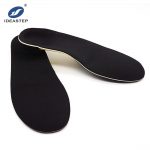
For wholesale distributors, OEM footwear manufacturers and foot‑care clinic operators, picking between custom and off‑the‑shelf diabetic insoles shapes your entire project. It impacts budget, launch timelines, product differentiation and even regulatory exposure. From handling countless B2B diabetic insole projects, we have seen many buyers make decisions based on assumptions instead of real‑world project constraints. Custom options are not automatically better, and stock insoles cannot satisfy every clinical requirement. Getting this choice wrong leads to wasted spend, delayed rollouts, and potential liability for your business downstream.

Why B2B Teams Should Draw a Clear Line Between Custom and Stock Diabetic Insoles
Many procurement teams treat diabetic insoles like regular orthotic inserts, ignoring the performance gaps and risk differences between pre‑made and custom‑built products. Off‑the‑shelf diabetic insoles are built around fixed standard foot shapes. Custom work covers multiple levels of modification, from minor tweaks to proven existing bases all the way to brand‑new moulds engineered for specific biomechanical goals.
Your final call should be driven by your business model, end‑customer profile, order size, launch schedule and local compliance rules. Two wrong assumptions are extremely common in this space: that custom development always delivers stronger clinical performance, or that stock products can fully support clinical channels without independent performance checks.
Off‑the‑Shelf Diabetic Insoles: Practical Advantages and Inherent Limitations
Stock diabetic insoles are a solid fit for businesses entering or expanding within diabetic foot care without heavy upfront investment. There are no mould‑related costs, MOQs tend to be more flexible, and lead times are short enough to keep retail and clinic partners consistently supplied. Reputable stock lines come with completed third‑party test documentation, so you can build out a sellable product range without waiting for new lab testing.
These practical benefits come with clear trade‑offs. Core biomechanical features such as pressure distribution, substrate density and heel‑cup depth stay fixed. You can trim them to a limited degree, but you cannot adjust key support zones for complex foot deformities. Heavy market saturation also keeps profit margins tight; many suppliers carry identical stock units, leaving little room to stand out in wholesale markets.
Supply‑chain caution is critical here. A large number of generic foam insoles are labelled diabetic‑friendly despite lacking valid pressure‑relief test results. When sourcing stock units, always review actual test reports instead of relying on marketing copy. Off‑the‑shelf insoles work best for market testing, fast clinic restocks, and customers with relatively standard foot anatomy.
Custom Diabetic Insoles: Three Distinct Tiers, Not a One‑Size‑Fits‑All Solution
Miscommunication frequently happens when buyers and factories lump every custom request under one umbrella. In real B2B sourcing, custom diabetic insoles fall into three practical tiers, each with its own cost, lead‑time and capability boundaries.
Modular ODM represents entry‑level customisation. Manufacturers take an already validated diabetic‑grade base insole and adjust top fabrics, branding, firmness or small local geometry changes, with no need for brand‑new tooling. This keeps sampling costs and MOQ reasonable while helping your product stand apart from generic stock alternatives.
Semi‑custom batch production often draws on aggregated 3D scan data. This option suits clinic networks and institutional buyers looking for improved pressure redistribution for common non‑standard foot shapes, without patient‑specific individual moulds.
Full custom development involves completely new mould design. Every element including arch height, heel‑cup shape and metatarsal offloading zones is engineered from scratch to match your technical requirements. This gives you full control over pressure performance and product differentiation, yet requires higher upfront investment, longer sampling cycles and larger minimum orders. Project management also becomes more involved, as you need to monitor consistency from prototype all the way through mass production.
Full custom work makes the most sense for private‑label brands chasing healthy margins, footwear OEMs building matched diabetic shoe systems, or large institutional tenders with strict, non‑negotiable biomechanical specifications.
Key Factors to Guide Your B2B Sourcing Decision
When comparing stock and custom options, look beyond simple unit price. Medical performance tops the list. Well‑validated off‑the‑shelf insoles can deliver reliable pressure redistribution for standard feet, yet cannot adapt to complex deformities. Custom work enables targeted offloading, but final performance still heavily depends on your supplier’s biomechanical expertise.
Upfront commercial costs create a clear divide. Stock products have zero tooling expenses. Modular ODM adds sampling and modification fees. Full mould‑based custom development includes mould investment plus multiple rounds of prototype adjustments. Lead times follow the same pattern: stock orders ship quickly, modular ODM adds weeks for sampling, and full custom mould projects extend timelines substantially.
Competitive positioning matters too. Stock lines offer almost no differentiation. Customised outputs support better wholesale margins and help you carve your niche in the market. Established stock lines come with ready‑made test files for compliance, while custom projects usually require fresh testing for modified final products. Supply‑chain risk shifts accordingly: stock orders face risks from raw‑material substitutions, while custom projects add concerns around mould maintenance and version control across repeated production runs.

Scenario‑Driven Guidance for Different B2B Operators
Wholesale distributors testing demand for diabetic foot‑care products should start with validated off‑the‑shelf stock or low‑risk modular ODM. This keeps exposure low while you gather real‑world feedback from retail and clinic customers. For distributors serving podiatry clinics, a mixed portfolio often delivers best results: trusted stock for most patients, paired with modular or semi‑custom options for more complex cases.
Footwear OEMs developing matching diabetic shoe collections will generally lean toward custom work, either modular adjustments or fully new moulds, to guarantee the insole geometry fits inside your shoe cavity. Private‑label brands wanting to distance themselves from generic market goods gain the most value from customised solutions. For large institutional bids with fixed biomechanical requirements, full custom development is often unavoidable, as standard stock will not meet tender specifications.
Frequent Sourcing Pitfalls When Selecting Between Stock and Custom
Some buyers push for full custom development even with small order volumes and tight budgets. This drives up unit costs, creates delays and delivers poor return on investment. On the flip side, relying entirely on stock insoles for projects requiring strict clinical performance puts your business at risk of compliance issues and downstream liability.
Many buyers also overestimate what modular ODM can achieve, expecting major structural changes when only surface‑level tweaks are feasible. It is easy to focus purely on initial pricing and overlook ongoing costs for revisions, re‑sampling and future repeat orders. Even with stock products, skipping independent checks on pressure‑relief reports can leave you selling mislabelled insoles that do not meet diabetic‑grade standards.
FAQ
Does modular ODM count as true custom diabetic insole work?
For B2B purposes, yes. It modifies a proven existing base instead of building everything from scratch. You get branding, material and limited geometry changes without new mould costs, though full biomechanical redesign is not possible.
Should clinic buyers prioritise stock or custom diabetic insoles?
Most clinics perform best with a mixed setup. Qualified stock covers the majority of patients, and semi‑custom or fully custom insoles handle high‑risk cases with significant foot deformity.
Are custom diabetic insoles always medically superior to off‑the‑shelf alternatives?
Not at all. Custom work only outperforms stock when supported by solid biomechanical engineering. Poorly executed custom products can deliver worse pressure redistribution than well‑tested stock diabetic insoles.
Can small‑volume buyers order custom‑built medical‑grade diabetic insoles?
Modular ODM works for smaller batches. Full new‑mould custom development calls for higher minimum orders, so it is rarely practical for initial small runs.
Assess Your B2B Diabetic Insole Project
There is no one‑size‑fits‑all answer between off‑the‑shelf and custom diabetic insoles. Every project balances order volume, launch timelines, channel requirements, local‑market compliance and target profit margins. Avoid following generic industry assumptions and work through your actual constraints first. If you would like to go over your project details, review supporting documentation or ask about evaluation samples, feel free to contact us.
Recommended Reading:
Advantages of Orthopedic Materials for Diabetic Insoles
Why Diabetic Insoles Are Essential for Managing Diabetes-Related Foot Complications