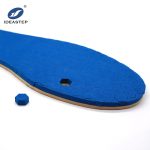
Custom-made orthotic insoles require careful coordination between structural design, material selection, dimensional control, and manufacturing processes. Each specification affects the finished product, from arch geometry and shell rigidity to cushioning properties and footwear compatibility.
For wholesalers, orthotic product suppliers, footwear brands, and rehabilitation product distributors, a clear development process is essential to achieving consistent quality and reliable bulk production.
This guide examines the main technical factors involved in custom insole development, including design configuration, material selection, production methods, and quality control.

1. Defining Custom Insole Requirements
Product development begins with the intended application and technical specifications. Sports insoles, work footwear inserts, and orthotic insoles have different structural and material requirements.
Before production, buyers and manufacturers should confirm:
- Application: Sports footwear, work footwear, everyday footwear, or orthotic applications.
- Construction: Full-length or 3/4-length design, rigid or semi-rigid support, and cushioning zones.
- Size range: Required sizing system, dimensions, and tolerances.
- Materials: Foam type, density, hardness, thickness, and top cover.
- Structural features: Arch profile, heel cup geometry, and additional support components.
- Customization: Color, logo, surface finish, and packaging.
These details form the basis of technical drawings, sample development, and production specifications.
2. Insole Structural Design
The insole structure determines how support, cushioning, and flexibility are distributed. Its configuration must also account for footwear dimensions and manufacturing requirements.
Full-Length and 3/4-Length Construction
Full-length insoles extend across the entire footbed and provide space for integrated foam layers, supportive shells, and cushioning components.
A 3/4-length design ends before the toe area. It concentrates the main structural components around the heel and arch while reducing coverage in the forefoot.
The choice depends on the footwear profile, internal space, and required support configuration.
Arch Support
Arch geometry is a defining feature of orthotic insole design. Key parameters include arch height, contour, width, and transition profile.
Manufacturers can develop low-, medium-, or high-profile configurations according to the approved design or supplied measurements.
The supporting shell may use polypropylene (PP), thermoplastic polyurethane (TPU), or other suitable polymers. Material grade, shell thickness, and geometry determine the finished structure’s rigidity and flexibility.
Heel Cup Design
Heel cup depth, width, and contour affect the rearfoot structure and the insole’s compatibility with footwear.
A deeper cup creates a more defined rearfoot enclosure, while a lower profile may be necessary when footwear has limited internal volume. Heel cup dimensions should be developed together with arch geometry and overall shell design.
Cushioning Components
Cushioning can be incorporated into the heel, forefoot, metatarsal area, or full-length base. Common components include EVA foam, PU foam, and selected cushioning pads.
Their thickness, hardness, position, and material properties should follow the product specification. Consistent placement is particularly important when manufacturing multiple sizes or product variations.
3. Material Selection for Custom Orthotic Insoles
Each material serves a specific function within the insole structure. Selection should consider mechanical properties, processing requirements, and compatibility with adjacent layers.
EVA Foam
EVA is widely used in insole manufacturing because of its low weight, flexibility, and adjustable density and hardness.
Different EVA grades support a range of cushioning and structural requirements. Multi-density constructions can also combine foam materials with different properties within one insole.
Polypropylene (PP)
PP is commonly used in rigid and semi-rigid orthotic shells. Its stiffness and formability make it suitable for supporting structures with defined contours.
Shell thickness, geometry, and forming conditions all influence the final properties.
Thermoplastic Polyurethane (TPU)
TPU offers a range of hardness and flexibility options. Depending on the material grade and design, it can serve as a supporting shell or an integrated structural component.
Manufacturers should assess its mechanical properties and processing compatibility before selecting it for a specific construction.
PU Foam and Memory Foam
PU foam is available in different densities and hardness levels, making it suitable for cushioning layers and molded components.
Memory foam can also be used in selected insole designs. Its compression behavior, recovery characteristics, and thickness should be evaluated against the product requirements.
Top Cover Materials
Common top cover options include microfiber, polyester fabric, and mesh. Buyers can specify color, texture, thickness, and branding details.
For laminated constructions, manufacturers should also check the bonding compatibility between the cover, adhesive, foam, and supporting shell.
4. Dimensional and Technical Specifications
Custom designs must translate into measurable production parameters. Clear specifications help control sample approval, tooling, and batch consistency.
| Parameter | Main Considerations |
|---|---|
| Length and width | Size range and footwear dimensions |
| Arch height | Contour and support profile |
| Heel cup depth | Rearfoot geometry and footwear space |
| Overall thickness | Insole construction and available internal volume |
| Foam density | Material weight and mechanical properties |
| Hardness | Required firmness and flexibility |
| Shell thickness | Structural rigidity and forming requirements |
| Cushioning position | Component location and dimensions |
For multi-size projects, manufacturers should review how arch height, heel cup proportions, and shell geometry change across the size range. Simple uniform scaling may not preserve the intended structure.
Critical dimensions should have defined tolerances and corresponding inspection methods.
5. Manufacturing Processes for Custom Insoles
The manufacturing process depends on the material, component geometry, order quantity, and required dimensional accuracy. A single insole may involve several processes.
CNC Milling
CNC milling processes foam blocks and other suitable materials according to CAD data. It allows manufacturers to control contours, thickness, and surface geometry.
The result depends on the accuracy of the design file, material stability, machine setup, and cutting parameters. CNC processing is particularly useful for customized orthotic components and repeatable designs.
Thermoforming and Heat Molding
Thermoforming shapes suitable thermoplastic materials through controlled heating and forming. Temperature, heating time, pressure, and cooling conditions affect the final shell geometry.
Process parameters should be established according to the material grade and component design.
Compression Molding
Compression molding uses heat and pressure to form materials inside a mold cavity. It is used for selected molded foam and insole components.
Mold design, material loading, temperature, pressure, and cooling conditions influence dimensional consistency and product quality.
Die Cutting and Lamination
Die cutting produces foam, fabric, and other components in specified shapes. Lamination then bonds selected layers using suitable adhesives or bonding processes.
For multi-layer insoles, bonding strength and material compatibility require particular attention. Poor adhesion can cause layer separation during handling or subsequent use.
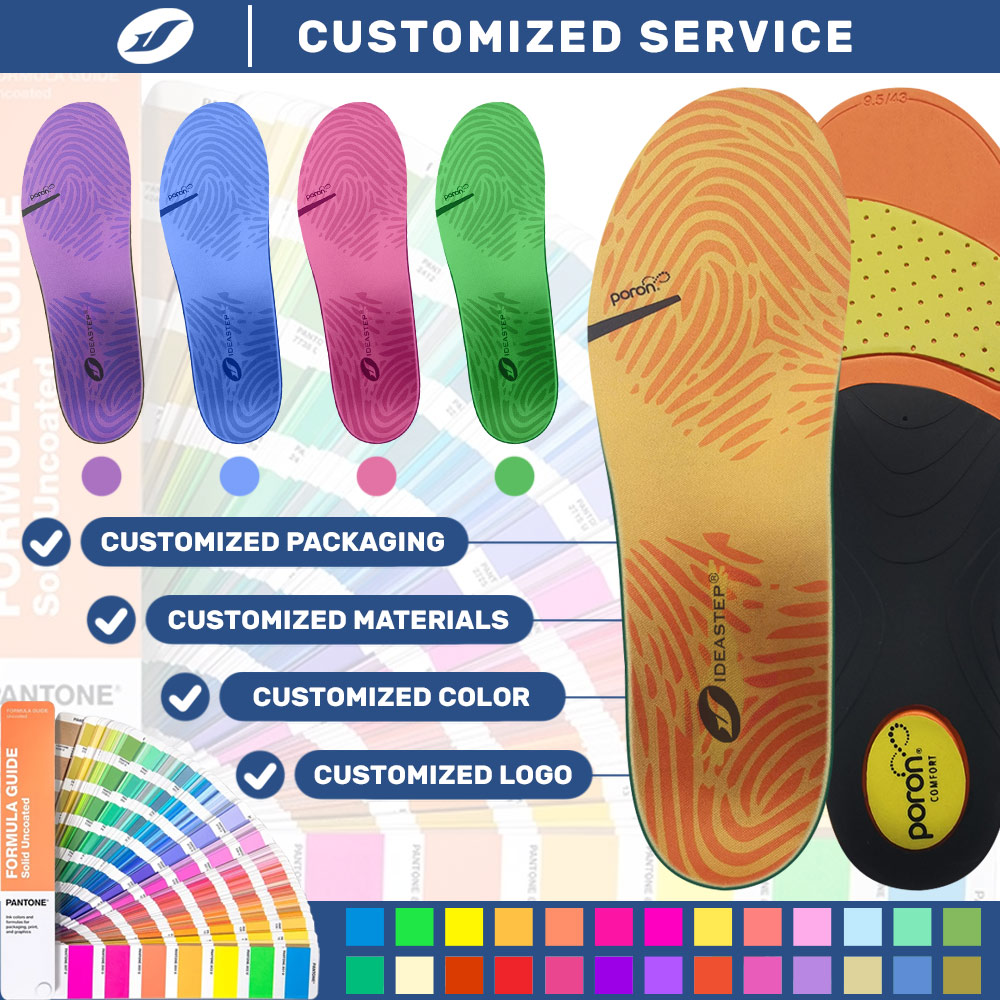
6. OEM and ODM Customization
OEM and ODM arrangements support different levels of buyer involvement in product design and development.
OEM Insole Manufacturing
In an OEM project, buyers typically provide drawings, samples, technical specifications, or an established product design. The manufacturer produces the insoles according to the approved requirements.
Common customization options include:
- Material combinations and thickness
- Arch support and heel cup geometry
- Dimensions and size ranges
- Top cover materials and colors
- Logo printing and private-label branding
- Customized packaging
The approved sample and technical specifications should serve as the production reference.
ODM Insole Development
ODM projects involve greater participation from the manufacturer in product development. Buyers may provide application requirements or an initial concept, while the manufacturer assists with structural design, material selection, and sample preparation.
This approach is suitable for projects that require product development support as well as manufacturing.
For both models, buyers and manufacturers should agree on specifications, sample approval, quality requirements, and production responsibilities before placing bulk orders.
7. Quality Control in Insole Production
Quality control should cover incoming materials, manufacturing processes, and finished products. Inspection criteria must correspond to the approved specifications.
Incoming Material Inspection
Key checks include:
- Material type and grade
- Density and hardness
- Thickness and dimensional consistency
- Surface condition and color
- Batch identification and supporting documentation
For multi-material constructions, manufacturers should also verify compatibility between components.
In-Process Inspection
Production checks may cover cutting dimensions, molding conditions, shell geometry, adhesive application, lamination, and component positioning.
Critical dimensions and structural features should receive particular attention.
Finished Product Inspection
Finished insoles should be checked against the approved sample and technical requirements. Inspection points typically include:
- Length, width, and overall thickness
- Arch and heel cup dimensions
- Surface appearance and finishing
- Layer bonding and component alignment
- Size identification and labeling
- Packaging and order quantity
Consistent inspection criteria help maintain product specifications across repeat orders.
8. Sample Development and Approval
Sample development allows buyers to verify the proposed construction before mass production. It also provides an opportunity to identify design or material issues at an early stage.
A typical process includes:
- Specification review: Confirm the application, structure, dimensions, materials, and customization requirements.
- Design preparation: Develop technical drawings, patterns, or CAD files.
- Sample production: Manufacture samples using the proposed materials and processes.
- Technical evaluation: Check dimensions, structural features, material properties, and workmanship.
- Revision and approval: Make necessary adjustments and confirm the final sample.
- Production release: Use the approved sample and specifications as references for bulk manufacturing.
Where possible, sample materials and processes should match those planned for mass production. This reduces the risk of differences between prototypes and production batches.
9. Evaluating a Custom Insole Manufacturer
Supplier selection should consider technical capability and production management, not unit price alone.
Product development: Assess the manufacturer’s understanding of insole structures, material properties, and design requirements.
Material and process capability: Check experience with EVA, PU foam, PP, TPU, textile covers, CNC milling, molding, and lamination.
Quality management: Review incoming material inspection, in-process controls, finished product checks, and batch consistency.
Customization services: Confirm support for OEM/ODM development, size variations, logo application, and customized packaging.
Sampling and production capacity: Clarify sample lead time, MOQ, bulk production schedules, and available capacity before confirming an order.
A supplier with relevant technical experience can help identify design and production issues before they affect larger orders.
10. Establishing Consistent Custom Insole Production
Reliable custom insole manufacturing depends on accurate specifications and consistent execution. Structural design, material selection, processing conditions, and inspection standards must work together.
For B2B projects, the approved sample and technical documentation should define the requirements for mass production and repeat orders. Any changes to materials, dimensions, or construction should be reviewed and approved before implementation.
Ideastep supports custom insole projects through material selection, structural customization, OEM/ODM development, and bulk manufacturing. Available construction options include EVA foam components, supportive shells, cushioning layers, and customized top covers.
Discuss Your Custom Insole Requirements
For a new product development project or an existing insole range, share your required structure, materials, size specifications, and order volume with our team.