Athletic orthotics require more than cushioning or firm structural support. They need to accommodate repeated loading, changes in movement direction, and varying impact levels while maintaining a balance between cushioning, stability, and flexibility.
For sports footwear brands, orthotic product distributors, and wholesale buyers, this balance is central to product development. Excessively soft materials may compromise structural control, while overly rigid constructions can restrict movement. The challenge is to select materials and develop a structure that meet the demands of the intended application.
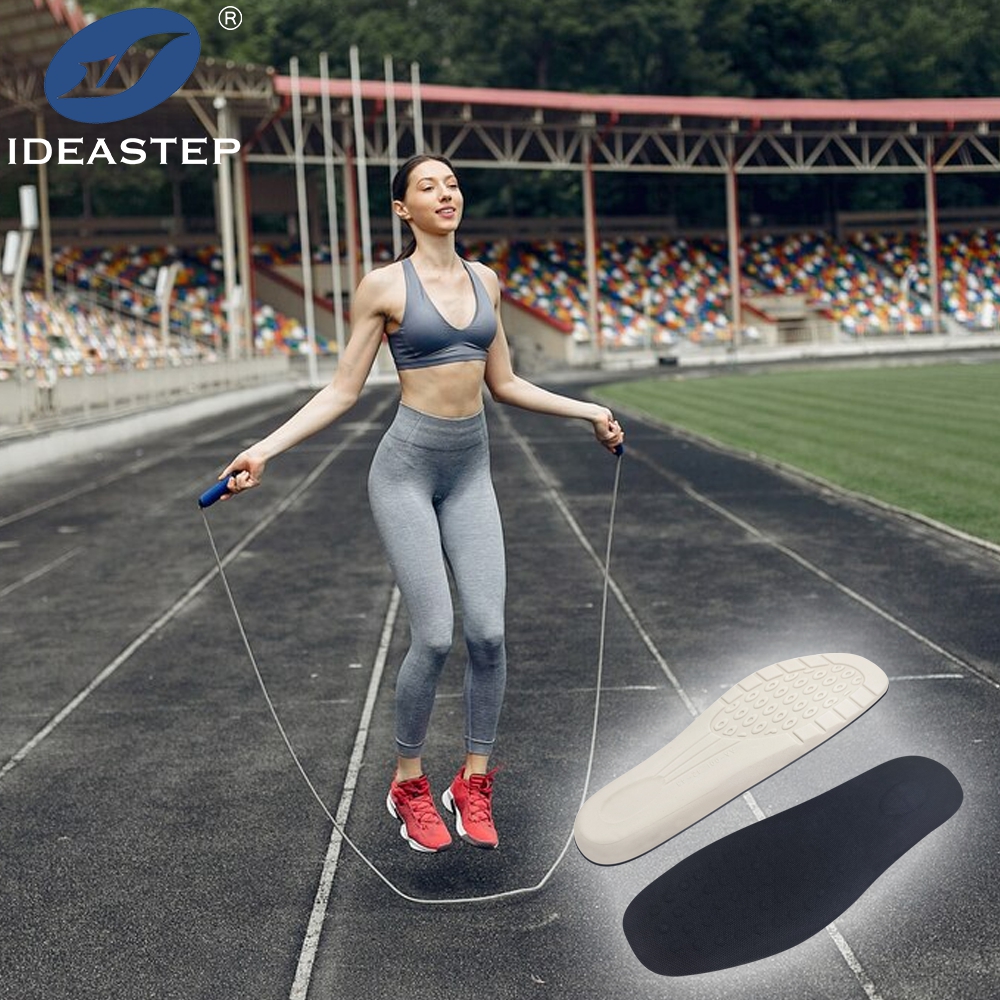
1. Design Around the Intended Sport
Different sports place different demands on footwear and insole construction. These requirements should guide material selection and structural design from the beginning.
- Running: Requires impact cushioning, controlled compression, and a stable heel structure. Material recovery is also important under repeated loading.
- Court sports: Frequent lateral movement and changes in direction call for reliable heel positioning and structural stability without excessive forefoot rigidity.
- Training: A combination of cushioning, flexibility, and support helps accommodate a wider range of movements.
- Outdoor activities: Durability, load distribution, and resistance to repeated compression are important considerations.
A design developed for running may not suit court sports or outdoor footwear. Defining the target application early helps manufacturers establish appropriate specifications and avoid unnecessary design features.
2. Cushioning: More Than Material Softness
Cushioning depends on material density, thickness, compression response, and recovery. A softer material does not automatically provide better performance, particularly when the insole also needs to maintain a defined support structure.
Common Cushioning Materials
EVA is widely used in athletic insoles because it is lightweight and available in different densities and hardness levels. Softer grades can serve as cushioning layers, while firmer grades provide a more stable foundation.
PU offers varying levels of cushioning and resilience depending on its formulation. It can be used in full-length constructions or selected zones.
PORON materials are often incorporated into the heel or forefoot for localized cushioning. Their thickness and placement should be considered alongside the overall insole profile.
Manufacturers can combine different materials or densities to achieve a more controlled construction. When selecting cushioning materials, buyers should consider compression behavior, recovery, and available footwear volume rather than focusing on softness alone.
3. Stability: Developing the Supporting Structure
Stability depends on material properties as well as the shape and position of structural components.
Arch Geometry
Arch height, contour, length, and position influence the overall support structure. These dimensions should reflect the intended application, footwear profile, and target size range.
The base material must also provide sufficient support to maintain the designed geometry under repeated loading.
Heel Cup
The depth, width, and contour of a heel cup determine the rearfoot structure and affect how the insole fits inside the shoe.
A deeper design requires more internal footwear volume, while a shallower profile may be better suited to low-volume athletic footwear. The geometry should balance structural requirements with shoe compatibility.
Reinforcement Components
TPU can provide additional reinforcement in selected areas while retaining some flexibility. For applications requiring a more rigid shell, polypropylene (PP) may be considered.
Material thickness, component shape, and position all influence the finished structure. The choice should reflect the product specification rather than simply favoring harder materials.
4. Flexibility: Allowing Natural Forefoot Movement
The forefoot needs to work with the bending characteristics of the footwear. An overly rigid insole may restrict movement, while an excessively flexible construction may not maintain the required support.
Flexibility can be adjusted through:
- Material hardness: Softer materials generally allow greater deformation.
- Thickness: Thicker sections tend to increase stiffness, depending on material properties and geometry.
- Component placement: Reinforcement should be positioned according to the intended support areas.
- Layer construction: Different material combinations create different flexibility profiles.
A common design approach is to maintain a more defined rearfoot structure while allowing appropriate forefoot movement. The exact configuration depends on the footwear category and intended application.
5. Combining Materials for Balanced Performance
Many athletic orthotics use multiple materials because cushioning, stability, and flexibility rarely come from one material alone.
A typical construction may include:
| Component | Material Options | Design Purpose |
|---|---|---|
| Base layer | EVA | Cushioning and structural foundation |
| Cushioning zone | PU or PORON | Localized cushioning |
| Reinforcement | TPU | Additional structural support |
| Rigid shell | PP | Defined support geometry |
| Top cover | Fabric or microfiber | Surface finish and protection |
The material combination should reflect the product’s intended use. A running insole, for example, may require a different density arrangement from a court-sport model.
Material compatibility also matters. Different layers respond differently to heat, pressure, and adhesives. Bonding methods, thickness tolerances, and component alignment need to be controlled during production.
Any material substitution should be checked against the approved sample and technical specification, as changes in density or thickness can affect the entire construction.
6. Manufacturing Processes and Product Consistency
The manufacturing method influences dimensional accuracy, surface quality, and production efficiency. It should match the selected materials and product geometry.
- Compression molding: Forms suitable foam materials under controlled heat and pressure. Mold design and processing conditions affect the finished dimensions.
- CNC milling: Removes material from a block or preformed blank to create specific contours. It is useful for prototypes and customized structures.
- Thermoforming: Shapes suitable thermoplastic sheets, such as PP, into defined shell structures through controlled heating and forming.
- Die cutting and lamination: Produces consistent components from sheet materials and assembles them into multi-layer constructions. Alignment and adhesive application require careful control.
Not every material can use the same process. Selecting the right method helps maintain product dimensions and reduce unnecessary production variation.
7. Quality Control for Wholesale Athletic Orthotics
For wholesale buyers, consistency between samples and production batches is as important as the initial product design.
Key inspection areas include:
| Inspection Area | Parameters to Check |
|---|---|
| Materials | Type, density, hardness, and thickness |
| Cushioning | Compression response and recovery |
| Structure | Arch dimensions, heel cup geometry, and reinforcement position |
| Flexibility | Forefoot bending characteristics and overall stiffness |
| Assembly | Bonding quality, layer alignment, and surface finish |
| Production | Dimensional tolerances and batch variation |
Sample evaluation should reflect the intended application. Repeated compression testing may be relevant to cushioning materials, while dimensional inspection is important for molded support components.
Before mass production, buyers and manufacturers should confirm the approved sample, material specifications, inspection requirements, and packaging details.
8. OEM and ODM Development
OEM and ODM projects allow brands and distributors to develop athletic orthotics around specific product requirements. Customization may include material density, cushioning zones, arch geometry, heel cup dimensions, reinforcement components, top covers, and private-label packaging.
In OEM projects, buyers typically provide an existing sample, drawing, or technical specification. The manufacturer develops the production process around those requirements.
ODM projects involve greater manufacturer input, including material recommendations, structural development, and sample production.
A typical development process includes:
- Application review: Define the target sport, footwear type, and product requirements.
- Material selection: Choose materials that balance cushioning, stability, and flexibility.
- Structural design: Establish the arch profile, heel cup, forefoot construction, and reinforcement.
- Prototype production: Produce samples for dimensional and construction evaluation.
- Sample approval: Confirm the material combination, footwear compatibility, and technical specifications.
- Mass production: Finalize quality standards, packaging, and production requirements.
Early coordination helps identify technical limitations and reduce unnecessary revisions before mass production.
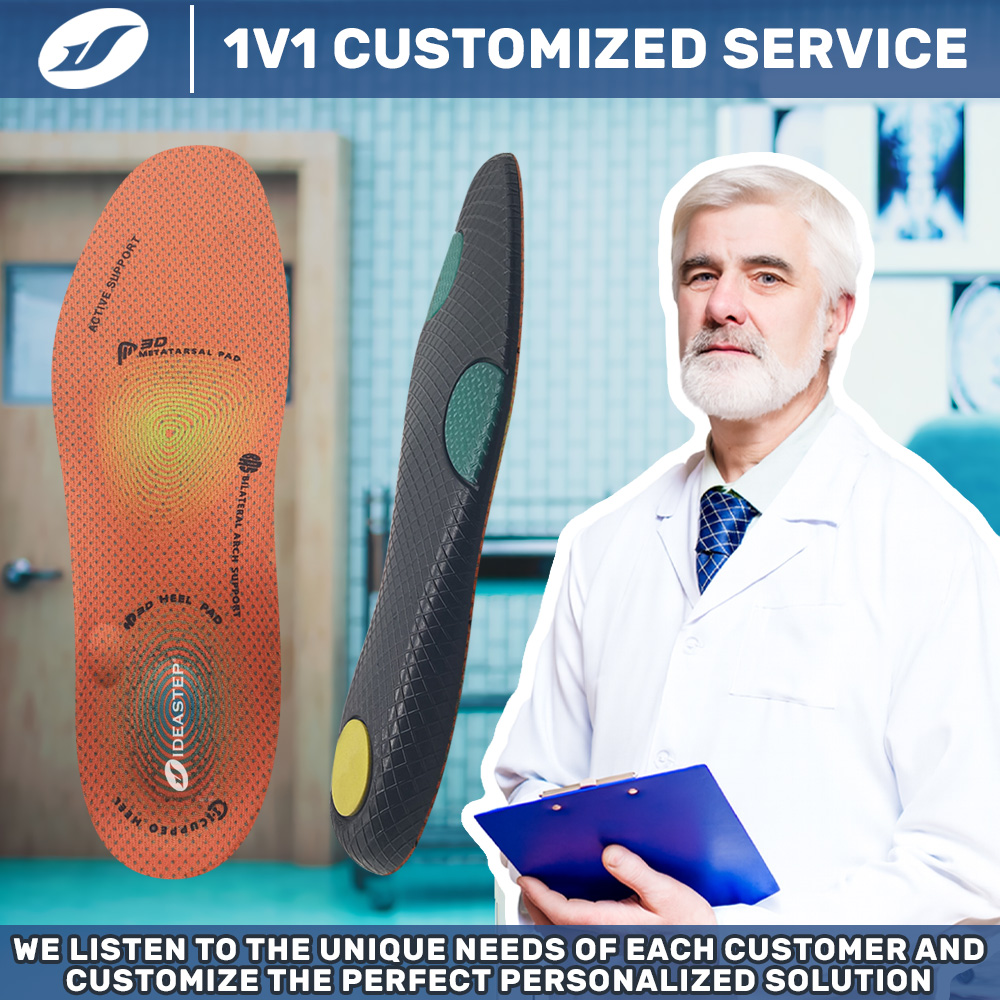
9. Athletic Orthotic Manufacturing with Ideastep
Ideastep, operated by Xiamen KON Technology Co., Ltd., has been involved in the foot-care and insole industry since 1989. Its manufacturing capabilities include EVA processing, CNC machining, 3D printing, and customized insole development.
For sports footwear brands, orthotic product distributors, and wholesale buyers, Ideastep supports OEM and ODM projects involving material selection, structural adjustments, and private-label packaging.
Projects can begin with an existing sample, technical drawing, or product concept. The development team can then assess the material combination, construction, and suitable manufacturing process.
Conclusion
Custom athletic orthotics depend on the interaction between cushioning, stability, and flexibility. Material properties determine how the insole responds to loading, while structural design controls how those properties work across the product.
For manufacturers and wholesale buyers, development should start with a clearly defined athletic application. Material selection, component geometry, manufacturing methods, and quality standards then need to be evaluated together.
This approach provides a practical foundation for consistent product specifications and reliable wholesale production.
Related Articles:
Custom Athletic Orthotics with OEM and ODM Manufacturing Support
Ideastep Custom Athletic Orthotics for Professional Sports Foot Care Solutions