
Quality control is essential to consistent orthotic insole manufacturing. Variations in material properties, processing conditions, dimensions, and assembly can affect the quality of finished products, particularly in large-volume orders.
A reliable factory should monitor quality at every production stage, from incoming material inspection to final packaging. This article outlines the key quality control procedures used in orthotic insole manufacturing and what wholesale buyers should expect from a supplier.

1. Incoming Material Inspection
Quality control starts with raw materials. Before production, materials should be checked against approved specifications and samples.
Common materials include EVA, PU, PORON, TPU, polypropylene (PP), microfiber, and fabric top covers.
Key inspection items include:
- Density and hardness: Confirm that foam materials meet the specified ranges.
- Thickness and dimensions: Check material sizes and thickness tolerances.
- Surface condition: Identify cracks, contamination, uneven texture, and color differences.
- Batch consistency: Compare incoming materials with approved samples and previous batches.
- Documentation: Review technical data sheets and relevant test reports.
Consistent material properties help reduce variations in cushioning, structural support, and finished product dimensions.
2. Production Process Monitoring
Inspection continues throughout manufacturing. Different materials and constructions require specific processing methods and quality standards.
CNC Milling and Cutting
CNC milling and die cutting are commonly used to process foam components and other insole materials.
Inspection focuses on:
- Length, width, and thickness
- Arch and heel cup contours
- Cutting accuracy and edge quality
- Surface finish
- Consistency with technical drawings
For multi-layer constructions, dimensional accuracy is particularly important because individual components must align during assembly.
Molding and Thermoforming
Molding and thermoforming processes require controlled parameters based on material properties, tooling, and product design.
Quality checks may cover:
- Processing temperature and conditions
- Shape consistency
- Dimensional accuracy after forming
- Deformation and surface defects
- Shape retention
For example, PP support shells and molded foam components have different processing requirements. Each material should follow an appropriate production procedure.
Component Preparation
Die cutting is also used to prepare top covers, reinforcement pieces, and other components. Inspectors should check dimensions, material orientation, cutting edges, and alignment before assembly.
3. Structural and Dimensional Inspection
Structural accuracy is a key quality requirement for orthotic insoles. Inspection should follow approved drawings, technical specifications, and reference samples.
Important checkpoints include:
- Arch support: Height, position, contour, and symmetry.
- Heel cup: Depth, width, shape, and positioning.
- Posting: Angle, thickness, and placement.
- Metatarsal support: Position and dimensions.
- Forefoot structure: Thickness and flexibility.
- Overall dimensions: Length, width, thickness, and size grading.
Depending on product complexity, factories may use measuring tools, templates, fixtures, or digital measurement equipment. CAD drawings and approved samples provide reference points for customized designs.
4. Bonding and Assembly Inspection
Many orthotic insoles combine multiple materials and components. Poor bonding or inaccurate alignment can affect product integrity and batch consistency.
Assembly inspection should cover:
- Adhesive coverage and bonding strength
- Layer alignment and component positioning
- Top cover attachment
- Edge trimming and finishing
- Wrinkles, bubbles, separation, and adhesive residue
Adhesives and surface preparation methods should be compatible with the materials being joined. Peel or bonding tests can be used when required by the product specification.
5. Physical and Mechanical Testing
Testing verifies whether materials and finished products meet agreed technical requirements. The test plan should reflect the product construction and intended application.
| Test Item | Inspection Purpose |
|---|---|
| Hardness | Measures resistance to indentation |
| Density | Checks material mass per unit volume |
| Compression recovery | Evaluates recovery after compression |
| Compression set | Measures permanent deformation |
| Flex fatigue | Evaluates resistance to repeated bending |
| Bonding strength | Checks adhesion between layers |
| Dimensional stability | Evaluates changes in product dimensions |
| Abrasion resistance | Assesses surface wear resistance |
Not every test applies to every product. Soft cushioning insoles, rigid functional orthotics, and multi-layer constructions have different testing requirements.
Inspection frequency and acceptance criteria should be defined in advance. Test methods, sample quantities, and results should also be documented.
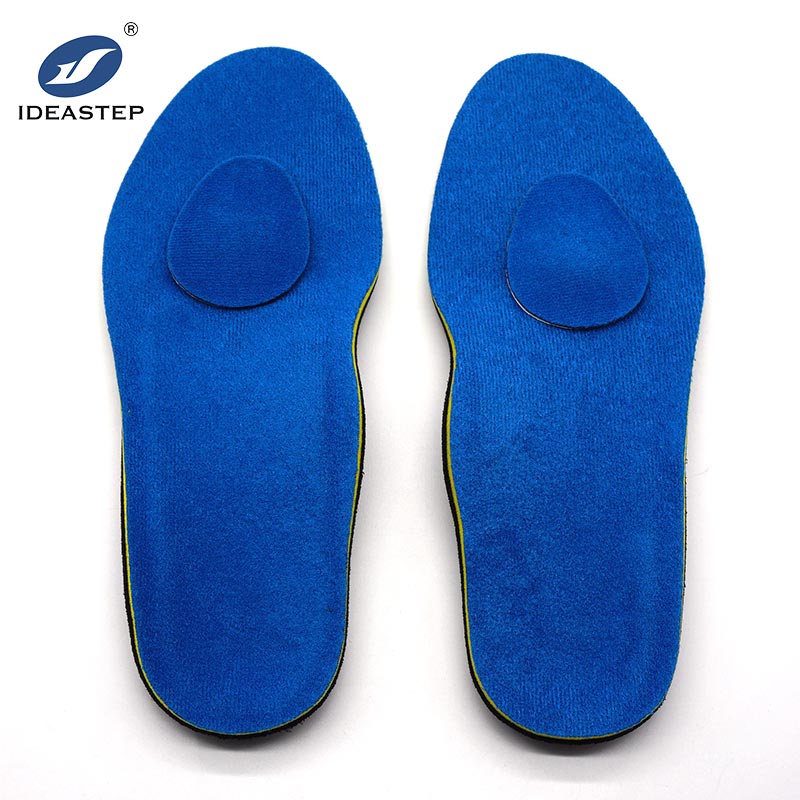
6. Finished Product Inspection
After assembly and finishing, the production batch undergoes final inspection before packaging.
The main inspection areas are:
Appearance
- Surface cleanliness and color consistency
- Scratches, stains, wrinkles, and visible defects
- Edge finishing
- Logo placement and printing quality
Dimensions and construction
- Length, width, and thickness
- Arch and heel cup geometry
- Component position and alignment
- Layer construction and symmetry
Assembly quality
- Bonding integrity
- Material consistency
- Structural stability
- Compliance with product-specific requirements
Finished products should be checked against approved samples and confirmed specifications. Products outside the agreed acceptance criteria should be reviewed before batch release.
7. Batch Consistency and Traceability
For wholesale and OEM orders, quality control must extend beyond individual samples. Manufacturers need to maintain consistent specifications across production runs and repeat orders.
A practical traceability system should include:
- Approved samples: Reference samples for production comparison.
- Material records: Material specifications and batch information.
- Production records: Relevant processing parameters and inspection results.
- Inspection reports: Dimensional, visual, and mechanical test records.
- Nonconformance records: Defects, corrective actions, and reinspection results.
These records help identify the source of quality issues and support more consistent production across batches.
8. Packaging and Pre-Shipment Inspection
Before shipment, the factory should verify both product quality and order details.
Final checks should include:
- Model numbers and size ranges
- Quantity by size and total order quantity
- Logo, labels, and packaging specifications
- Product protection and carton condition
- Carton markings and shipping information
- Required inspection and shipping documents
For private-label projects, packaging specifications should be confirmed during sample approval to avoid differences between the approved design and bulk production.
9. Evaluating a Manufacturer’s Quality Control System
Buyers should assess actual inspection procedures rather than relying on general claims about quality. The following questions can help evaluate a supplier’s manufacturing controls:
- How are incoming materials inspected?
- Are dimensions and structural features checked against approved drawings?
- What quality checks are performed during cutting, molding, and assembly?
- Are compression, flex fatigue, and bonding tests available when required?
- How are production batches identified and inspection records maintained?
- How are nonconforming products handled?
- Can the factory provide inspection reports or relevant test documentation?
Clear procedures and documented results provide a stronger basis for evaluating a manufacturer’s ability to support repeat orders and bulk production.
Conclusion
Orthotic insole quality control covers the entire manufacturing process: material inspection, production monitoring, structural checks, assembly, physical testing, finished product inspection, and shipment preparation.
For wholesale and OEM/ODM projects, quality standards should be defined before production and applied consistently across every batch. A documented inspection process helps control manufacturing variation and maintain product specifications.
Ideastep supports orthotic insole development and OEM/ODM production, including material selection, structural customization, and bulk manufacturing. Contact our sales team to discuss your product specifications and quality requirements. Free samples are available upon request for evaluation before bulk orders.
Related Articles: From Orthotic Insole Prototype to Bulk Production: A Manufacturing Case Study.

