Introduction
Ankle brace development requires careful consideration of product structure, material combinations, fit, and manufacturing requirements. Different applications call for different levels of coverage, flexibility, and reinforcement. As a result, a standard design may not meet every buyer’s product specifications or market requirements.
For wholesalers, orthopedic suppliers, and private-label brands, custom made ankle braces offer greater control over construction, sizing, materials, and branding. However, these details must work together within a practical production plan.
This article examines the key design and manufacturing considerations for developing ankle braces, with a focus on structural configurations, component selection, size grading, and production specifications.
1. Structural Design of Custom Ankle Braces
The brace structure determines ankle coverage, fastening options, flexibility, and the placement of support components. Selecting the right configuration is one of the first decisions in product development.
Common Construction Types
Custom ankle braces generally use several construction styles:
- Sleeve-style: A close-fitting textile construction, often made with elastic or knitted materials. Its relatively simple structure suits lightweight support products.
- Wraparound: Overlapping panels allow adjustable fastening and accommodate different foot and ankle dimensions.
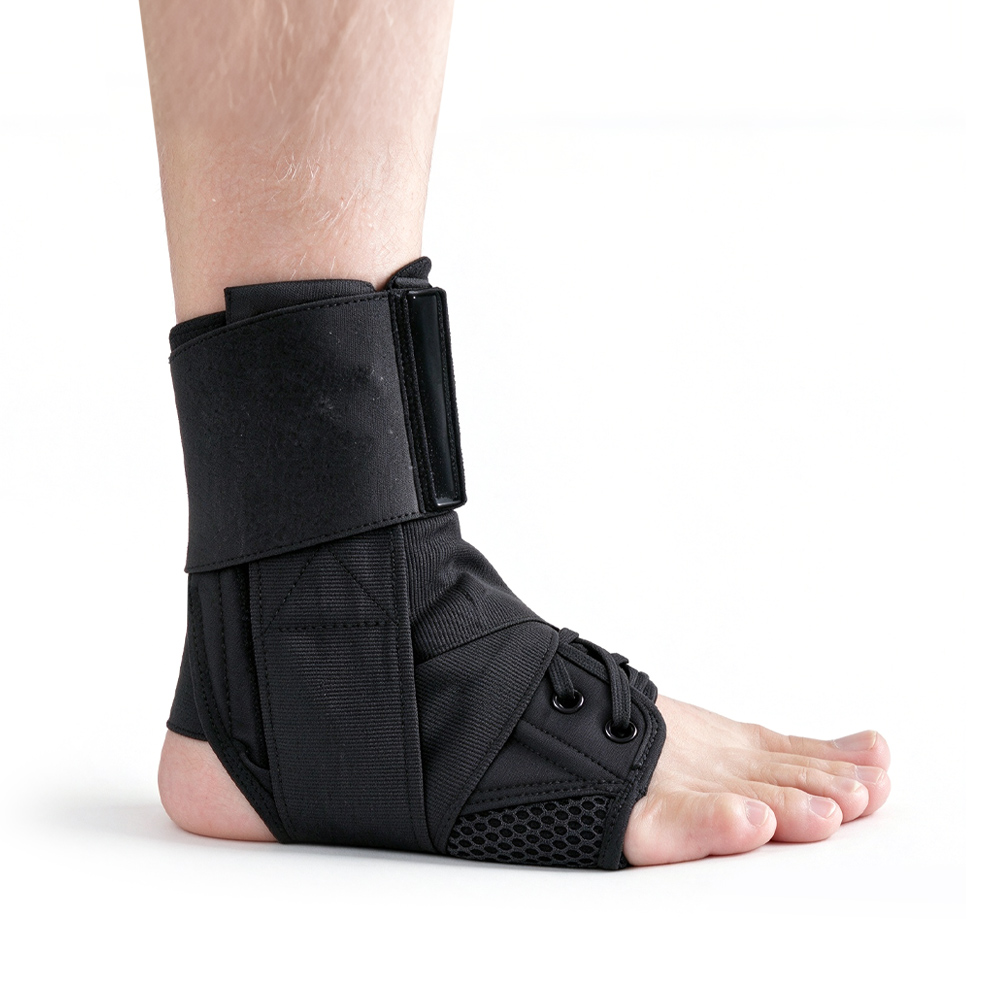
- Lace-up: A lacing system provides adjustable tension across the brace body.
- Strap-based: Adjustable straps secure the brace and allow changes to fastening tension.
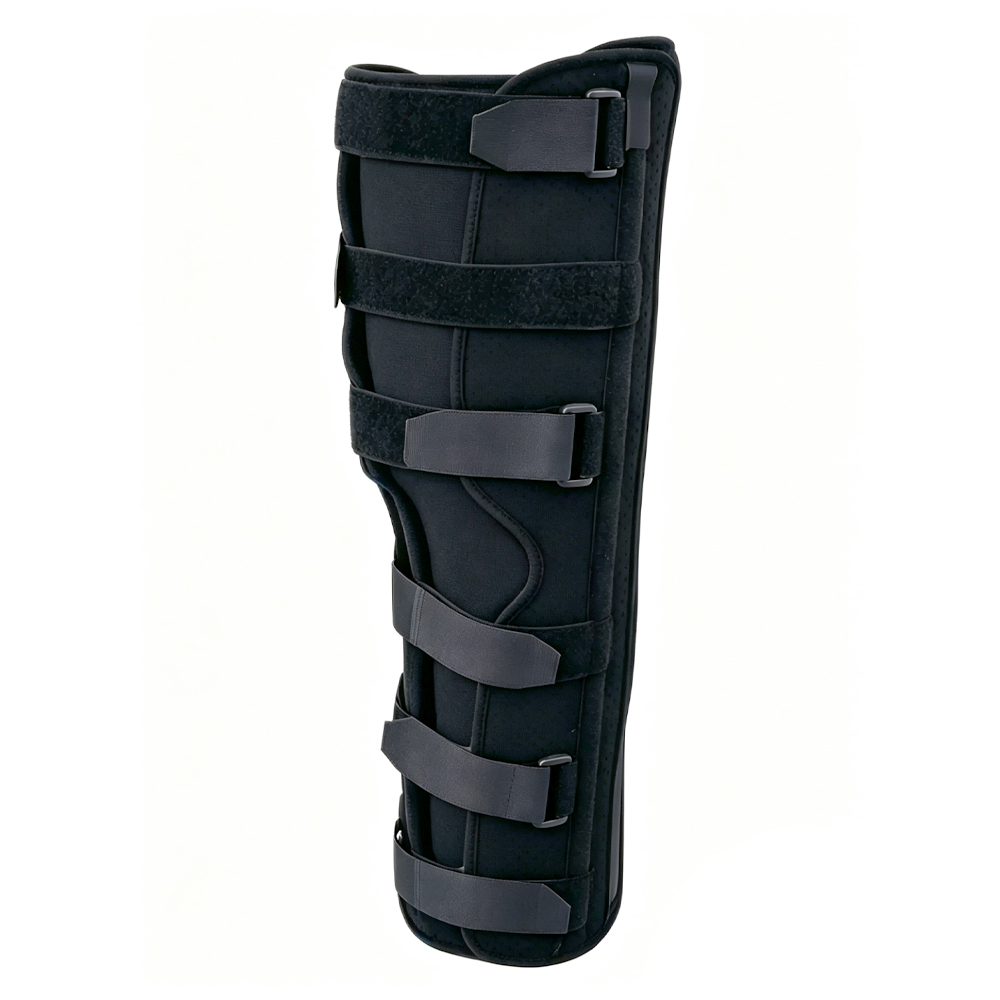
- Reinforced designs: Additional stays, support panels, or semi-rigid components create a more structured construction.
These designs differ in component count, assembly requirements, and material consumption. Buyers should select a construction based on the intended product category rather than adding components without a clear design purpose.
Side Support and Reinforcement
Some ankle braces incorporate reinforcement around the medial and lateral sides. Depending on the design, these components may include flexible stays, shaped plastic inserts, or reinforced fabric panels.
Several details require attention during development:
- Reinforcement material and thickness
- Component shape and positioning
- Fixed or removable construction
- Pockets or channels for removable stays
- Compatibility with the surrounding fabric and padding
For example, removable stays require accurately positioned pockets, while fixed inserts need to be incorporated into the assembly structure. These differences affect pattern design, sewing operations, and final product dimensions.
Closure and Strap Configuration
The closure system influences both product construction and adjustment range. Common options include hook-and-loop straps, laces, elastic bands, and buckle-based fasteners.
For custom projects, buyers should specify strap width, length, placement, fastening material, and whether the straps are fixed or removable. Reinforcement around strap attachment points also deserves attention, particularly where repeated fastening places stress on the stitching.
2. Material Combinations and Component Selection
Ankle braces often combine textiles, padding, fasteners, and reinforcement components. Material selection should reflect the function of each section and its compatibility with the overall construction.
Materials Commonly Used in Ankle Braces
| Material | Typical Application | Selection Considerations |
|---|---|---|
| Neoprene | Main body and support panels | Thickness, stretch, and cushioning |
| Polyester Fabric | Outer panels and lining | Texture, durability, and printing compatibility |
| Nylon Fabric | Reinforcement panels | Strength, flexibility, and abrasion resistance |
| Elastic Fabric | Stretch sections and adjustable areas | Stretch recovery and tension |
| EVA Foam | Padding and cushioning | Density, thickness, and compression characteristics |
| TPU | Flexible reinforcement components | Hardness, shape, and forming requirements |
| PP | Semi-rigid support components | Stiffness, thickness, and component design |
| Hook-and-Loop Material | Adjustable closures | Fastening strength and durability |
The materials listed above are not required in every design. A sleeve-style brace may rely mainly on elastic textiles, while a reinforced model may combine fabric, foam, and molded plastic components.
Material Compatibility in Multi-Layer Construction
Combining different materials requires more than selecting suitable individual components. Their physical properties and manufacturing compatibility must also be considered.
For example, differences in fabric stretch can affect panel alignment during sewing. Foam thickness may influence the final fit, while the hardness of a reinforcement insert can affect the shape and flexibility of the assembled brace.
Before confirming a material combination, manufacturers should review:
- Fabric stretch direction and recovery
- Foam thickness and compression behavior
- Bonding and stitching compatibility
- Reinforcement dimensions and hardness
- Material color and surface consistency
These checks help prevent construction problems and reduce unnecessary changes during sample development.
3. Sizing, Pattern Development and Fit Specifications
Sizing is particularly important for ankle braces because the product must accommodate variations in foot and ankle dimensions while maintaining its intended construction.
Defining Measurement Points
A sizing specification should identify the measurement points relevant to the selected design. Depending on the brace structure, these may include:
- Ankle circumference
- Foot circumference
- Brace height
- Overall product length
- Strap length and adjustment range
- Width and position of reinforcement components
Buyers should provide a size chart, technical drawing, or reference sample whenever possible. Clear measurement definitions help manufacturers establish consistent patterns and avoid differences in interpretation.
Pattern Grading Across Multiple Sizes
Pattern grading involves adjusting the dimensions of a base design to create a complete size range, such as S, M, L, and XL.
However, simply enlarging or reducing the main fabric panels may not produce a consistent result. Strap positions, reinforcement pockets, padding dimensions, and closure lengths may also require adjustment.
For designs with left and right versions, the pattern and component specifications should clearly identify each variation. This is especially important when buyers manage multiple SKUs within one product range.
4. Manufacturing Requirements for Different Ankle Brace Structures
Ankle brace manufacturing methods depend on the selected construction and component materials. Fabric-based models mainly involve cutting and sewing, while designs with shaped reinforcement parts may require additional forming operations.
Fabric Cutting and Panel Preparation
The approved pattern guides the cutting of the main body, lining, padding, straps, and reinforcement covers. Depending on order volume and material type, manufacturers may use die cutting, automated cutting, or other suitable methods.
Cutting accuracy is important for matching panel edges, maintaining seam allowances, and positioning components correctly during assembly.
Sewing and Component Assembly
Sewing operations vary according to the brace structure. Typical assembly details include joining body panels, attaching straps, securing padding, and finishing reinforcement pockets.
Areas around strap attachments and other high-stress seams may require additional stitching or reinforcement. Stitch type, thread, seam allowance, and stitch density should therefore be specified according to the design.
Forming Reinforcement Components
Ankle braces that incorporate shaped TPU or PP components may require thermoforming or other suitable forming methods. The selected process depends on the material, component geometry, thickness, and production quantity.
Tooling requirements should be reviewed before production, especially when the design includes custom-shaped stays or inserts. Buyers should also confirm whether these components are fixed, removable, or replaceable.
5. Product Specifications and Quality Inspection
For bulk orders, quality inspection should focus on the details that define the approved product. A clear specification sheet provides a practical reference for checking materials, dimensions, construction, and packaging.
Key Inspection Points
| Inspection Area | Items to Check |
|---|---|
| Materials | Fabric type, thickness, color, foam specifications, and reinforcement material |
| Dimensions | Overall size, brace height, panel dimensions, and strap length |
| Construction | Stitching, seam finishing, component positioning, and pocket structure |
| Closures | Strap alignment, hook-and-loop engagement, and fastening condition |
| Reinforcement | Insert dimensions, shape, placement, and stability |
| Branding | Logo position, label details, and printed information |
| Packaging | Product identification, size marking, and packaging accuracy |
Particular attention should be given to strap attachment points, reinforcement pockets, and left/right product identification. These details can vary between sizes or production versions if the specifications are not clearly documented.
6. Customization Options for Wholesale and Private-Label Ankle Braces
B2B buyers may need to adjust an existing ankle brace design or develop a new product structure. The available customization options depend on the selected construction and production requirements.
| Customization Area | Possible Options |
|---|---|
| Construction | Sleeve, wraparound, lace-up, strap-based, or reinforced designs |
| Materials | Neoprene, polyester, nylon, elastic fabric, EVA, TPU, and PP |
| Reinforcement | Flexible stays, shaped inserts, and reinforced panels |
| Sizing | Standard size ranges or customized measurements |
| Closure | Hook-and-loop straps, laces, elastic bands, or buckles |
| Color | Standard colors or specified color combinations |
| Branding | Printed logos, woven labels, and product markings |
| Packaging | Polybags, product boxes, and private-label packaging |
Not every combination is suitable for every design. Changes to the reinforcement structure, material thickness, or fastening system may affect the pattern and assembly process. Buyers should confirm these details before requesting a final quotation.
OEM and ODM Project Requirements
OEM projects generally follow buyer-provided drawings, samples, or technical specifications. ODM projects may involve more input from the manufacturer, including suggestions on materials, construction, and component arrangements.
To support an efficient development process, buyers should prepare reference samples, product measurements, material preferences, color references, logo files, and packaging requirements where available.
A pre-production sample allows both parties to review the actual construction before bulk manufacturing. Any agreed changes should be reflected in the final specifications.
7. Information to Confirm Before Bulk Production
Before placing a bulk order, buyers should confirm the following product details:
- Product construction: Sleeve, wraparound, lace-up, or reinforced structure.
- Component specifications: Stays, inserts, padding, straps, and closure systems.
- Material details: Fabric composition, thickness, foam specifications, and reinforcement materials.
- Size range: Required sizes, measurement charts, and left/right configurations.
- Branding and packaging: Logo placement, labels, product markings, and packaging format.
- Order quantity: Initial quantity, size breakdown, and expected repeat-order volume.
- Sample approval: Final confirmation of dimensions, materials, construction, and appearance.
MOQ, sample costs, tooling charges, and production lead times should be confirmed according to the design and order requirements.
8. Custom Ankle Brace Manufacturing with Ideastep
Ideastep works with B2B buyers on customized foot and lower-limb support products. Ankle brace projects can be reviewed according to the required construction, materials, reinforcement components, sizing, and branding specifications.
For OEM and ODM cooperation, buyers can provide drawings, reference samples, or an initial product brief. Our team can review the proposed requirements and discuss suitable customization options, sample development, and bulk order arrangements.
Whether you are adding an ankle brace to an existing product range or developing a private-label model, clear technical specifications provide a practical starting point.
Contact our team to discuss your custom ankle brace requirements and wholesale project.
Related Reading:
Custom Rehabilitation Leg Bracing Wholesale For Medical Device Distributors
Clinical Grade Custom Leg Braces For Orthotic And Rehab Distributors