Introduction
Orthotic knee braces are standard inventory for orthopedic clinics, rehabilitation centers and medical distributors. Unlike basic compression sleeves, these clinical-grade knee orthoses deliver focused stabilization, controlled range of motion or joint unloading, built around specific injury patterns and rehab timelines. Many buyers opt for low-cost one-size-fits-all braces and quickly run into inconsistent fit, hinge failure and pushback from treating clinicians. This guide draws from our orthotic manufacturing and clinical fitting experience to break down brace categories, core quality benchmarks and practical bulk sourcing points for your clinic and private label lineup.
Clinical Categories of Orthotic Knee Braces
ROM hinged braces for post-operative rehabilitation
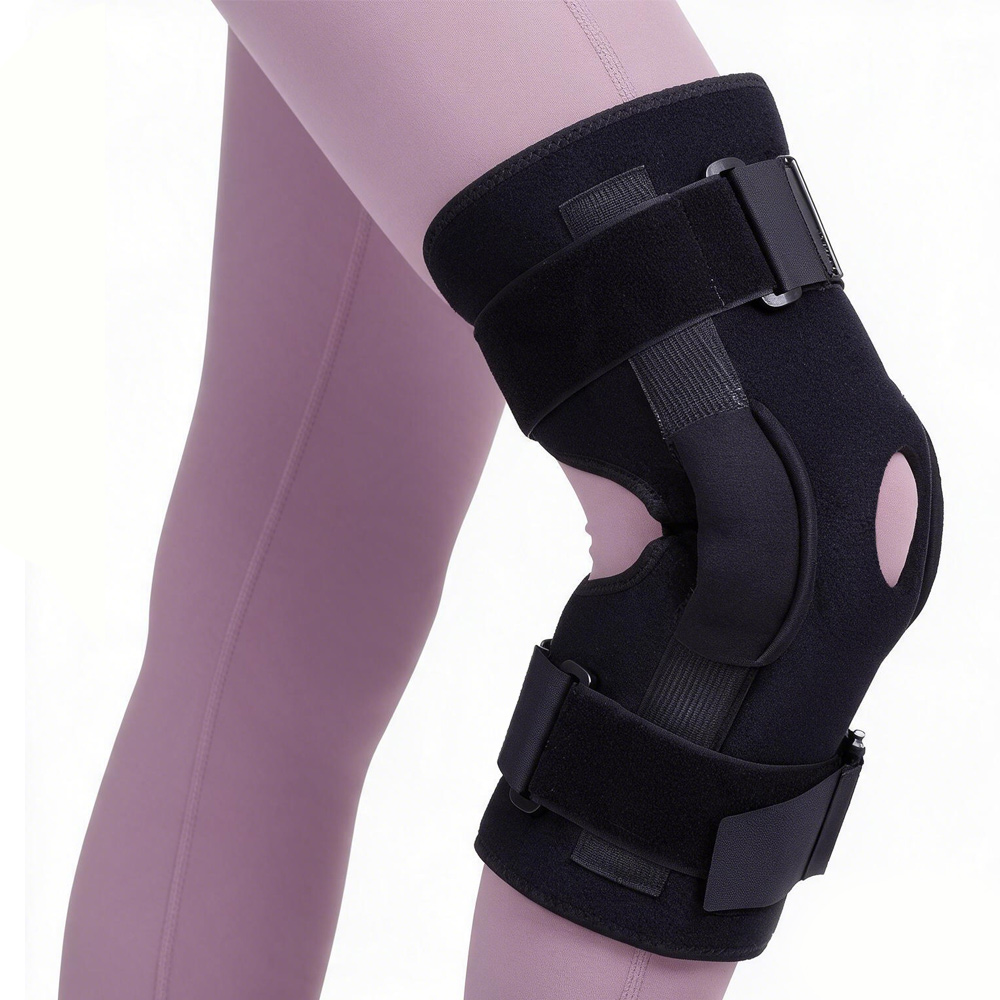
Range-of-motion hinged braces are widely used for post-surgical recovery, including ACL, MCL and meniscus repair. Adjustable polycentric hinges let clinicians lock, restrict or gradually unlock flexion and extension as healing progresses. The frame and strap layout must maintain steady alignment without slipping during walking. Clinicians count on these braces to protect repair sites while allowing safe, controlled movement, so hinge durability and simple strap adjustment are non-negotiable.
Unloader braces for osteoarthritis management
Unloader knee orthoses shift load away from overworked medial or lateral knee compartments. They are prescribed for degenerative osteoarthritis to ease pain and help patients delay more invasive treatment. A well-designed unloader brace delivers predictable corrective force without disrupting natural walking mechanics. This relies on precise frame geometry and adjustable tension straps; poorly calibrated models often create discomfort or fail to achieve the intended offloading effect.
Functional ligament braces for chronic instability
For patients with persistent ligament laxity, functional knee braces provide secondary stability during daily activity and light sport. They resist excessive valgus or varus shift while staying flexible enough for regular wear. Many clinic partners prefer lightweight, low-profile frames that fit under trousers, without losing structural rigidity during sudden twists or side loads.
Patella stabilising braces and immobilisers
Patella-focused orthoses guide the kneecap and reduce maltracking, suitable for patellofemoral pain and recurrent patellar dislocation. Full immobilisers, by contrast, lock the knee in extension for acute injury, fracture care or immediate post-op rest. These two serve separate clinical purposes, so keeping them distinct in your catalog prevents misdispensing by clinical staff.
Key Quality Features Clinic-Grade Knee Orthoses Must Meet
Hinge construction is where budget braces most often fail. Clinical models use reinforced polycentric hardware instead of simple single-axis hinges, engineered to hold up through repeated loading cycles without play or binding. Padding and liner materials also matter: breathable, low-friction foam cuts skin irritation and shear stress, essential for patients wearing the brace for hours each day. Fasteners need to hold tension through repeated putting on and taking off; weak hook-and-loop fasteners are a frequent source of patient complaints.
Adjustability is another core clinical requirement. Clinicians need to reposition cuffs, tweak strap tension and set hinge limits on-site, with no special tools. Sizing ranges should cover narrow, standard and larger thigh and calf circumferences, including bariatric options where your market requires them. All materials must meet biocompatibility standards, and individual components should be replaceable. This way clinics do not discard an entire brace just because one strap or hinge wears out.
Material Choices and OEM Customisation Options
Aluminum and composite frames balance strength and weight for hinged and unloader braces. Medical-grade neoprene and laminated foam form the padding layer, while moisture-wicking fabric liners work well for warmer climates or longer wear schedules. For private label orders, you can adjust hinge stop ranges, strap layout, colour coding and packaging while retaining validated clinical geometry. We also supply replacement strap kits as a companion SKU, an easy add-on that drives repeat revenue for distribution partners.
When building tiered product lines, reserve heavy-duty composite frames for premium clinic dispensing, and use streamlined hinged builds for high-volume rehab stock. Avoid overengineering simple immobilisers, as this unnecessarily raises unit cost for clinics that only need fixed extension support.
Compliance and Testing Checks Before Bulk Ordering
Orthotic knee braces classified as medical devices require supporting documentation for the EU and other regulated markets. Confirm your supplier can provide ISO 13485 quality records, biocompatibility reports and complete CE marking packs for therapeutic indications. Ask for accelerated cycle testing data for hinges and straps, to confirm performance after hundreds of flexion cycles. A sample fit trial with local physical therapists or orthotists is highly recommended before committing to large batches, because fit feedback often reveals issues static lab testing misses.
FAQ
What is the difference between a clinical knee orthosis and a retail compression sleeve?
Orthotic knee braces deliver directional stabilization, motion restriction or joint unloading following a clinician’s treatment plan. Compression sleeves only provide circumferential pressure, with no ability to control varus or valgus shift or limit knee range of motion. Keep these two clearly separated in your product documentation and marketing materials.
Can the same hinged brace be used for both ACL rehab and osteoarthritis unloading?
It is not recommended. Standard ROM hinged braces control flexion and extension, but they lack the offset frame and tension system needed for compartment unloading. Unloader braces are built for a different biomechanical goal, and mixing these indications carries clinical risk.
How important is polycentric hinge design for knee orthoses?
It is critical. Polycentric hinges follow the knee’s shifting rotational axis as it bends. Single-axis hinges pull, bind and create pressure points, lowering patient adherence and increasing return rates for clinic partners.
Are replacement straps and spare hinge parts available for private label knee braces?
Yes. We offer individual replacement components alongside finished braces. Stocking spare parts helps clinics extend device service life and lower total costs for their patients.
What documentation should I receive for CE-marked orthotic knee braces?
You will need declaration of conformity, risk management files, test reports and device labeling aligned with medical device rules. Keep these records organised for clinic audits and market surveillance checks.
Conclusion
Well-built orthotic knee braces align their design directly with clinical goals: controlled motion for post-op care, targeted unloading for osteoarthritis, or directional stability for ligament laxity. Prioritizing hinge integrity, adjustable fit and complete compliance documentation helps your clinic partners deliver better patient outcomes and cut inventory waste. Reach out to review sample units, technical test data and private label terms to expand your knee orthotic product line.
Recommended Reading: Orthotic Knee Braces: Grow Your Rehabilitation Product Line.