Custom ankle braces help distributors and clinics fill gaps that standard off-the-shelf supports cannot address. Unlike simple ankle sleeves or generic stabilizers, these orthoses are built around specific clinical indications, target patient groups and regional regulatory rules. Many wholesale buyers overlook the full development workflow, treating custom ankle braces as nothing more than a logo print service. This often leads to inconsistent fit, compliance delays and inventory that fails to meet clinicians’ expectations. Drawing from our orthotic design and manufacturing experience, this piece walks through how custom ankle braces progress from initial requirements to scalable bulk production for B2B partners.
Start With Clinical and Commercial Briefing
Development work starts by locking in core use cases before any CAD modelling or prototyping begins. Wholesale partners need to clarify whether the brace will serve acute ankle sprains, chronic instability, drop foot management, post-surgical immobilisation or athletic injury prevention. These intended uses directly shape support structure, hinge type, shell rigidity and sizing ranges. The team also reviews market requirements: target patient demographics, footwear compatibility, packaging format and medical device classification. A brace intended for EU clinic dispensing needs a different technical file and risk assessment than a comfort support sold at retail. Clear alignment at this stage prevents costly redesigns later in the project.
Design, CAD Modelling and Material Selection
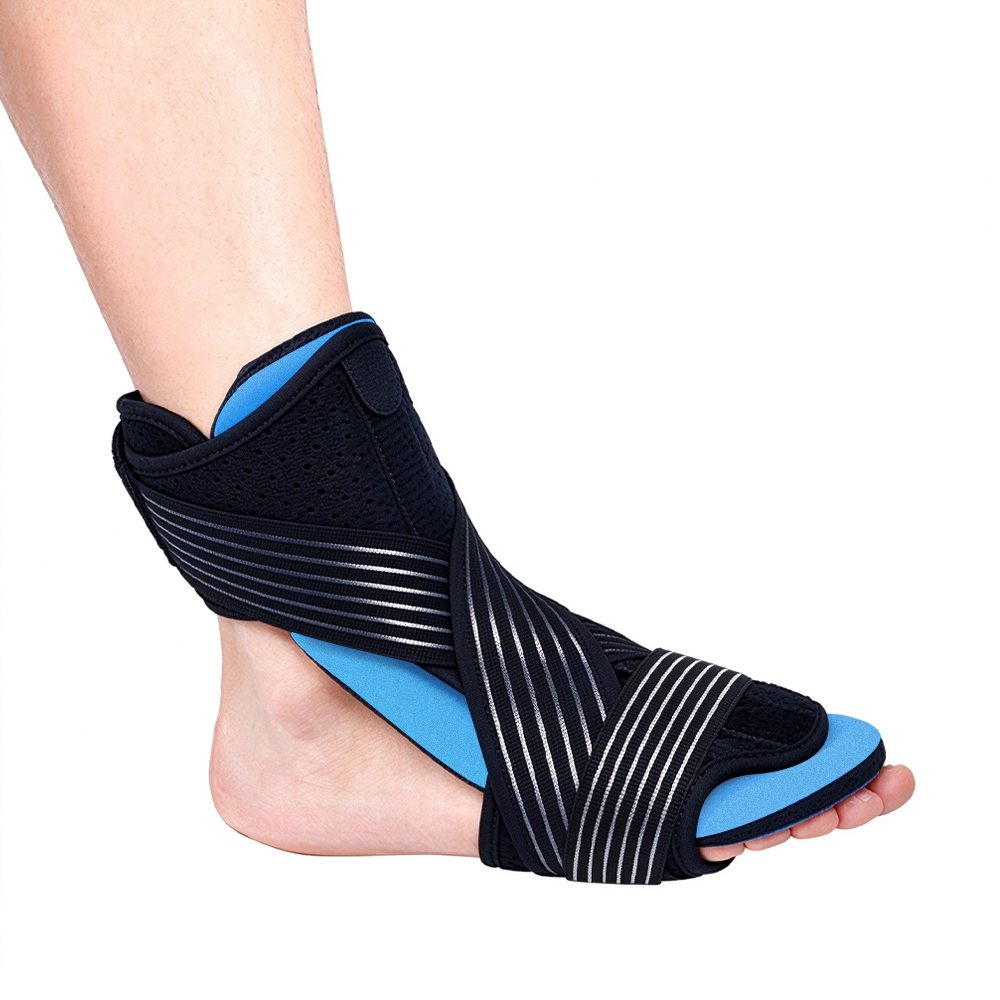
Once requirements are confirmed, engineers build digital models mapped to ankle biomechanics. For hinged custom braces, polycentric hinge geometry follows natural ankle rotation to avoid binding during walking. Rigid AFO-style braces use thermoformable polypropylene or composite shell layouts, while soft custom stabilizers combine layered neoprene, nylon and low-friction liner fabrics. Material selection balances weight, breathability, fatigue resistance and biocompatibility. Every design also accounts for practical adjustability: strap routing, hook-and-loop placement, padding relief over bony areas and simple donning for patients with limited mobility. The final CAD file feeds prototype fabrication or thermoforming tooling.
Prototype Iteration and Clinical Fit Validation
Initial prototypes are not sellable units. They exist to test fit, range of motion, pressure points and strap hold. We share prototypes with wholesale partners for feedback from orthotists, physical therapists and clinic fitters. Fit trials cover different ankle circumferences, foot shapes and shoe styles. Common adjustments include trimming shell edges, repositioning stabilising straps, updating hinge stop limits or changing padding density. Revisions continue until the prototype meets both clinical function and wear comfort benchmarks. A signed master sample is locked in before pre-production, to serve as a fixed reference for all QC checks.
Pre-production Trial and Compliance Documentation
A small pilot run confirms whether the design can be reproduced consistently at scale. This stage validates raw material batches, stitching or thermoforming processes, assembly workflows and packaging. Quality teams check dimensional tolerance, hinge cycle performance, strap tensile strength and surface finish. For braces classified as medical orthotics, the supplier compiles the required documentation: biocompatibility test reports, risk analysis, ISO 13485 records and CE marking packs. Wholesale buyers should review these documents early. Delays in technical file preparation frequently push back launch timelines for regulated markets.
Bulk Production, Batch QC and Wholesale Delivery
Mass production follows the approved master sample and pre-production parameters. Incoming materials are inspected, and inline sampling maintains consistency across shells, hinges, padding and fasteners. Finished braces are cross-checked against the master sample for shape, marking and assembly quality. Private label orders add brand-specific steps: logo application, woven labels, custom colour boxes and multilingual instruction inserts. Once inspection passes, units are packed and routed into the wholesale partner’s distribution pipeline. We retain batch traceability records, so clinics and distributors can trace components and test data if field issues arise.
Key Customisation Options for Wholesale Lines
Wholesale customisation splits into two categories: structural modification and branding. Structural changes include adjustable hinge stops, modified shell stiffness, alternative strap layouts and extended sizing for paediatric or bariatric patients. Branding options cover Pantone colour matching, printed or embroidered logos, custom packaging and tailored instruction sheets. Many partners take a hybrid route: starting from a validated base brace design and adjusting only straps, colours and packaging. This cuts development time and MOQ compared with building an entirely original orthosis from scratch.
FAQ
What separates patient-specific custom ankle orthoses from wholesale custom ankle braces?
Patient-specific braces are scanned and manufactured for one individual. Wholesale custom ankle braces are standardised, modified designs built for a product line, with fixed specs for clinical use, sizing and branding. They are scalable clinic inventory, not made one at a time for single patients.
How long does the full development cycle take for a custom ankle brace wholesale project?
Timelines depend on complexity. Minor branding changes on an existing base design can finish sampling within 1–2 weeks. Full structural redesign, clinical validation and compliance work usually takes 4–8 weeks before bulk production starts.
Can custom ankle braces reuse the same certification as prefabricated ankle supports?
Not automatically. Any structural change that alters biomechanical function or intended clinical use triggers a review of test records and risk files. Simple logo and packaging changes may not require full re-certification, but this should be confirmed with your supplier and regulatory team.
What MOQ can wholesale buyers expect for custom ankle brace development?
MOQ varies significantly. Simple private label branding on existing designs often carries lower minimums. Projects requiring new tooling, moulds or composite shell fabrication have higher MOQs, as tooling costs are spread across the batch.
Can we order replacement straps and spare hinge parts for our custom ankle brace line?
Yes. We encourage partners to add spare component SKUs to their wholesale portfolio. Replacement hinges and straps extend each brace’s usable life and create repeat purchase opportunities for clinic customers.
Conclusion
Developing custom ankle braces for wholesale markets requires balancing clinical performance, manufacturing repeatability and regulatory readiness. Successful projects start with clear clinical intent, move through hands-on fit validation, and lock a master sample before scaling. Whether you adjust a proven base design or create a new orthosis for a specific patient pathway, structured development reduces return rates and helps clinic partners deliver reliable ankle support. Reach out to discuss design briefs, prototype testing and private label terms for your custom ankle brace line.
Recommended Reading:
Bulk Custom Shoe Orthotics Made For Footcare Brands And Clinics
Custom Rehabilitation Leg Bracing Wholesale For Medical Device Distributors