Custom foot insole development gives wholesale buyers and private label brands more control over product design, materials and construction. Rather than choosing only from standard models, brands can develop insoles around their footwear designs, target markets and price requirements.
A successful project starts with a clear product brief. Material selection, structural design, sampling and production planning all need to work together. The aim is not simply to create a different-looking insole, but to develop a product that meets its intended requirements and can be manufactured consistently in bulk.
1. Define the Product Requirements
The intended application determines much of the product design. An insole for sports footwear has different requirements from one designed for work shoes or orthotic applications.
Typical development projects include:
- Everyday footwear: Lightweight construction with flexible cushioning.
- Sports footwear: Shock absorption, flexibility and resistance to repeated use.
- Orthotic insoles: Defined arch profiles, heel cups and structural support.
- Work footwear: Durable materials and cushioning for extended wear.
- Medical and specialty applications: Specific material and structural requirements based on the intended use.
At the beginning of development, it is useful to establish the footwear type, size range, target price, expected order volume and required product features. These details give the manufacturer a practical basis for evaluating the design.
2. Choose Materials and Construction
The choice of materials affects the insole’s weight, flexibility, cushioning, durability and production cost. Common materials include:
| Material | Main Characteristics | Typical Applications |
|---|---|---|
| EVA | Lightweight, flexible and available in different hardness levels | Cushioning bases and support layers |
| PU | Elastic with good cushioning properties | Heel and forefoot cushioning |
| Poron | Soft cushioning and compression recovery | Cushioning and pressure-relief layers |
| TPU | Flexible, durable and mechanically strong | Support structures and reinforcement |
| PP | Relatively rigid and thermoformable | Orthotic support shells |
| Cork | Firm structure and suitable for shaping | Footbeds and support bases |
| Fabric | Available in various textures and finishes | Top covers |
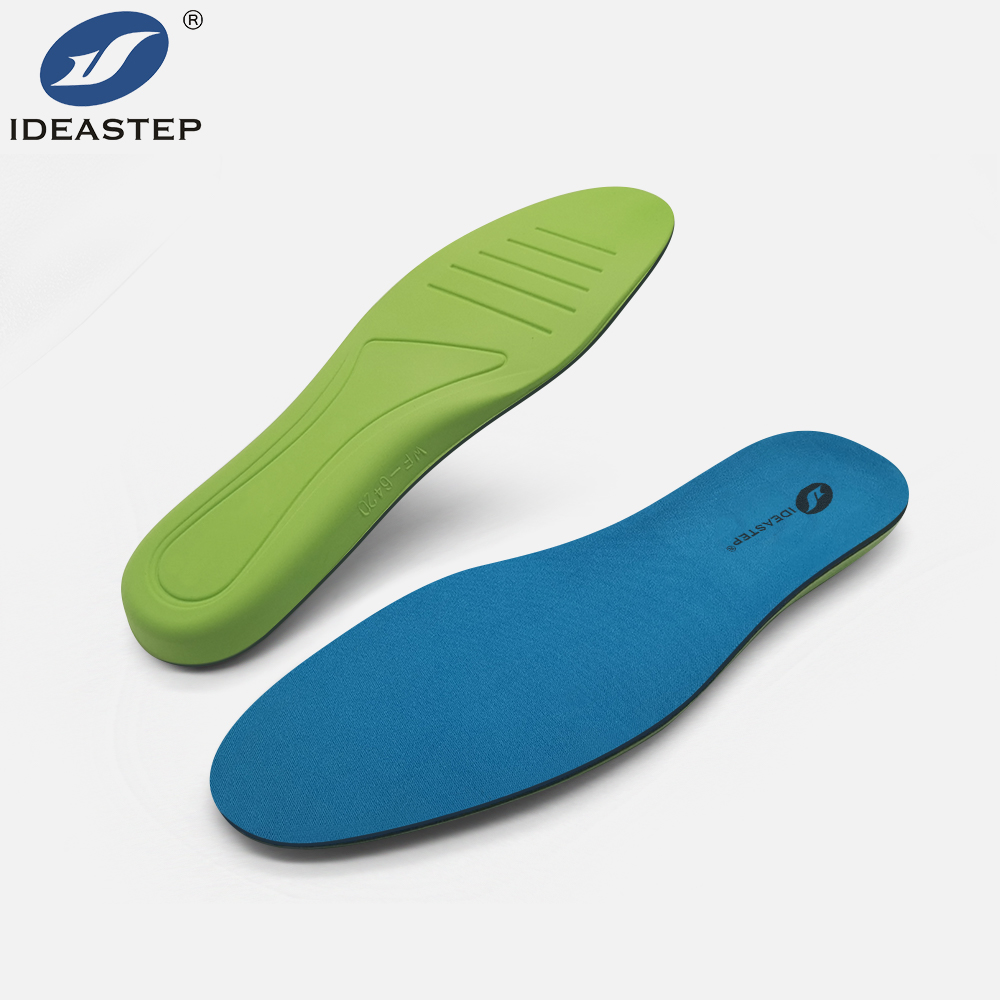
Many custom insoles combine several materials rather than relying on a single layer. A typical construction might use a fabric top cover, an EVA cushioning layer and a semi-rigid support base.
The materials need to work as a complete structure. For example, a soft cushioning layer should not reduce the stability required from the support base. For laminated products, adhesive compatibility and bonding strength also need attention.
3. Adjust the Structure and Product Details
Material selection is only part of the development process. The shape and dimensions of each component also influence the finished product.
Depending on the application, customization may involve:
- Arch profile: Height, contour and support geometry.
- Heel cup: Depth, width and overall shape.
- Thickness: Cushioning level and available space inside the footwear.
- Top cover: Fabric type, color, texture and finish.
- Support components: PP or TPU shells and reinforcement sections.
- Branding: Printed logos, labels and packaging.
A completely new design is not always necessary. For many private label projects, adapting an existing construction can meet the product requirements while keeping development time and tooling costs under control. New tooling may be needed when the requested shape or structure differs substantially from existing designs.
4. Sample Development and Evaluation
Sampling is where design decisions can be checked against the actual product. It helps identify issues that may not be obvious from drawings or material specifications alone.
A sample evaluation should cover:
- Dimensions and fit: Length, width, thickness and compatibility with the intended footwear.
- Material properties: Hardness, flexibility, cushioning and surface quality.
- Structural details: Arch shape, heel cup and support components.
- Layer bonding: Adhesion, edge finishing and possible separation.
- Appearance: Color, logo placement and overall finish.
Feedback is most useful when it is specific. Measurements, marked-up drawings and reference photos help manufacturers understand what needs to change. Once the design is approved, the confirmed sample and specifications should be used as the reference for bulk production.
5. Prepare for Mass Production
Before production starts, the product specifications and order details need to be finalized. This reduces the risk of differences between the approved sample and the finished batch.
| Item | Details to Confirm |
|---|---|
| Product specifications | Materials, dimensions, hardness and construction |
| Size range | Available sizes and dimensional tolerances |
| Branding | Logo, color and labeling |
| Packaging | Individual or bulk packaging |
| Order quantity | MOQ and production volume |
| Delivery | Production lead time and shipping arrangements |
Production methods depend on the design. Die cutting and laminating are widely used for multi-layer insoles, while thermoforming is suitable for certain support shells. Injection molding may be used for specific TPU components.
Quality checks should focus on material consistency, cutting accuracy, bonding strength, finished dimensions and batch uniformity. Changes to materials or construction should be reviewed before being introduced into an approved product.
6. Practical Considerations for Wholesale and Private Label Projects
Custom development involves balancing product requirements with production feasibility and cost. A few decisions made early can prevent unnecessary revisions later.
- Set clear requirements: Define the application, target price and essential product features before requesting a quotation.
- Review existing designs: An existing structure may provide a suitable starting point and reduce tooling costs.
- Confirm order quantities: MOQ can vary depending on materials, tooling and production methods.
- Evaluate samples carefully: Resolve fit, material and construction issues before approving the product.
- Document the final design: Keep material specifications, dimensions and an approved sample for repeat orders.
Clear communication between the buyer and manufacturer is particularly important when a project involves multiple materials, custom molds or several product sizes.
Conclusion
Developing custom foot insoles for wholesale and private label brands requires coordination between product requirements, material selection and manufacturing capabilities. A clear specification, suitable material combination and properly evaluated sample provide a sound basis for consistent bulk production.
Whether adapting an existing design or developing a new construction, the key is to make sure the finished product meets the intended requirements without creating unnecessary production complexity.