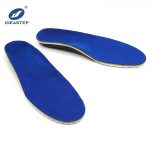
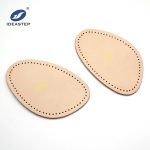
Turf toe is a common forefoot injury in sports involving running, jumping, and sudden changes in direction. It affects the soft tissues surrounding the first metatarsophalangeal (MTP) joint, making forefoot stability an important consideration in footwear and orthotic design.
For orthotic manufacturers and footwear brands, developing suitable support involves more than adding cushioning. Insole stiffness, rigid forefoot components, and material selection all influence how a product controls movement and distributes pressure.
Understanding these factors helps manufacturers develop functional insoles for sports footwear and specialized orthotic applications.
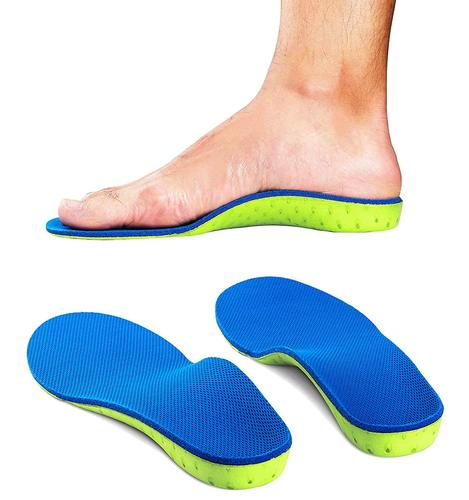
Understanding Turf Toe and Forefoot Mechanics
Turf toe occurs when the big toe is forced excessively upward while the forefoot remains planted. This movement places stress on the plantar plate, joint capsule, and supporting ligaments around the first MTP joint.
Depending on the severity, the injury is generally classified into three grades:
- Grade 1: Mild stretching of the supporting tissues, with limited tenderness and swelling.
- Grade 2: Partial tearing accompanied by greater pain, swelling, and restricted movement.
- Grade 3: Severe damage to the supporting structures, potentially causing joint instability.
The injury can affect normal push-off movement during walking and running. For this reason, controlling excessive big toe extension is an important consideration in selected orthotic designs.
The required level of support depends on injury severity and professional assessment. More serious injuries may require medical treatment or immobilization rather than an insole alone.
Why Stiffness Matters in Turf Toe Orthotics
In normal walking, the forefoot bends as the heel rises and the toes extend during push-off. When the first MTP joint is injured, excessive bending can place additional stress on the affected structures.
A rigid or semi-rigid forefoot component can help limit this movement and provide a more stable platform.
Rigid Forefoot Plates
Carbon fiber, graphite, and selected thermoplastic materials are commonly considered for rigid forefoot reinforcement.
These materials can provide bending resistance without adding excessive thickness. When positioned beneath the forefoot, a rigid plate may help restrict excessive joint movement.
However, higher stiffness is not always better. The plate’s thickness, length, shape, and position must match the intended footwear and support requirements.
Rigid vs. Semi-Rigid Support
Rigid structures are suitable for applications requiring greater forefoot motion restriction, while semi-rigid materials offer a different balance between support and flexibility.
Manufacturers should consider:
- Required bending resistance.
- Available space inside the footwear.
- Overall insole thickness and weight.
- Intended product application.
- Compatibility with cushioning materials.
The goal is to achieve suitable structural support without making the finished insole unnecessarily bulky or uncomfortable.
Forefoot Support Design and Component Positioning
The location of the reinforcement directly affects how an insole supports the foot. For turf toe-related applications, particular attention should be given to the first MTP joint and the area beneath the great toe.
Morton’s Extension
A Morton’s extension is a relatively rigid component positioned beneath the great toe. It helps restrict excessive dorsiflexion at the first MTP joint by providing additional resistance beneath the toe.
Unlike a conventional cushioning pad, its primary purpose is motion restriction.
Its thickness, length, and positioning should be carefully evaluated to avoid unwanted pressure and footwear fit issues.
Full-Width Forefoot Reinforcement
Another option is a broader plate extending across the forefoot. This design provides support over a larger area and can help control bending across multiple metatarsal regions.
A full-width plate may suit footwear requiring greater overall forefoot stability, while a localized extension focuses more directly on the great toe region. The appropriate design depends on the intended application.
Combining Support and Cushioning
Rigid support does not mean the entire insole needs to feel hard. A layered construction can combine structural reinforcement with cushioning and a suitable top cover.
Common material combinations include:
- Rigid or semi-rigid plates for structural support.
- EVA foam for lightweight cushioning.
- PU foam for resilient comfort layers.
- Fabric or microfiber for the top cover.
The cushioning layer should improve wearing comfort without compromising the stability of the supporting component.
Material Selection for Forefoot Support Insoles
Material selection influences stiffness, weight, thickness, cushioning, and manufacturing flexibility. For B2B insole development, the right combination depends on the finished product’s structural requirements.
| Material | Key properties | Typical application |
|---|---|---|
| Carbon fiber | High stiffness and low weight | Rigid forefoot plates |
| Graphite | Lightweight reinforcement | Thin support components |
| TPU | Adjustable flexibility and structural properties | Semi-rigid support components |
| EVA foam | Lightweight, available in different densities and hardness levels | Cushioning and base layers |
| PU foam | Resilient cushioning | Comfort layers |
| Microfiber and fabric | Different surface textures and finishing options | Top covers |
EVA is particularly useful in custom insole manufacturing because manufacturers can select different densities, hardness levels, and thicknesses.
TPU can be used for molded support components, while carbon fiber is worth considering when lightweight reinforcement and higher bending resistance are required.
One important distinction is that Shore hardness and bending stiffness are not the same property. Hardness measures resistance to indentation, whereas bending stiffness describes resistance to flexing. Both should be considered during product development.
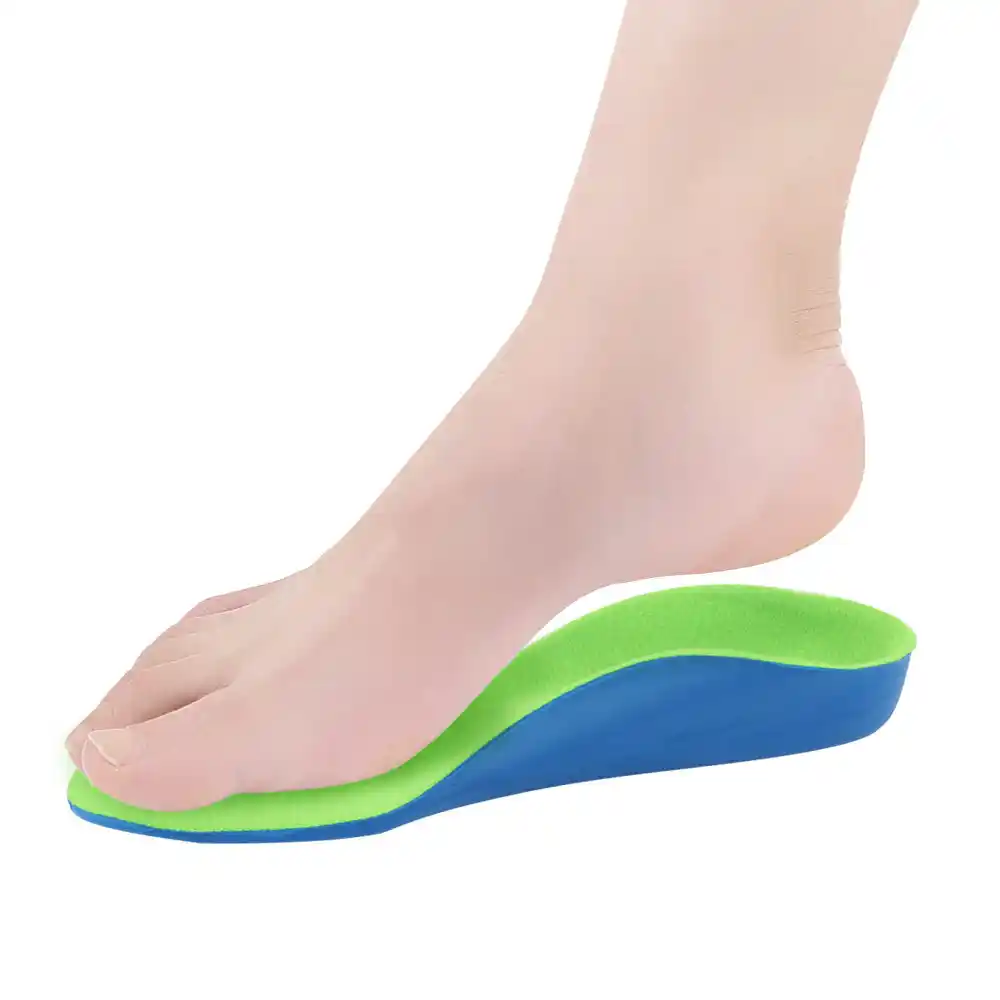
Key Design Checks for Orthotic Manufacturers
Before finalizing a turf toe-related insole, manufacturers should evaluate several practical factors.
1. Forefoot bending resistance
Test the finished structure rather than relying only on individual material hardness specifications.
2. Reinforcement positioning
Check whether the supporting component provides the intended coverage beneath the first MTP joint and great toe.
3. Footwear compatibility
Evaluate overall thickness, internal shoe space, and compatibility with the target footwear construction.
4. Material bonding and durability
Check bonding strength between rigid components and cushioning layers, along with compression behavior and dimensional stability.
5. Surface comfort
Review top cover materials, edge finishing, and transitions between rigid and soft components.
These checks help manufacturers identify structural issues before moving into bulk production.
Common Mistakes in Turf Toe Insole Development
Several design problems can affect product performance:
- Using cushioning alone: Soft foam improves comfort but does not necessarily restrict excessive big toe movement.
- Making the entire insole too rigid: Excessive stiffness may affect comfort and footwear compatibility.
- Ignoring component positioning: Poor reinforcement placement can reduce the intended support effect.
- Selecting materials by hardness alone: Finished-product bending performance also depends on thickness and geometry.
- Using one design for every application: Sports footwear and specialized orthotic products may require different support configurations.
A clear product specification and sample evaluation process can help avoid these problems.
Custom Orthotic Insole Manufacturing for B2B Buyers
For orthotic laboratories, footwear brands, and wholesale distributors, forefoot support is a specialized product development opportunity.
The finished design may combine EVA cushioning, rigid or semi-rigid reinforcement, and different top cover materials to meet specific footwear requirements.
At Ideastep, we provide custom orthotic insole and EVA material solutions for B2B customers. Our manufacturing experience supports projects involving different foam specifications, support structures, and multilayer constructions.
Buyers can discuss:
- EVA density, hardness, and thickness.
- Rigid and semi-rigid support configurations.
- Cushioning and top cover combinations.
- Product dimensions and footwear compatibility.
- OEM and ODM manufacturing requirements.
We recommend evaluating samples before confirming bulk orders to check material combinations, structural performance, and finished-product fit.
Contact Ideastep to discuss your custom orthotic insole project, request samples, or explore wholesale manufacturing options.
Final Thoughts
Effective turf toe orthotic design depends on balancing forefoot stiffness, joint support, and wearing comfort.
Rigid plates can help limit excessive movement around the first MTP joint, while EVA, TPU, and other materials offer different options for cushioning and structural reinforcement.
For manufacturers, the best design is not necessarily the hardest or most rigid one. It is the construction that meets the intended application, fits the target footwear, and performs consistently in the finished product.
Explore More: Common Foot And Ankle Sports Injuries.